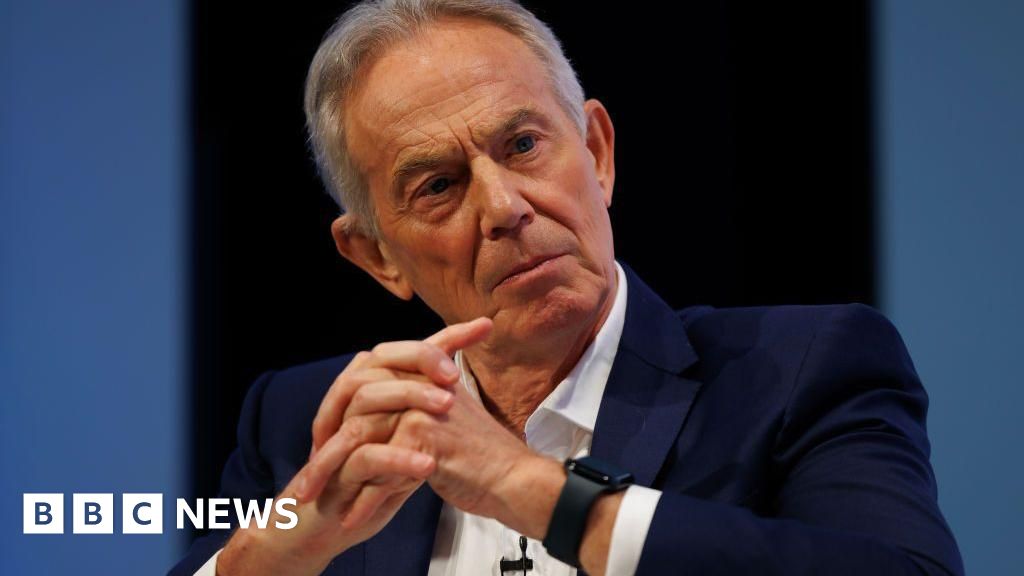
Tony Blair urged Labour to move to the "radical centre," but his intervention appears unlikely to materially shift the party’s debate given strong internal resistance. Senior figures including Torsten Bell and Andy Burnham pushed back on his views on taxes, inequality, pensions, and net zero, while some MPs praised his focus on delivery and big ideas. The piece suggests limited immediate policy impact, with the main relevance being Labour’s leadership dynamics rather than markets.
This is a signaling event more than a policy event, but it matters because it exposes a widening gap between market-friendly rhetoric and the actual constraint set of a potential future Labour leadership contest. The near-term market read is that fiscal premia on UK assets are not being challenged; instead, the debate increases the odds of a more explicit growth-vs-discipline split later this year, which raises volatility around UK rates, sterling, and domestic cyclicals.
The second-order effect is on coalition management: any move toward “radical centre” economics would likely force a sharper trade-off between household transfers, pension promises, and capex for energy transition. That is structurally bearish for long-duration UK assets if investors conclude the party is drifting toward higher taxes without credible supply-side reform. The real beneficiary is not one faction of Labour, but markets that can price a clearer commitment to fiscal restraint and policy continuity; the loser is anything dependent on open-ended fiscal support or regulated returns.
The contrarian angle is that the content may matter less than the messenger, and that the backlash itself reduces the probability of rapid policy drift. If Blair fails to move the party, the base case is a muddle-through stance: headline risk stays high, but the probability of a hard-left or hard-austerity pivot remains contained. That makes the event tradable mainly as an entry point into UK political risk premium, not as a durable macro regime change.
Catalysts are months, not days: leadership maneuvering, conference positioning, and any pension/tax commentary ahead of the next fiscal event. The key tail risk is a leadership vacuum paired with markets starting to price a less predictable UK fiscal path; the reversal would be a clear Starmer-style reassertion of pro-business, pro-capex, anti-abrupt-tax messaging that narrows the policy distribution.
AI-powered research, real-time alerts, and portfolio analytics for institutional investors.
Request DemoOverall Sentiment
neutral
Sentiment Score
-0.05
