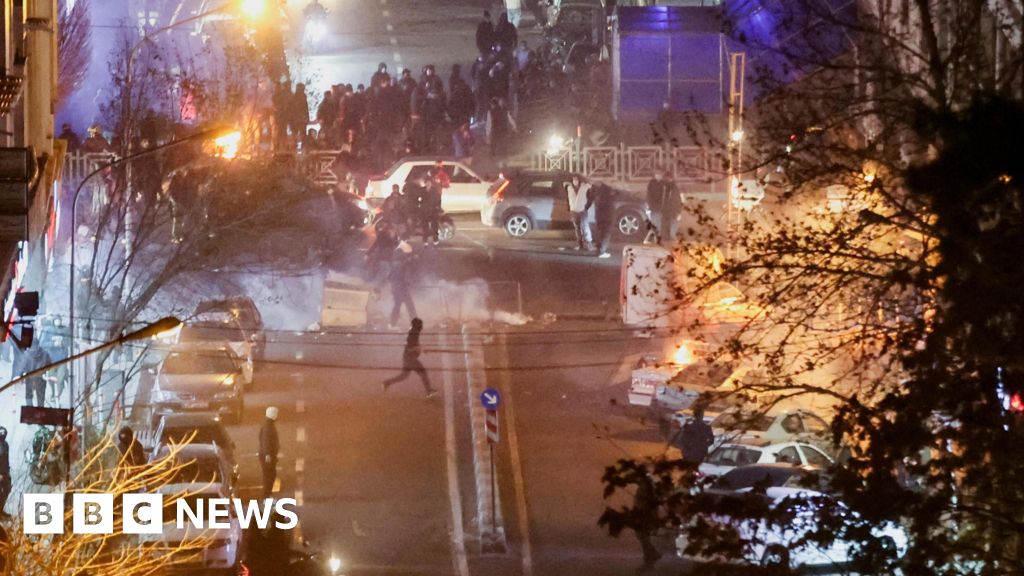
Iran is under acute economic and political strain: UN nuclear-deal sanctions were reimposed by the UK, Germany and France in September, food price inflation topped 70% in 2025 and the rial hit a record low in December, while security forces including the IRGC (≈150,000 personnel) and the Basij militia have violently suppressed recent protests. The combination of deep domestic economic distress, sustained sanctions and US threats (including a proposed 25% tariff on third parties dealing with Iran) heightens country risk and potential oil market volatility given China’s role as Iran’s primary buyer, though regime coercive capacity appears to limit immediate collapse. Investors should price in prolonged FX and inflation stress, elevated geopolitical risk premia and the risk of episodic supply shocks rather than an imminent regime change.
Market structure: Geopolitical stress and renewed EU sanctions on Iran tighten the marginal crude supply curve by up to ~1–2 mbpd over 1–6 months if China does not fully substitute volumes, benefiting integrated oil majors (XOM, CVX), commodity ETFs (BNO/USO) and gold, while hurting airlines (DAL/LUV), EM equities and banks with MENA exposure. Pricing power shifts toward OPEC+ and spot sellers; US shale can respond above ~$85/bbl but with ~3–6 month lag, capping peaks. Shipping/insurance and regional energy service providers gain pricing leverage in the near term.
Risk assessment: Tail risks include a sudden regime collapse or regional conflict that could push Brent >$100/bbl (low probability, high impact) and a counter-tail where China backfills exports, keeping prices stable. Immediate (days) sees volatility spikes and FX/EM outflows; short-term (1–6 months) sanctions implementation determines export decline magnitude; long-term (6–24 months) is structural — persistent underinvestment in global projects could keep a higher floor. Hidden dependencies: China’s purchasing decisions, insurance market reopening, and EU enforcement cadence are the levers that drive actual supply loss.
Trade implications: Direct plays favor 3–6 month directional exposure to crude (long Brent call spreads or XOM/CVX longs) and 6–12 month selective long exposure to defense contractors (RTX, LMT) as geopolitical risk premia reprice; short tactical exposure to airlines and EM sovereign debt (EMB) as fuel and funding stress rise. Options: buy capped-risk Brent 3‑month 80/95 call spreads (size 0.5–1% notional) to capture spikes; pair trades: long XOM vs short UAL to express energy vs travel divergence. Entry is tactical within 2 weeks; trim or hedge if Brent falls below $70 for 30 consecutive days or if China confirms +500 kbpd incremental purchases.
Contrarian angles: Consensus that Iran is on the verge of collapse is likely overstated — security apparatus resilience implies sanctions are the durable channel for impact, not sudden war, so markets that price immediate large supply shocks may be overreacting. Historical parallels (2019 tanker incidents; 2011 MENA shocks) show oil spikes often mean-revert within 3–6 months absent structural supply loss; conversely, underappreciated is the cumulative effect of multi-year de‑risking of Iranian exports which can sustain a higher price floor. Key unintended consequence: sustained >$85/bbl incentivizes rapid US shale re-acceleration and demand-side policy responses that can blunt upside beyond 12–18 months.
AI-powered research, real-time alerts, and portfolio analytics for institutional investors.
Request DemoOverall Sentiment
strongly negative
Sentiment Score
-0.65
