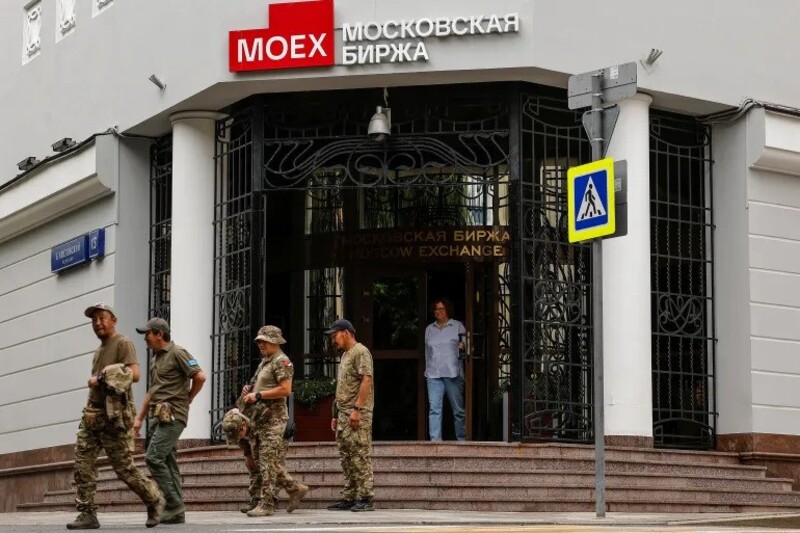
Trump said the U.S. will not "rush into" an Iran deal, noting it is not "even fully negotiated yet," but the article’s main content is a broad market recap. Moscow’s MOEX Russia Index finished unchanged, with winners led by Polyus (+1.25%), Norilsk Nickel (+1.00%) and MTS (+0.54%), while Tatneft (-1.36%), Rusal (-1.19%) and T Technologies (-1.16%) lagged. In commodities, August Brent rose 0.94% to $100.21 a barrel, July crude gained 0.26% to $96.60, and USD/RUB rose 0.48% to 71.55.
The market is signaling that the headline is less about immediate de-escalation and more about extending the geopolitical risk premium. A slower-than-expected path to an Iran deal keeps the two most sensitive variables for global risk assets — crude supply optionality and sanctions enforcement — in a holding pattern, which is supportive for upstream energy but not for a clean broad-market rally. The move in USD/RUB suggests the market is still paying for geopolitical optionality rather than pricing a decisive thaw, and that matters because Russia-linked assets can lag the first-order commodity move when policy ambiguity remains high.
The second-order effect is on the shape of the energy curve, not just spot. If traders believe the situation can deteriorate or stall for weeks to months, nearby barrels deserve a premium versus deferred contracts, which helps integrated producers and short-cycle E&Ps more than downstream refiners. That also means vol sellers in crude are vulnerable: the headline risk is binary, but the path dependency is asymmetric, with any breakdown in talks likely to widen Brent quickly before physical balances can adjust.
Contrarianly, the market may be underestimating how little incremental upside there is from simply delaying a deal. If negotiations drag without collapse, the premium can bleed out even if no agreement is signed, because inventories and non-OPEC supply can absorb a modest expectations reset over a 1-3 month window. In that scenario, energy beta fades while gold and defensive FX hedges keep a bid, so the cleanest expression is not outright long risk but relative-value positioning around volatility and supply sensitivity.
AI-powered research, real-time alerts, and portfolio analytics for institutional investors.
Overall Sentiment
neutral
Sentiment Score
-0.05
