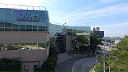


Tower Semiconductor plans to invest $3.0B to expand chip manufacturing in Japan, including $1.0B in Japanese government grants, with a near-term catalyst in premarket shares up 18%+. The build targets silicon photonics and silicon-germanium technologies for AI/data-center demand, with full operations expected by Q4 2027. Management guided 2028 revenue to $3.6B and net profit to $1.2B, up from the prior $2.8B revenue and $750M net profit projection.
The market is likely pricing the announcement as a de-risked growth reset, but the economic impact is mostly back-end loaded. The real mechanism is not the headline capex number; it is that subsidized capacity lowers Tower’s effective cost of capital and improves customer confidence in long-duration AI infrastructure sourcing. That can support a higher multiple now, even though meaningful revenue contribution is still several quarters away and the near-term P&L will likely absorb start-up and depreciation drag.
The second-order winner is the broader AI interconnect ecosystem: silicon photonics is a bottleneck-relief trade, so names tied to data-center networking and optical content should benefit if investors start underwriting faster AI cluster scaling. On the supply side, Japanese equipment, materials, and construction vendors could see incremental order flow, while larger foundries and specialty peers risk losing the “scarce capacity” premium if Tower successfully proves it can commercialize a differentiated node. The catch is that this is a capacity story, not a demand guarantee; if customer ramps slip, the market will quickly re-rate this as subsidized optionality rather than durable earnings power.
The contrarian angle is that the reaction may be too aggressive relative to timing. 2027/2028 cash flows are too far out to justify a permanent step-up unless management continues to win anchor customers and publishes concrete utilization targets; otherwise the new guidance can be read as aspirational rather than bankable. Falsifiers are straightforward: delayed fab conversion, capex inflation, weaker photonics demand, or guidance that comes back down after the first phase enters the execution window. For the next 1-3 months, the trade is mostly about momentum and multiple expansion; over 6-18 months, it becomes an execution and ramp-rate story.
AI-powered research, real-time alerts, and portfolio analytics for institutional investors.
Request TrialOverall Sentiment
strongly positive
Sentiment Score
0.55
Ticker Sentiment
