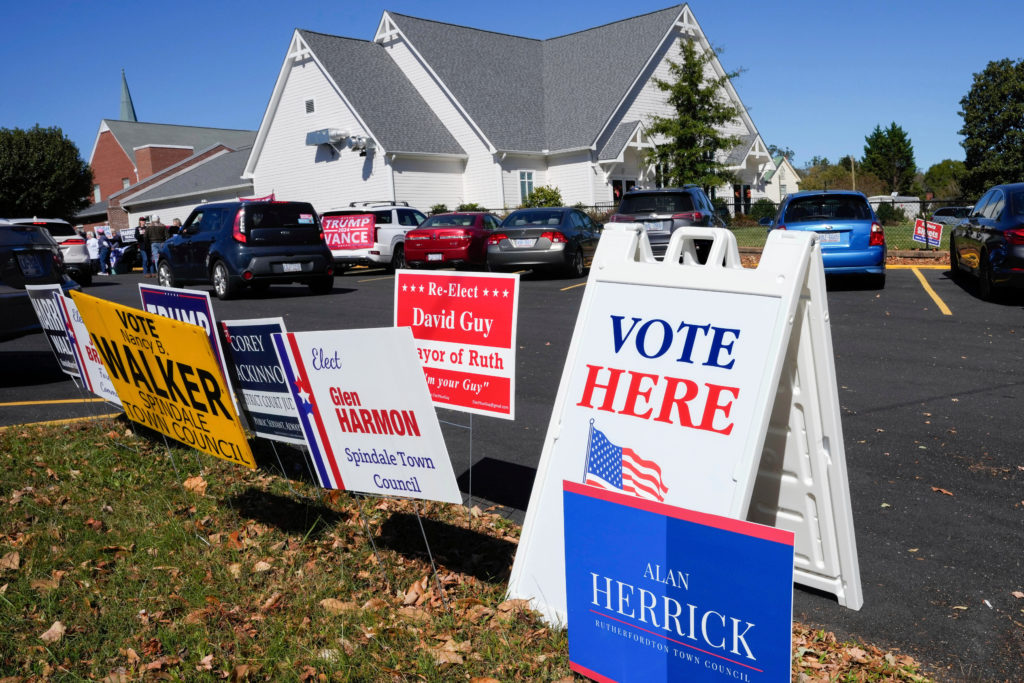
The House approved the SAVE America Act on a 218-213 mostly party-line vote, imposing strict proof-of-citizenship requirements (primarily a U.S. passport or birth certificate) at registration and requiring photo ID at the polls, plus mandatory state sharing of voter rolls with DHS. Only one Democrat crossed party lines; the measure is a reprise of a bill that stalled in the Senate and faces likely filibuster hurdles, with officials warning immediate implementation would burden election administrators, risk privacy concerns and potentially disenfranchise millions (experts cite >20 million voters lacking ready proof of citizenship).
Market structure: The immediate winners are government IT and defense contractors that handle secure data and identity verification (e.g., Leidos LDOS, Booz Allen BAH, CACI CACI) and pure-play cybersecurity/identity SaaS (Okta OKTA, CrowdStrike CRWD, Palo Alto PANW). Losers are smaller state/local election vendors (many private) and any consumer businesses in states forced into expensive compliance; municipal budgets face +5–15% incremental election-administration costs in the next 12–24 months. Cross-asset: near-term headlines will bid safe-havens (USTs, GLD) and lift implied vols in political and cyber-sensitive names; FX moves will be negligible absent large-scale unrest.
Risk assessment: Tail risks include nationwide legal injunctions, mass voter-roll purges or civil unrest that spike market volatility (VIX > 30) and force risk-off into Treasuries; probability ~10–20% in worst-case scenarios within 6–12 months. Timing: days–weeks for headline-driven moves; weeks–months for Senate procedure outcomes; quarters–years for structural budget shifts (identity/cyber TAM expansion estimated +10–25% over 2–3 years if federal mandate or funding follows). Hidden dependencies: availability of federal funding, state implementation capacity, and court rulings; DHS data-sharing raises liability and insurance costs for contractors.
Trade implications: Direct plays: overweight LDOS and BAH (2–3% each portfolio) and a 1–2% tactical position in OKTA/CRWD for identity/cyber upside if implementation or DHS contracts accelerate. Options: buy 90-day call spreads on LDOS/BAH sized 0.5–1% portfolio notional to capture +10–25% rallies, and purchase a 60–120 day VIX call spread (hedge) sized 0.5% if Senate calendar or primaries create volatility. Entry/exit: tranche entries 50% now, 50% on clear Senate procedural signal within 30–60 days; cut if Senate achieves a 60‑vote filibuster block or if bill is litigated into a permanent injunction.
Contrarian angles: Consensus assumes Senate kill — that understates durable state-level spending and procurement wins for contractors even if federal law stalls; after 2000/2020 we saw multi-year election-infrastructure budgets rise. If the bill is blocked, identity/cyber names may drop 10–20% on headline disappointment — a buying opportunity. Unintended outcomes: heightened privacy litigation and insurance costs could shift revenue mix from one-off projects to recurring security services, favoring subscription-based cyber vendors over project-heavy contractors.
AI-powered research, real-time alerts, and portfolio analytics for institutional investors.
Request DemoOverall Sentiment
mildly negative
Sentiment Score
-0.25
