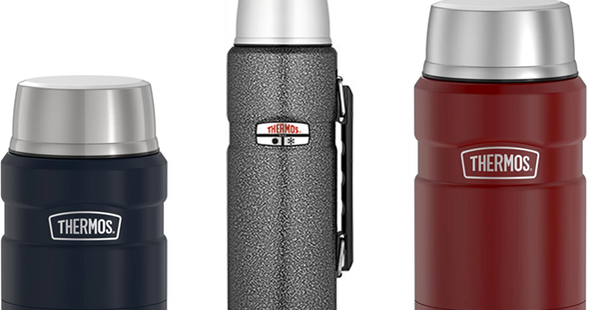
Thermos is recalling 8.2 million containers, including 5.8 million Stainless King Food Jars and about 2.3 million Sportsman Food & Beverage Bottles, after stoppers were forcefully ejected and caused injuries, including three cases of permanent vision loss. The company cited 27 injury reports and said the defect stems from stoppers lacking a pressure relief in the center. Consumers are being offered free replacement parts or replacement bottles, making this a significant product-safety and legal-liability event but not a broad market-wide shock.
This is a brand-damage event for the retail channels more than a direct earnings event for the retailers themselves. The immediate financial exposure sits with Thermos and the manufacturer/brand owner, but the second-order issue is category-level trust: food-storage and insulated beverage products are purchased on habit and repeat cadence, so a highly visible safety failure can shift share toward private label and adjacent brands for several quarters. The fact pattern also increases scrutiny on any “older inventory” sitting in the long tail of mass-market home goods, which is a hidden liability for broadline retailers with weak SKU-level visibility.
For TGT, WMT, and AMZN, the near-term risk is not unit economics but returns, customer-service friction, and marketplace quality perception. Amazon is the most exposed to seller-quality contagion because marketplace incidents tend to broaden into “counterparty trust” concerns faster than big-box incidents; even when the fault is upstream, consumers remember where they bought it. Target is the most sensitive to reputational spillover in discretionary home categories, while Walmart is relatively insulated by scale and lower expectation of premium product stewardship.
The contrarian angle is that headline severity may outrun actual balance-sheet impact on the retailers. Unless regulators widen the scope or litigation uncovers systematic controls failure at the retail level, this is likely a short-duration sentiment hit rather than a multi-quarter earnings issue. The bigger tradable opportunity is in any rival brand or private-label insulated container player that can advertise upgraded safety design and capture replacement demand over the next 1-2 quarters.
AI-powered research, real-time alerts, and portfolio analytics for institutional investors.
Request DemoOverall Sentiment
strongly negative
Sentiment Score
-0.72
Ticker Sentiment
