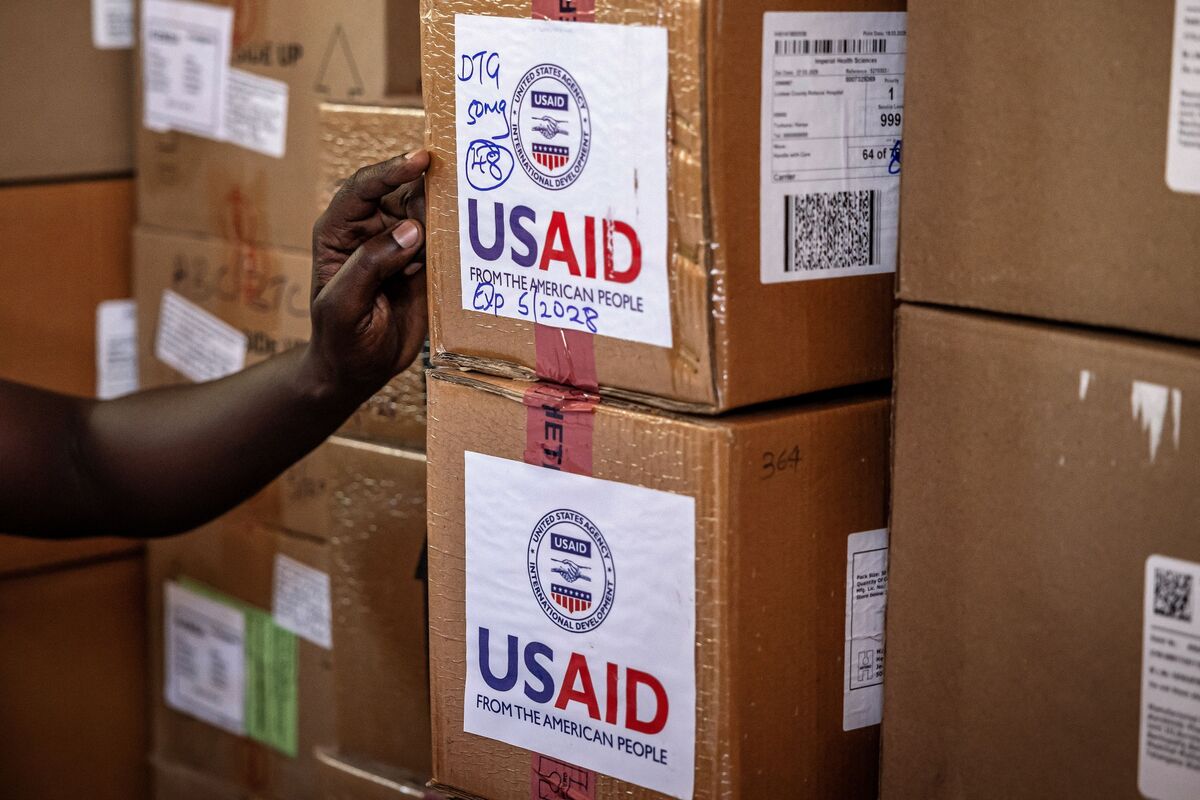
The US has committed $1.6 billion to Kenya for health programs over five years under the America First Global Health Strategy, the first bilateral US health deal in Africa designed to transition health-worker pay and medical procurement to Kenyan authorities. Funding focuses on disease-tracking data projects for HIV/AIDS, tuberculosis and malaria and the rollout of a national electronic medical-record system, which could accelerate opportunities for local suppliers and health-IT vendors while signaling a broader US policy shift toward localized aid. The announcement is strategically significant for emerging-market health infrastructure but is unlikely to move major financial markets in the near term.
Market structure: The $1.6B (≈$320M/yr over 5 years) deal reallocates pay/procurement and EMR spending to Kenyan institutions, creating direct winners: Kenyan hospitals, local pharma/regional distributors, and Africa-focused IT integrators. Large US-based government contractors and global medical distributors (who historically captured aid procurement) face modest demand loss; expect pricing pressure on imported medical supplies and a 1–3% loss of addressable procurement for top global distributors over 3–24 months. Cross-asset: modest positive for KES (reduced import demand), a small tightening of Kenyan USD sovereign spreads if implementation reduces fiscal gaps; negligible commodity impact outside pharma inputs.
Risk assessment: Tail risks include program mismanagement, corruption or a failed EMR rollout causing fund stoppage (low-probability, high-impact), or Kenyan political shifts around elections that rescind procurement rules. Immediate (0–30 days): market reaction muted; short-term (3–12 months): RFPs and supplier awards will create winners; long-term (1–5 years): structural shift to regional suppliers and local payroll. Hidden dependencies: effective procurement regulations, Kenyan public financial management capacity, and cyber/EMR security standards — failure in any amplifies downside.
Trade implications: Direct plays favor cloud/EMR vendors able to take small emerging-market contracts (Oracle/ORCL, Microsoft/MSFT) via 6–18 month deployments and local integrators; short/trim positions on global distributors with high government-contract mix (McKesson/MCK, Cardinal Health/CAH) as procurement localizes. Credit/FX: selective long Kenya USD sovereigns or KES forwards sized small (0.5–1% NAV) to capture possible 25–100bp tightening in spreads if implementation shows progress within 12 months. Options: own 12-month calls on ORCL/MSFT to express optionality on large multi-year EMR deals.
Contrarian angles: Consensus will treat this as symbolic; the mispricing is that local procurement magnifies market access for small regional vendors and cloud providers more than it marginally dents US suppliers — a potential underappreciated revenue stream of $50–150M/yr to vendors that can win regional rollouts. Historical parallels: USAID shifts in other African countries led to multi-year revenue growth for local integrators (2015–2020); failure modes are execution-related rather than demand-related. Unintended consequences: a successful local procurement program could accelerate similar bilateral compacts across 3–5 other East/Central African markets, compounding upside for EMR/cloud vendors and regional distributors.
AI-powered research, real-time alerts, and portfolio analytics for institutional investors.
Request DemoOverall Sentiment
neutral
Sentiment Score
0.10
