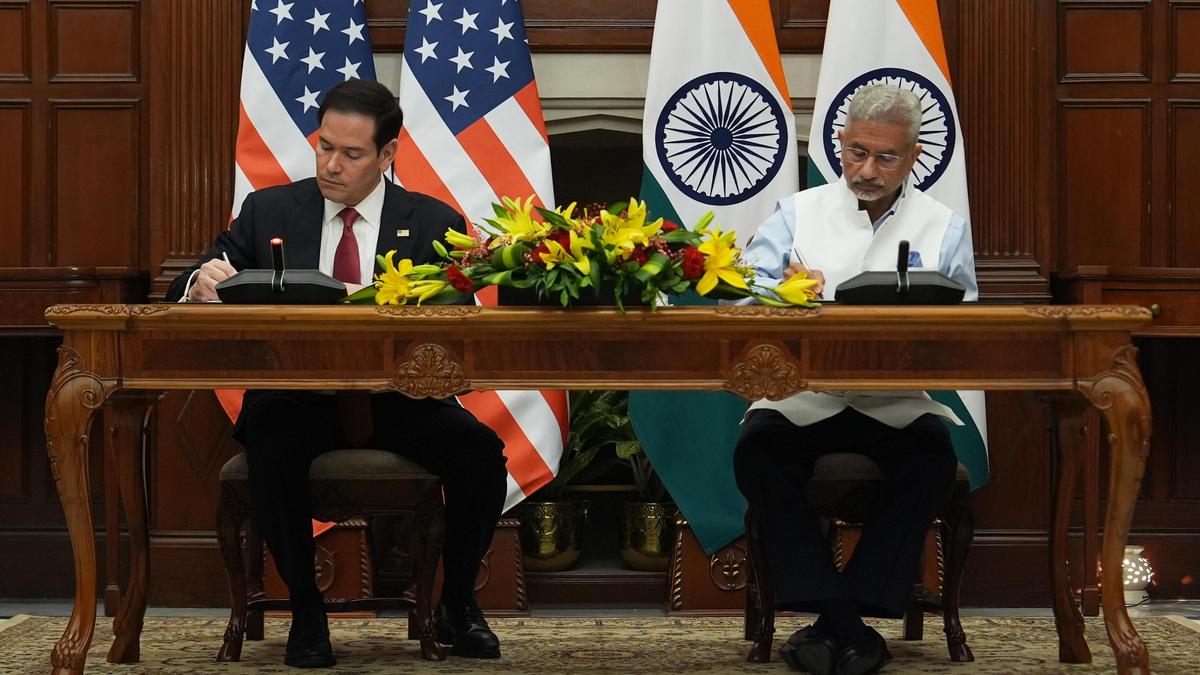
India and the U.S. signed a framework on May 26, 2026 to cooperate on mining, processing, recycling, financing, and investment across the critical minerals and rare earth supply chain. The pact is aimed at reducing vulnerability to China's export controls and strengthening long-term supply security for strategic metals used in technology and AI. It is a strategic policy development with potential sector implications, but not an immediate market-moving event.
The investable signal is not the headline diplomacy; it is the formalization of an alternate procurement architecture for inputs that today sit in a highly concentrated processing ecosystem. If this framework becomes operational, the biggest beneficiary is not necessarily the miner, but the midstream and chemical separation layer outside the dominant supplier bloc, because that is where bottlenecks, pricing power, and financing scarcity are most acute. Over 6-24 months, the market should start pricing a higher probability of non-China ex-China capacity coming online, which tends to compress tail-risk premia in end-use hardware and defense supply chains.
Second-order effects should show up first in capital allocation, not volume. Expect more project finance for Australian, North American, and select Indian downstream assets, plus a re-rating for recyclers and niche processors that can reduce dependence on primary ore flows; these businesses often have faster time-to-revenue than greenfield mines and better policy support. The winner set also includes firms with proprietary separation tech, impurity management, and off-take structuring expertise, because governments can sign frameworks faster than they can build plants.
The main risk is that this is strategically bullish but operationally slow. Any meaningful substitution away from current supply chains is a 2-5 year story, and near-term prices can still fall if China uses export controls tactically or if demand from EVs/AI hardware softens. The consensus may be overestimating how quickly bilateral agreements translate into physical tonnes; the better read is that this lowers the ceiling on future supply shocks rather than solving 2026-2027 tightness.
Contrarian angle: the more durable trade may be in enabling infrastructure and recycling rather than headline mining names. Markets often overpay for optionality in undeveloped deposits while underpricing companies that control processing know-how, water/power access, logistics, and reclaim economics. If policy support broadens, the rerating could be strongest in industrials and specialty chemistries rather than pure commodity beta.
AI-powered research, real-time alerts, and portfolio analytics for institutional investors.
Request DemoOverall Sentiment
mildly positive
Sentiment Score
0.20
