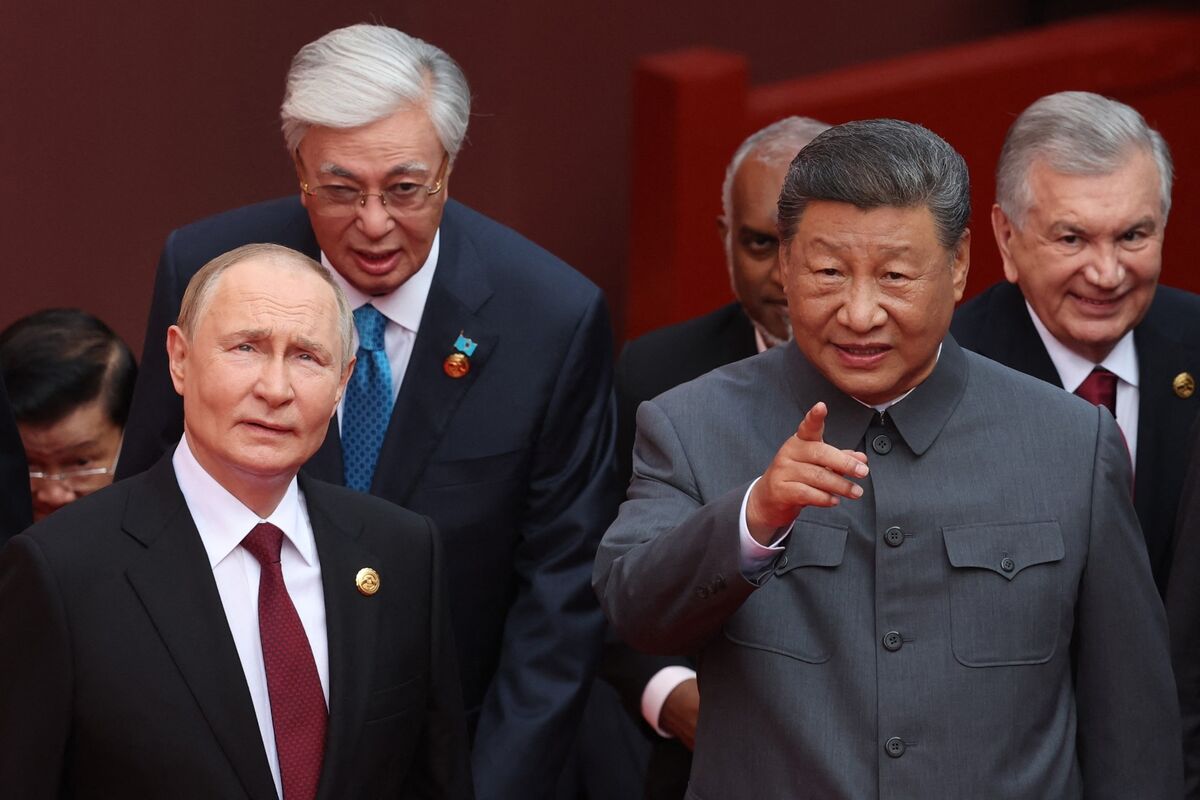
Chinese President Xi Jinping and Russian President Vladimir Putin are confirmed to attend a virtual BRICS trade summit convened by Brazil on September 8th to discuss Donald Trump's trade policy. While India's Prime Minister Narendra Modi will skip the meeting, sending a senior representative, the participation of Xi and Putin highlights the bloc's focus on coordinating responses to global trade dynamics.
The upcoming virtual BRICS summit on September 8th, convened by Brazil to specifically discuss Donald Trump's trade policies, represents a significant geopolitical event for investors. The confirmed high-level participation of China's President Xi Jinping, who is slated to deliver a key speech, and Russia's President Putin underscores a strategic alignment between these two nations to formulate a coordinated response to U.S. economic pressure. However, the notable absence of India's Prime Minister Narendra Modi, who will instead send a representative, introduces a critical nuance, suggesting a potential divergence in strategy or a more cautious diplomatic posture from India. This fractures the narrative of a fully unified BRICS front and is a key dynamic to watch. The summit's focus on trade policy, as highlighted by the event's thematic classification, directly impacts global supply chains and emerging market stability, justifying the moderate market impact score of 0.4 despite the neutral sentiment of the news itself.
AI-powered research, real-time alerts, and portfolio analytics for institutional investors.
Request DemoOverall Sentiment
neutral
Sentiment Score
0.00
