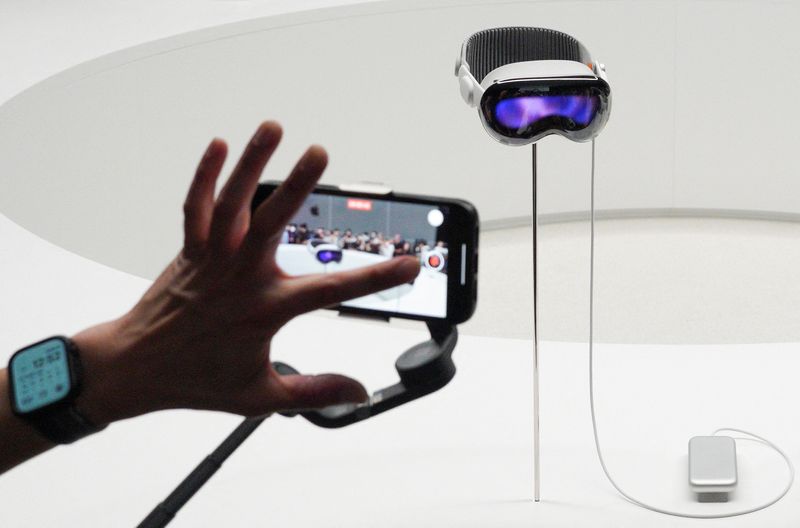
OpenAI is hiring Apple Vision Pro and smart glasses executive Paul Meade to lead its hardware division, a notable talent win as it builds AI-native devices. The move leaves a vacancy in Apple’s Vision Products Group, now to be handled by deputy Fletcher Rothkopf, and underscores OpenAI’s push into AI hardware following its $6.5B acquisition of an Apple-linked design startup. The story is strategically important for both companies but is more likely to affect sentiment than drive immediate broad-market price action.
This is less a single-person departure than evidence that the premium for AI-hardware execution is migrating away from incumbent consumer-electronics franchises toward founder-led platforms with faster decision cycles. The second-order read-through for AAPL is not immediate product disruption, but a higher probability of schedule slippage and design dilution on next-gen wearables, which matters because the market is valuing the company’s optionality in spatial computing and glasses more than near-term unit economics. In the near term, the stock can absorb the headline; over 6-18 months, the risk is that each senior exit increases the discount applied to Apple’s hardware reinvention story.
For META, the competitive consequence is asymmetric: if OpenAI can recruit proven industrial design and systems talent, the competitive set for AI devices broadens from phones/VR to a new category with potentially faster adoption curves. That is a subtle negative for Meta’s “own the interface” thesis, because any credible OpenAI-native device could siphon developer attention and consumer mindshare before Meta’s next hardware cycle fully matures. The likely market effect is not a direct multiple reset, but a gradual increase in skepticism around Meta’s ability to defend its wearables lane against a better-funded, more execution-focused entrant.
The contrarian angle is that talent wins do not automatically translate into product wins; hardware remains a capital-intensive integration game with distribution, manufacturing, and software ecosystem risks that elite designers cannot shortcut. Apple still retains unmatched supply-chain leverage and installed base monetization, so the downside from one executive move may be overestimated if investors extrapolate too aggressively. The cleaner signal is that OpenAI is willing to pay up for a hardware moonshot, which raises the probability of a well-capitalized but long-dated competitive threat rather than an immediate share shift.
AI-powered research, real-time alerts, and portfolio analytics for institutional investors.
Request DemoOverall Sentiment
mildly positive
Sentiment Score
0.15
Ticker Sentiment
