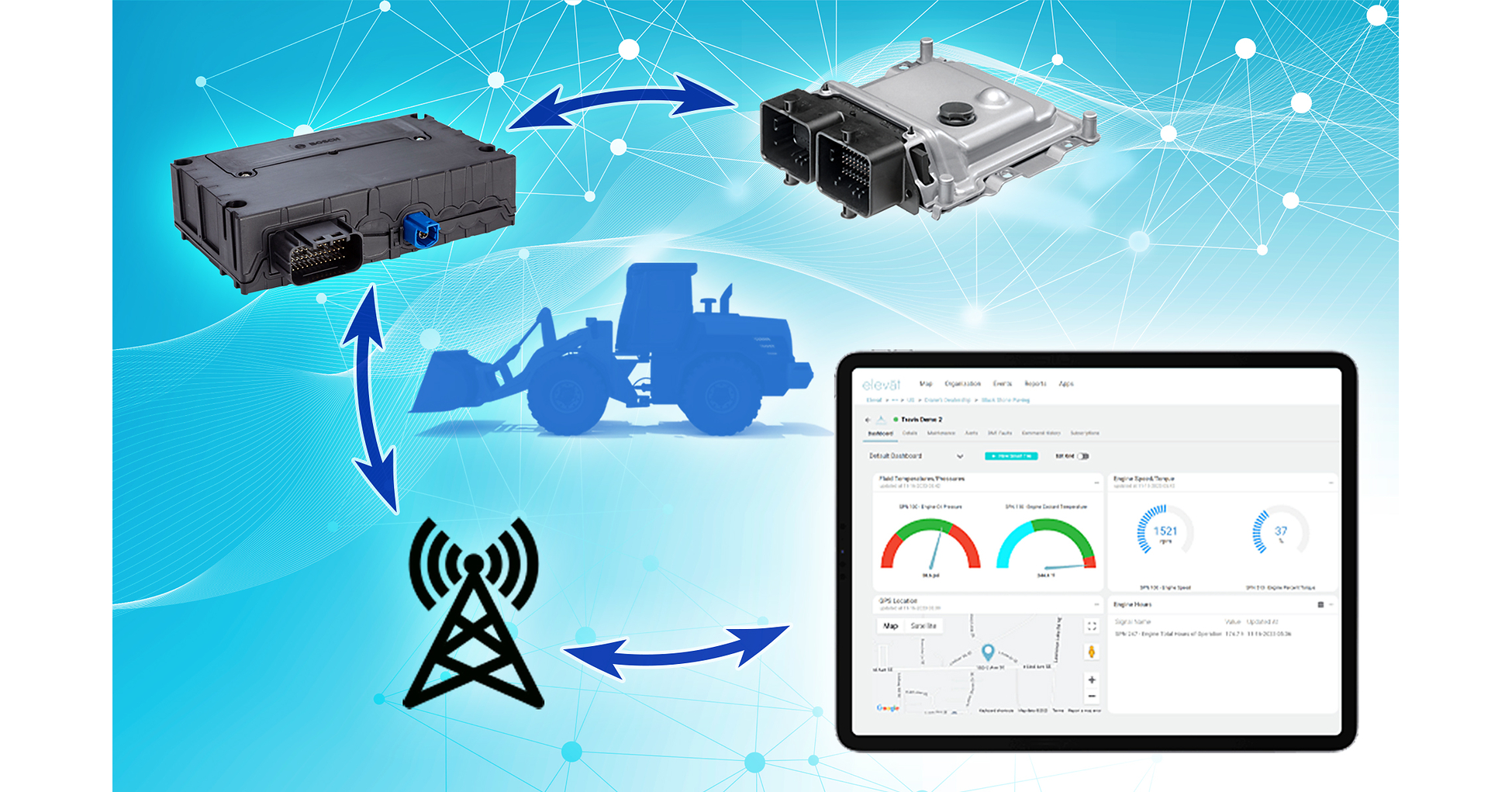
HydraForce and Elevāt announced remote machine management upgrades: the HydraForce Connected Control Unit (CCU) integrating Elevāt software can provide remote access and enable OTA updates for Bosch Rexroth BODAS controllers. The change is designed to reduce downtime via remote diagnosis and faster software deployment without on-site service personnel, aiming to improve machine performance and serviceability. Management frames it as a milestone toward a more connected, proactive equipment-service ecosystem, with further remote management capabilities planned.
This is less a revenue event than a proof point that the control stack is becoming the economic center of off-highway equipment. The incremental value is not in the press-release partnership itself; it is in who captures the service margin after installation—OEMs that can push updates remotely should lower dealer dependence, reduce warranty leakage, and pull more lifetime value into recurring software/service lines. Publicly listed beneficiaries are the larger OEMs and automation platforms with already-installed fleets and strong channel control, while smaller hardware-only vendors risk being relegated to commoditized box suppliers.
The market may overestimate near-term monetization. Adoption of OTA and remote access in heavy equipment is gated by cybersecurity qualification, fleet heterogeneity, and dealer politics, so the first 1-3 months are more about additional partnership announcements than P&L impact. Over 6-18 months, the real catalyst is evidence that connected fleets reduce downtime and raise service attach rates; absent that, this remains a narrative trade with little earnings translation. The main downside risk is a cyber incident or compliance issue that makes OEMs slower to expose field controllers remotely.
Contrarian read: the obvious consensus is that ‘connected’ equals higher-margin software. The less appreciated risk is that remote service can also commoditize hardware differentiation, because once OTA becomes table stakes, pricing power migrates to the platform layer and the best-integrated ecosystem, not to the component maker. That argues for owning software-enablement names more than mechanical exposure, but only if they can show measurable recurring revenue.
AI-powered research, real-time alerts, and portfolio analytics for institutional investors.
Request DemoOverall Sentiment
mildly positive
Sentiment Score
0.25
Ticker Sentiment
