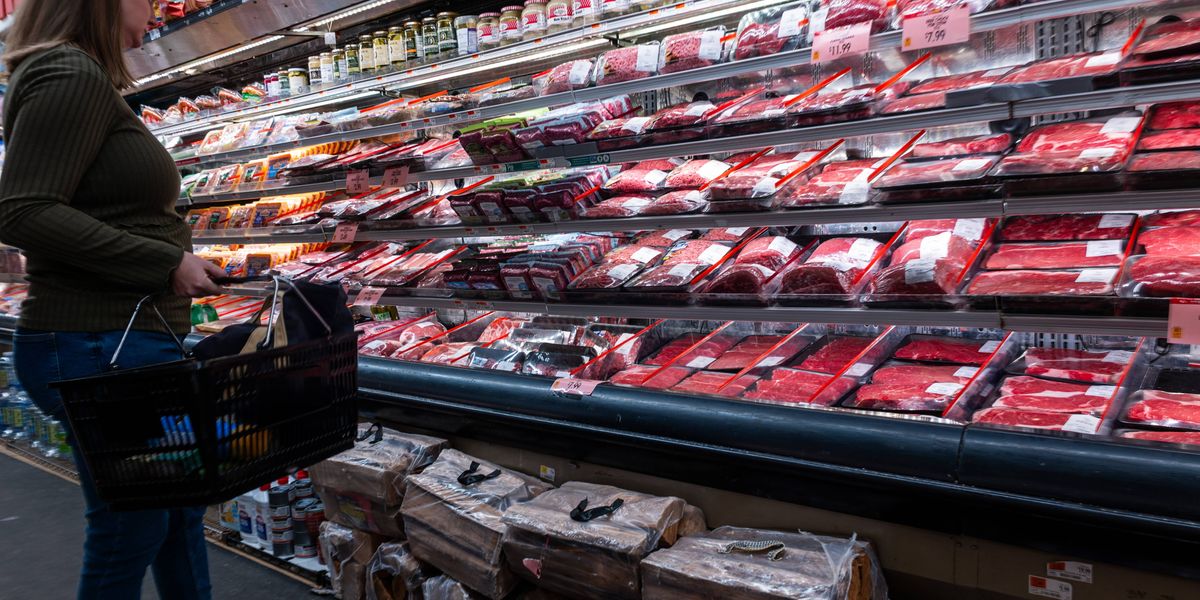
A new analysis says Memorial Day cookouts and summer travel are becoming materially more expensive, with barbecue staples up 13% on average year over year, gas prices above $4.50 per gallon, and domestic airfare 31% higher than in January. Specific items cited include ground beef up 20%, bratwursts up 28%, hot dogs up 12%, lettuce up 19%, corn up 98%, and tomatoes up 22%, largely attributed to Trump-era tariffs and the Iran conflict. The report argues higher fuel, jet fuel, plastic, and produce costs will pressure household spending and vacation demand.
The near-term market read-through is not just “higher prices,” but a broader squeeze on discretionary frequency. When households face a compounding shock across fuel, food, and travel at once, they do not simply spend less on the flagged categories; they trade down across the basket, delay purchases, and reduce trip intensity, which pressures retailers with exposure to small-ticket, high-frequency summer consumption. The second-order winner is value-oriented channels and private label, while branded packaged foods, fresh produce distributors, and leisure operators with high fixed costs absorb the volume hit first.
Energy remains the cleanest transmission mechanism. Elevated gasoline and jet fuel create a double bind: consumers cut road trips and airlines face both lower traffic and higher input costs, which is especially damaging to carriers that already rely on fare stimulation rather than pricing power. The less obvious knock-on is that capacity discipline becomes easier for incumbents once a budget competitor disappears, so the revenue consequence for larger airlines can be less severe than the public narrative suggests, at least if demand erosion is gradual rather than abrupt.
The inflation impulse is likely most acute over the next 4-8 weeks because it hits headline-sensitive categories during peak summer spending, but the longer-duration risk is margin compression in food packaging, grocery, and transport-sensitive retail if input costs remain sticky. A policy reversal on trade or de-escalation in the Gulf would unwind the fuel leg quickly, but supply-chain pass-through from tariffs tends to lag and can persist for multiple quarters, making the consumer squeeze more durable than the headline shock implies.
The contrarian view is that some of the damage may already be priced into the obvious consumer-exposed names, while the market is underestimating beneficiaries of demand substitution. If households are forced to stay local, localized entertainment, discount retail, grocery private label, and at-home consumption platforms can outperform even in a weak macro tape. The cleaner short is not broad consumer, but businesses with both high energy sensitivity and weak pricing power.
AI-powered research, real-time alerts, and portfolio analytics for institutional investors.
Request DemoOverall Sentiment
strongly negative
Sentiment Score
-0.72
