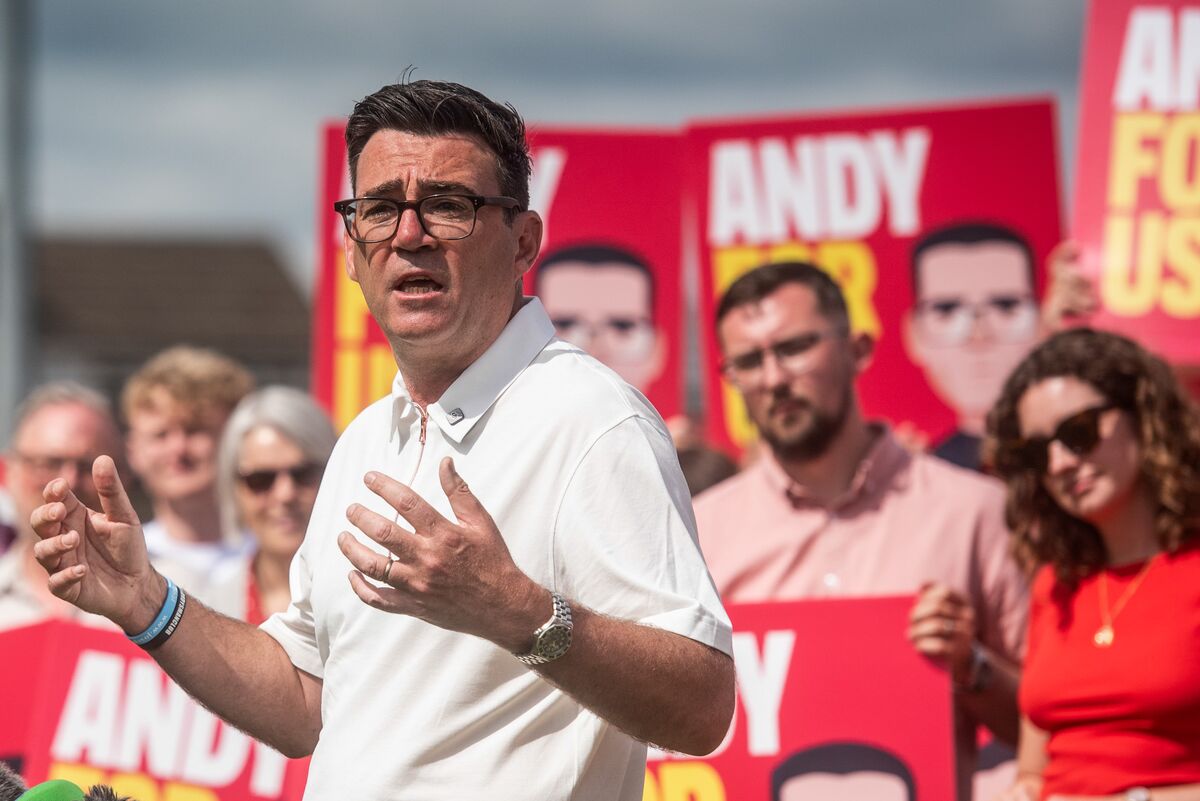
Andy Burnham plans to propose a major devolution agenda in his first speech after confirming his bid to succeed Keir Starmer as UK prime minister. The platform includes shifting more decision-making power to local authorities, overhauling procurement to support British jobs, and addressing youth unemployment. The article is politically significant but contains no immediate market-moving policy details or quantified fiscal measures.
The immediate market read is not about ideology but about capital allocation: a credible devolution agenda would shift marginal public spend away from Whitehall-anchored contractors toward regional incumbents, smaller builders, transport operators, and local-services vendors with stronger political connectivity. The biggest second-order winner is likely mid-cap UK domestic cyclicals that can win fragmented, region-by-region procurement without having to compete against large central-framework primes on price alone.
The real economic effect would take months to years, but the first tradable catalyst is expectations of a more pro-growth, pro-spend regime inside UK fiscal constraints. That usually supports the FTSE 250 relative to the FTSE 100, because the former has higher domestic revenue exposure and more leverage to planning, housing, and local capex. The flip side is that any reprioritization of procurement could pressure large outsourcers and infrastructure primes if local authorities favor shorter contracts, tighter locality requirements, or smaller bid sizes.
The contrarian risk is implementation friction: devolution sounds expansionary, but if local budgets remain capped and governance capacity is weak, the result can be slower procurement, not more of it. That would favor firms with administrative scale and balance-sheet flexibility over pure local exposure. Also, a leadership bid can create policy premium quickly, but the premium tends to fade unless paired with fiscal room or a clear legislative path; the trade may be better as a relative-value expression than a naked direction bet.
From a timing perspective, this is a weeks-to-months sentiment trade, not a same-day macro call. The key reversal trigger is any signal that the platform cannot survive contact with Treasury constraints or that local authorities resist added responsibility without funding. If that happens, the market will re-rate this from growth reform to political theater, and the beneficiaries would sharply mean-revert.
AI-powered research, real-time alerts, and portfolio analytics for institutional investors.
Request DemoOverall Sentiment
neutral
Sentiment Score
0.10
