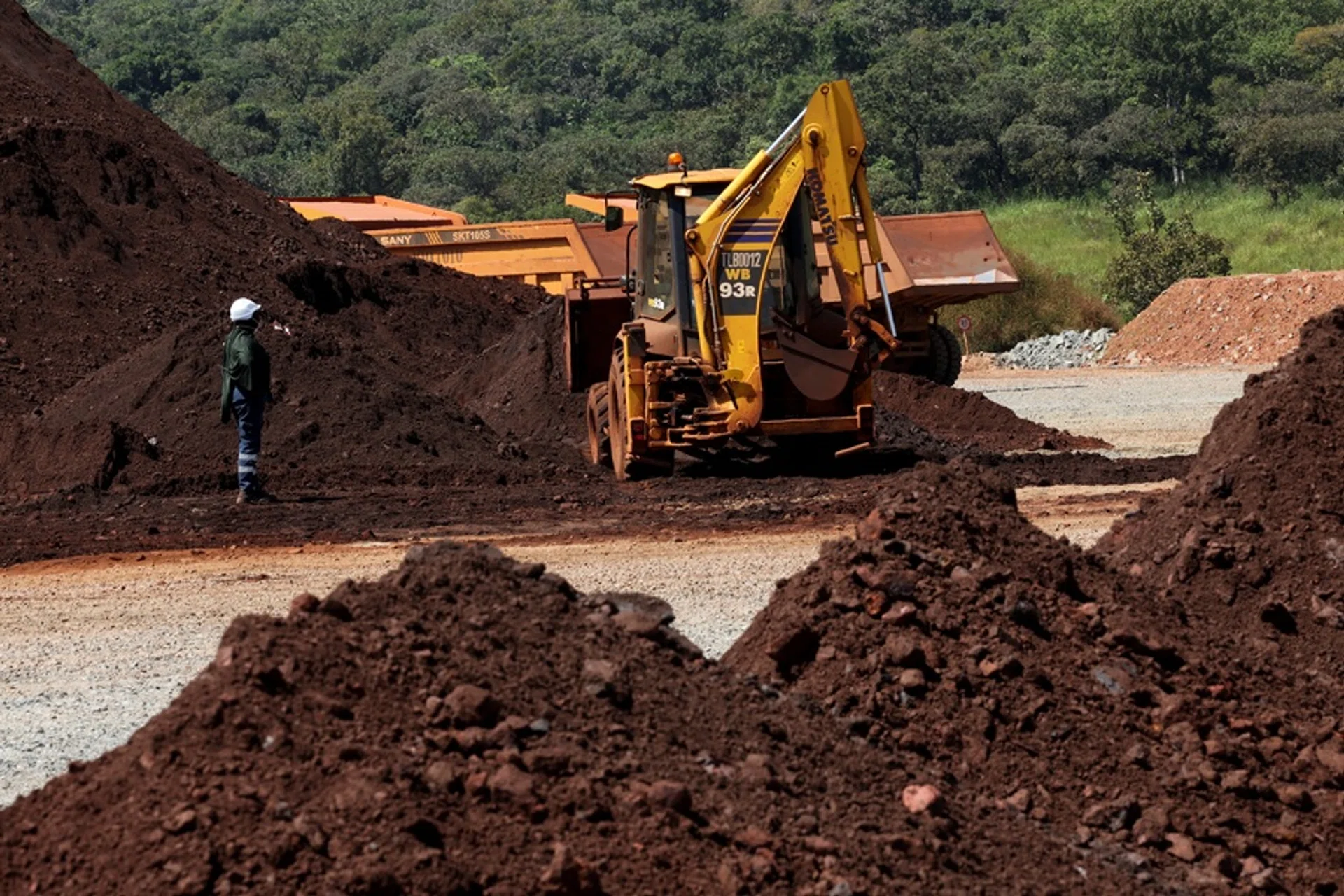
On 2 December 2025 the Simandou project loaded its first shipment — a 200,000 tonne cargo of >65% iron ore bound for China — marking the restart of a decades‑dormant, world‑class deposit. The project is structured as an integrated “mine + dedicated 600km railway + deep‑water port + shipping” system with financing and execution led by Chinese SOEs (Chinalco, Baowu, China Harbour Engineering, China Railway) plus Winning International Group and Rio Tinto as technical/licence partner, and equity participation from Guinea. Expected strategic outcomes include up to ~120 million tonnes p.a. of high‑grade supply, a 25–30 year operating horizon, major infrastructure that could spur economic diversification, and substantial local job/training impacts; key risks are environmental standards, fair compensation and geopoliticisation amid great‑power competition.
Market structure: Simandou’s 120 mtpa design (≈5–8% of seaborne trade) shifts bargaining power toward integrated buyers and coastal logistics operators. Winners: Chinese steelmakers (lower cash cost, steadier 10–15% margin upside on high-grade feed over 3–7 years), Guinea (long-term royalties/equity) and heavy civil contractors; losers: high-cost seaborne marginal suppliers and spot-exposed miners that rely on premium 62%+ pricing. Expect gradual compression of high-grade premiums (10–20% over 3–7 years) rather than an immediate collapse.
Risk assessment: Tail risks include political disruption in Guinea (coup/export blockade >30 days), major environmental litigation, or a construction cost blowout (+50%) that postpones output beyond 3 years. Near-term (0–12 months) market impact is limited; medium-term (12–36 months) depends on ramp milestones; long-term (3–15 years) structural supply effects materialize. Hidden dependency: the railway/port are multipurpose — they can enable additional regional supply, amplifying downside to prices if more projects follow.
Trade implications: Tactical play is to short the high-grade benchmark via 12–36 month iron ore futures/swap exposure sized to 2–3% of commodities book, hedged with 9–12 month put spreads on RIO (buy 15% OTM put / sell 30% OTM) to limit cost. Simultaneously overweight listed Chinese/contractor exposure (construction/port operators) with a 2–3% equity sleeve to capture engineering margins during build (target 12–18 month realization). Use monthly shipment confirmations (sustained >1 Mt/mo for 6 months) as add/trim triggers.
Contrarian angle: The market underestimates modular infrastructure’s ability to unlock latent West African supply — downside to prices could be larger if other deposits access the corridor. Conversely, disruption risk is underpriced: a 60–90 day export stoppage would spike spot prices >25% and flip short trades. Historical parallel: large single-asset supply additions (e.g., Vale’s S11D) drove multi-year price realignments, not immediate busts — scale positions to weather 12–36 month volatility.
AI-powered research, real-time alerts, and portfolio analytics for institutional investors.
Request DemoOverall Sentiment
moderately positive
Sentiment Score
0.35
Ticker Sentiment
