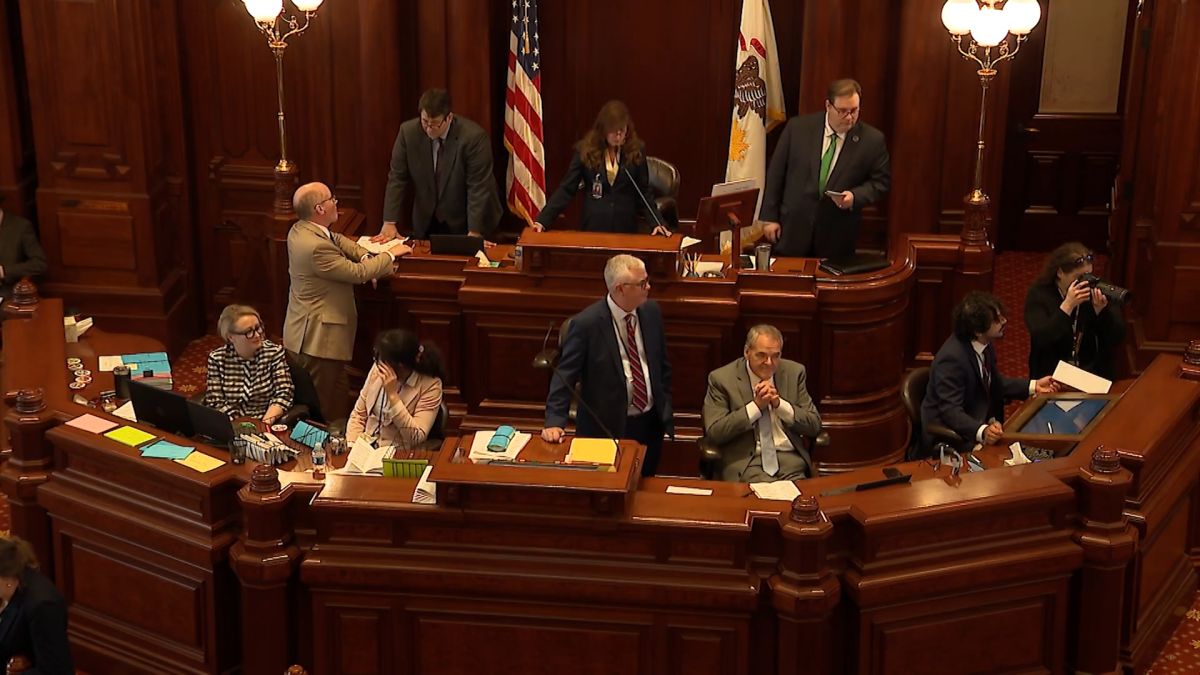
Illinois lawmakers missed a midnight deadline on legislation designed to help keep the Chicago Bears in-state, leaving the team's stadium plans uncertain. A prior PILOT structure that could have saved the Bears over $1 billion effectively died, while a new public-stadium proposal would still require the team to finance construction and lease the venue back from a municipal authority. Indiana continues to offer up to $1 billion in incentives to relocate to Hammond, keeping relocation risk alive.
The key market takeaway is not the stadium politics itself, but the emerging template for how Illinois is trying to preserve optionality without writing a direct subsidy check. A public-authority structure shifts value from the team to landowners, contractors, bondholders, and nearby retail developers while socializing execution risk through tax-exempt financing and eminent-domain authority. That makes the most likely near-term beneficiaries the local real-estate stack around any chosen site, not the franchise; the real loser is any incumbent private property holder in the footprint, because the state is effectively creating a lower-cost capital regime for a politically selected asset class.
Second-order, this is a negative for Cook County tax stability and a modest positive for municipal infrastructure issuance. If the framework advances, it sets up a multi-year wave of quasi-public development financings that can crowd in stadium-adjacent retail, hospitality, and transit spend, but only if lease commitments are locked before bonds are sold. The 35-year lease hurdle is important: it reduces relocation flexibility and creates an all-or-nothing negotiating posture, which increases the probability of a later-stage legal or political unwind rather than a clean approval.
The most important risk is time. The immediate deadline miss matters less than the 2027 delay path, because it preserves leverage for both sides and keeps capital allocation decisions frozen for another election cycle. That favors patience in the next few weeks: headline risk can still produce sharp volatility in local industrials, REITs, and muni-credit spreads, but the fundamental catalyst is months away unless the team issues a hard commitment or a competing state package becomes actionable.
Contrarian view: the market may be underestimating how much the Indiana incentive package functions as leverage rather than a true relocation base case. A site burdened by remediation and stigma is useful in negotiations but may never clear the final political and financing hurdles at an acceptable return. That means the strongest trade may be against overreaction to relocation headlines, while positioning for a longer-duration increase in public subsidy complexity across Midwestern sports/real-estate projects.
AI-powered research, real-time alerts, and portfolio analytics for institutional investors.
Request TrialOverall Sentiment
mildly negative
Sentiment Score
-0.15
