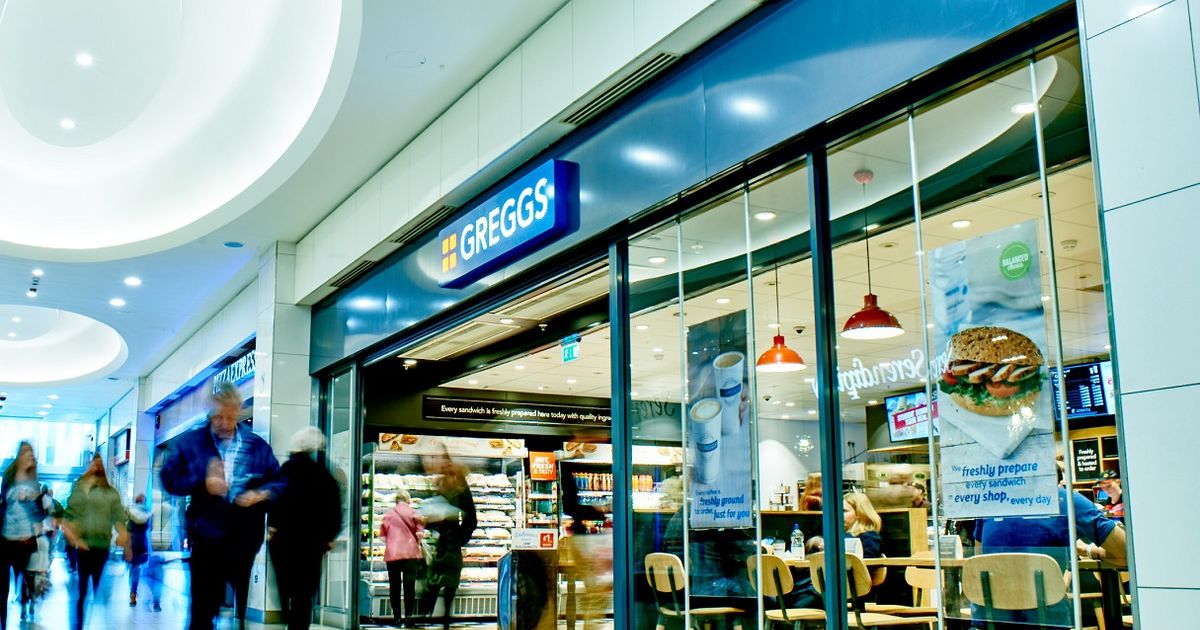
Greggs reported preliminary 2025 sales of £2.15bn, up 6.8% year-on-year with like-for-like (LFL) growth of 2.4% (first nine weeks: total sales +6.3%, LFL +1.6%), which Shore Capital interprets as implying negative LFL volumes through the year and continued volume weakness into 2026. Shore reiterated a 'hold' stance, citing higher government-imposed cost inflation, tougher trading and heavy infrastructure investment that will pressure margins and lead to declining-to-flat EPS while the balance sheet is rebuilt, delaying shareholder-friendly returns such as special dividends.
Market structure: Greggs (LSE:GRG) shows slowing like‑for‑like growth (2.4% FY25; 1.6% in first nine weeks) and Shore’s view of “negative LFL volumes” points to winners being scale operators with pricing power (McDonald’s MCD, Coca‑Cola KO) and national supermarkets (Tesco TSCO.L) that can capture food‑to‑go spend; losers are small food‑to‑go peers and discretionary names with weak balance sheets. Competitive dynamics: modest share gain (visits +0.5pp to 8.6%) masks volume weakness — pricing or mix drove sales, so pricing power is limited and margin recovery likely requires lower input inflation or productivity gains. Supply/demand & cross‑asset: softer footfall reduces demand for fresh bakery inputs (wheat, sugar) marginally; expect upward pressure on corporate credit spreads for weaker retailers and a potential rise in stock implied volatility (GRG) if guidance disappoints; sterling sensitivity modest but correlated to UK CPI/wage news.
Risk assessment: tail risks include a sharper UK consumer downturn (GDP contraction >0.5% YoY), another spike in commodity prices (+15% wheat in 3 months), or supply chain disruption at key bakeries — each could push EPS below Shore’s “flat” outlook (scenario: EPS -10% to -20%). Time horizons: immediate (days) = headline volatility from geopolitics; short (weeks/months) = trading updates and Q1 LFL trends; long (12–24 months) = balance‑sheet rebuild and capex absorption. Hidden dependencies: property lease inflation, timing of infrastructure capex, and dividend policy (special dividends suspended) materially change FCF; catalysts include next trading update, UK CPI/Wage prints, and FY26 capex cadence.
Trade implications: direct: establish a 2–3% portfolio short in GRG.L (12‑month horizon) with a downside target of 10–20% and a hard stop at +10% to limit drawdown. Pair: long MCD (2% weight) or KO (2%) vs short GRG (2%) over 6–12 months to play quality/scale differential; alternatives: buy a 3–6 month put‑spread on GRG (buy 10% OTM, sell 20% OTM) to cap cost if implied vol rises. Sector rotation: reduce UK quick‑service/food‑to‑go exposure by 2–4% and redeploy into global defensive food & beverage (MCD, KO) and UK supermarkets (TSCO.L).
Contrarian angles: consensus may understate upside if commodity deflation and completed capex restore margins within 12–18 months—historical recoveries for well‑known retail brands have produced 15–25% rebounds once volumes stabilise. The current market move (GRG +1.15% on heavy selling elsewhere) is muted, so there’s limited panic pricing; monitor for signs of faster balance‑sheet repair (net cash up >10% YoY or three consecutive months LFL >+2.5%) which would flip the trade and justify covering shorts or buying calls.
AI-powered research, real-time alerts, and portfolio analytics for institutional investors.
Request TrialOverall Sentiment
moderately negative
Sentiment Score
-0.50
