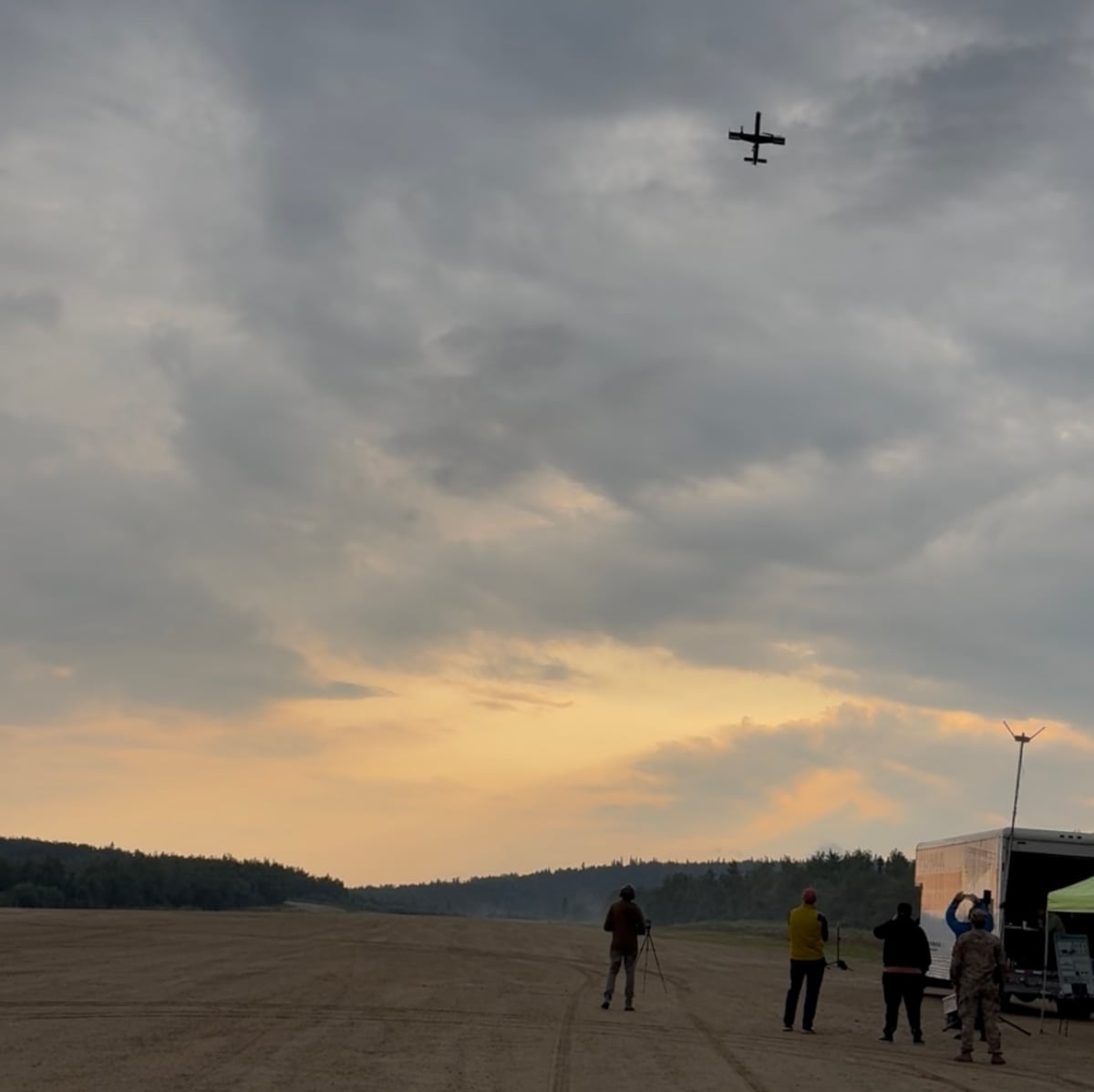
The Defense Innovation Unit's (DIU) recent Project Artemis testing of commercial long-range attack drones in Alaska revealed significant underperformance, particularly under electronic warfare conditions, underscoring the U.S. military's lagging aerial-drone capabilities. Despite Pentagon directives to accelerate acquisition of domestically-produced uncrewed systems, DIU faces a 'valley of death' as military services are reluctant to adopt these solutions, highlighting persistent bureaucratic hurdles and concerns about the readiness of the U.S. drone industrial base to meet critical defense needs.
The Defense Innovation Unit's (DIU) Project Artemis trials in Alaska revealed significant shortcomings in the U.S. domestic drone industry's current capabilities, creating near-term uncertainty for participating firms like AeroVironment (AVAV). The tests, designed to validate long-range attack drones under electronic warfare (EW) conditions, resulted in notable underperformance, with AVAV's prototype reportedly failing to acquire its target while jammed and ultimately crashing. This technical failure is compounded by a critical bureaucratic impediment: DIU has been unable to secure an 'acquisition partner' within the military services for the project, placing it in the proverbial 'valley of death' between development and procurement. The situation suggests that despite high-level directives from the Defense Secretary to streamline drone acquisition, deep-rooted institutional hurdles and a potential capability gap persist. The commentary from DIU officials, stating the U.S. is 'really far behind' its competitors, underscores that the path from strategic intent to fielded, at-scale drone technology remains fraught with both technical and procedural risks.
AI-powered research, real-time alerts, and portfolio analytics for institutional investors.
Overall Sentiment
strongly negative
Sentiment Score
-0.70
Ticker Sentiment
