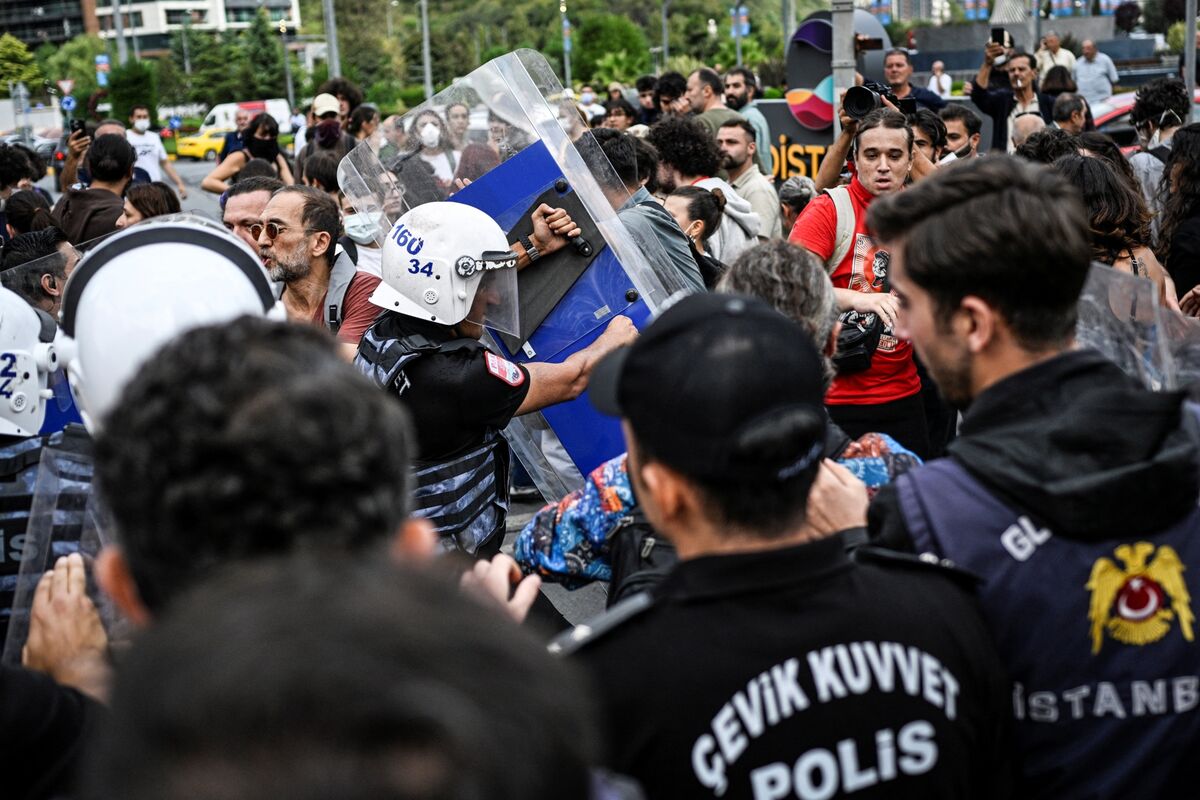
Turkish police deployed tear gas against protesters, including Republican People's Party (CHP) officials, outside the opposition's Istanbul headquarters on Monday. This action occurred as demonstrators attempted to prevent a court-imposed trustee from seizing control of the CHP's Istanbul branch, signaling escalating political tensions and potential rule of law concerns within Turkey, which could impact the country's investment climate.
A significant escalation in political tensions in Turkey is underway, evidenced by riot police using tear gas on protesters, including officials from the main opposition Republican People’s Party (CHP), outside their Istanbul headquarters. The confrontation was triggered by demonstrators attempting to prevent a court-imposed trustee from assuming control of the party's key Istanbul branch. This event highlights a deepening political standoff and raises material concerns about the rule of law and the separation of powers within the country. For investors, the use of judicial mechanisms to intervene in the operations of a major political opposition party signals a heightened level of country risk. While the immediate market impact is assessed as low, such developments can erode investor confidence by creating an unpredictable legal and political environment, potentially impacting the perceived stability of Turkish assets and the security of foreign capital.
AI-powered research, real-time alerts, and portfolio analytics for institutional investors.
Request DemoOverall Sentiment
neutral
Sentiment Score
0.00
