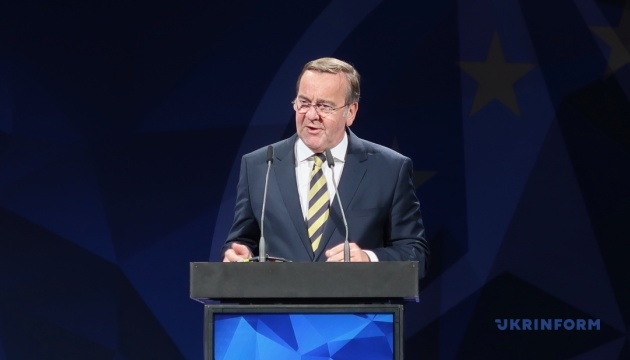
German Defence Minister Boris Pistorius expressed skepticism about deploying Bundeswehr troops to Ukraine and said he was not directly involved in drafting a Dec. 15 joint European statement that contemplated a multinational force and potential armed deployments. Pistorius flagged unresolved issues such as Bundestag mandates, command structures and legal frameworks, underscoring continued political and operational uncertainty that could delay any concrete troop commitments and shape future European defence planning and related sector exposure.
Market structure: Ambiguity over German troop deployment shifts demand from immediate kinetic exposure to longer-dated procurement and air-defence programs. Winners are large, export-capable defence primes (Rheinmetall RHM.DE, Hensoldt HAG.DE, Lockheed LMT, BAE BA.L) and systems integrators that can deliver modular air-defence/ISR quickly; losers are SMEs and domestic incumbents tied to immediate Bundeswehr buy-in. Expect procurement timelines to stretch 3–18 months, concentrating pricing power with large-cap primes and increasing bid premiums by an estimated 5–15% on urgent contracts.
Risk assessment: Tail risk includes a NATO escalation if political consensus breaks—low probability (<15% over 12 months) but high impact (oil +$20/bbl, EUR down 5–8%, defence equities +30–50%). Short-term (days–weeks) volatility will be driven by political statements and Bundestag votes; medium-term (3–12 months) by concrete budget allocations (watch for >€10bn signal); long-term (1–3 years) structural rearmament across the EU. Hidden dependency: Germany’s internal politics act as a gatekeeper—if Germany abstains, supply shifts to UK/Fr/Poland, prolonging delivery risk and driving premium on secondary suppliers.
Trade implications: Tactical longs in large, liquid defence names and sector ETFs on 3–12 month horizon, hedged with energy and FX tail protection. Use call spreads to cap premium and put spreads on EUR or long Brent call spreads for escalation protection; reprice positions if Bundestag votes pro-deployment or EU commits >€10bn within 60 days. Position sizing should be modest (2–5% aggregate) given event uncertainty and asymmetric tail risks.
Contrarian angles: Consensus underprices execution risk and timing — markets price a near-term defence rerating but often ignore multi-quarter procurement delays; this favors buying large primes with backlog and export channels vs small domestic contractors. Historical parallel: 2014–16 post-Crimea saw defence primes outperform over 12–24 months while smaller suppliers lagged due to procurement lags. Unintended consequence: political reluctance by Germany could accelerate bilateral procurement (France/UK/Poland), benefiting exporters — overweight globally diversified primes over Germany-only midcaps.
AI-powered research, real-time alerts, and portfolio analytics for institutional investors.
Request DemoOverall Sentiment
neutral
Sentiment Score
-0.10
