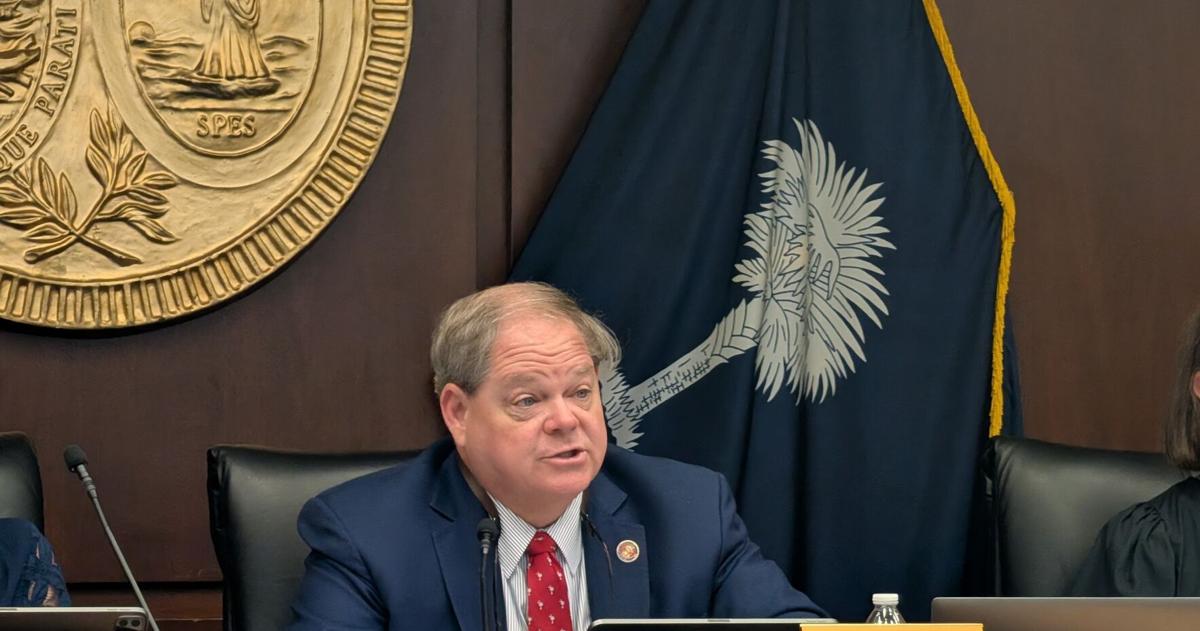
South Carolina lawmakers are preparing for a possible special session to redraw the state’s seven congressional districts, after an initial redistricting push was rejected in the state Senate. Gov. Henry McMaster has not formally announced a session, but leadership expects one could come immediately after adjournment, with the goal of pushing a map that could help Republicans target all seven seats ahead of the 2026 midterms. The issue is politically significant but has limited direct market impact aside from potential spending for a special election and administrative costs.
This is less about South Carolina and more about whether party leadership can still force through map changes under compressed procedural timelines. The market-relevant read-through is on the durability of “state-level institutional vetoes”: if a small number of holdouts can stall a redistricting push today, the same dynamic could reappear in other states where partisan map changes are being used as a 2026 seat-maximization tool. That matters because the national effect is not linear—one extra safe seat in a handful of states can have outsized value in a House this close to evenly split.
The second-order risk is that a rushed redraw invites litigation and administrative friction, which can delay candidate filing, confuse absentee voters, and increase the odds of court-ordered interim maps. The timeline is the key catalyst: days matter for legislative procedure, but months matter for election implementation. Any special election or calendar shift creates operational winners and losers: local election vendors, ballot logistics, and legal services benefit; campaigns and down-ballot incumbents with weak field operations are hurt.
Contrarian view: the consensus may be overpricing the certainty of a Republican gerrymander payoff. If the process becomes visibly transactional, it can harden resistance from institutional Republicans who dislike ad hoc mapmaking and from courts that are sensitive to “communities of interest” arguments. The more the effort looks like a last-minute power grab, the higher the chance that the net result is delay rather than durable seat gain, which is a negative for headline-chasing political catalysts but positive for firms exposed to election administration spending. The trade is therefore not on partisan outcome alone, but on procedural chaos and legal drag.
In the cleanest expression, this is a short-duration volatility event rather than a directional macro trade: the edge comes from timing uncertainty and litigation optionality, not from the redistricting outcome itself. If a special session is called immediately, expect a 2-6 week window of elevated political/legal headlines; if it stalls, the risk shifts to judicial intervention and calendar compression into late summer.
AI-powered research, real-time alerts, and portfolio analytics for institutional investors.
Request DemoOverall Sentiment
neutral
Sentiment Score
0.00
