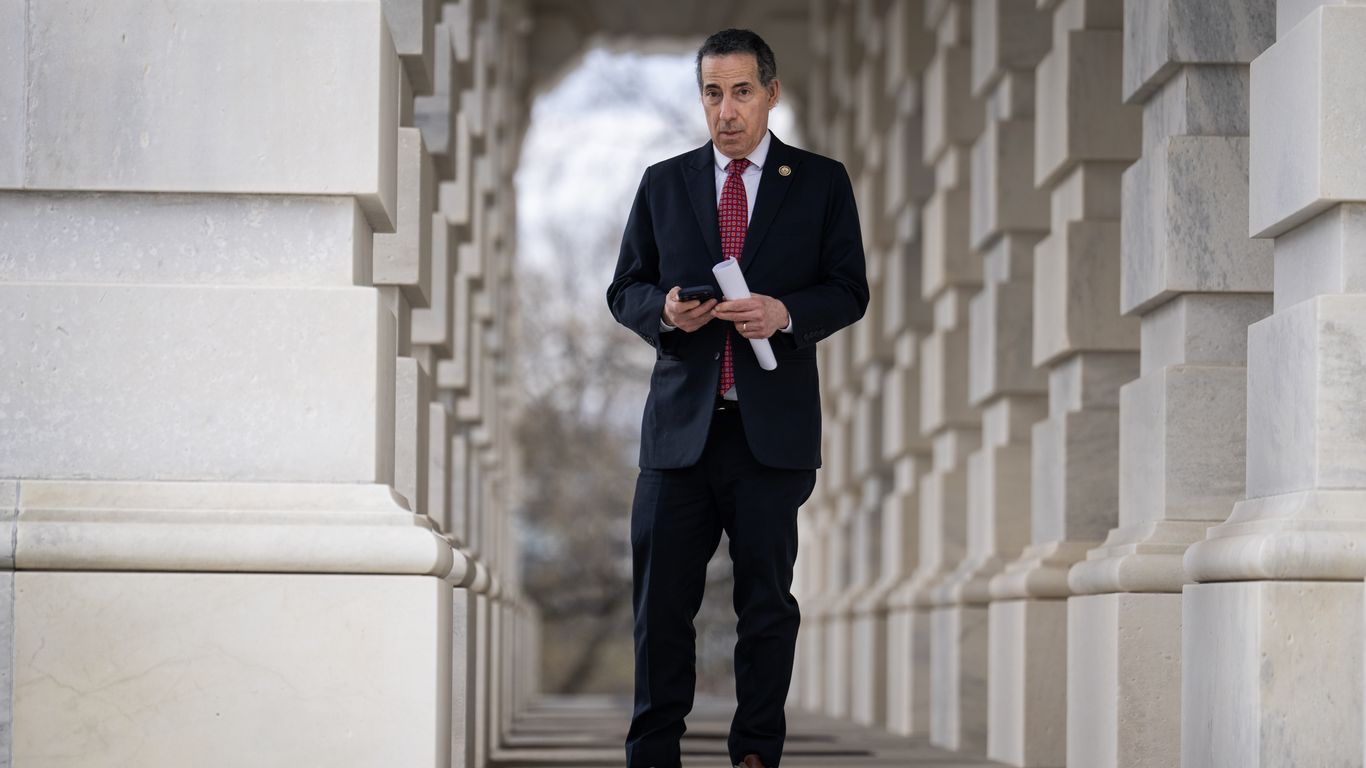
House Democrats introduced a bill to create a 17-member commission to assess whether the 25th Amendment should be used to remove President Trump, but the measure faces steep odds in a Republican-controlled Congress and likely veto. Even if enacted, any temporary removal would still require Vice President Vance's approval and a subsequent two-thirds vote in both chambers for permanent removal. The proposal underscores rising political tension but is unlikely to have direct near-term market impact.
The market implication is not the bill itself, but the widening probability distribution around executive continuity risk. Even a low-probability institutional challenge to a sitting president raises the tail risk premium for sectors sensitive to policy stasis, regulatory discretion, and federal procurement timing; that shows up first in Washington-sensitive names, not the broad indices. The cleaner trade is on volatility of policy expectations rather than on “removal” odds, which remain structurally low given the veto and Senate thresholds.
Second-order effects are more interesting than headline politics. Any sustained escalation in removal talk increases the odds of a more defensive White House posture, which can accelerate personnel churn, delay agency decisions, and push more policy into courts; that is negative for industries that rely on fast administrative approvals, antitrust forbearance, or tariff signaling. It also modestly benefits legal defense, government relations, and political media ecosystems because uncertainty itself becomes monetizable.
The contrarian read is that the move may be underpricing institutional fatigue: repeated impeachment/25th Amendment chatter can dull market sensitivity unless it translates into Cabinet defections or Vice Presidential distance. The real catalyst is not passage of the bill but any shift in elite Republican signaling over the next 2–8 weeks; absent that, this likely fades into noise. If the rhetoric persists, expect higher short-dated implied volatility around policy-exposed sectors and a relative bid for assets whose earnings are insulated from federal decision-making.
AI-powered research, real-time alerts, and portfolio analytics for institutional investors.
Request TrialOverall Sentiment
mildly negative
Sentiment Score
-0.20
