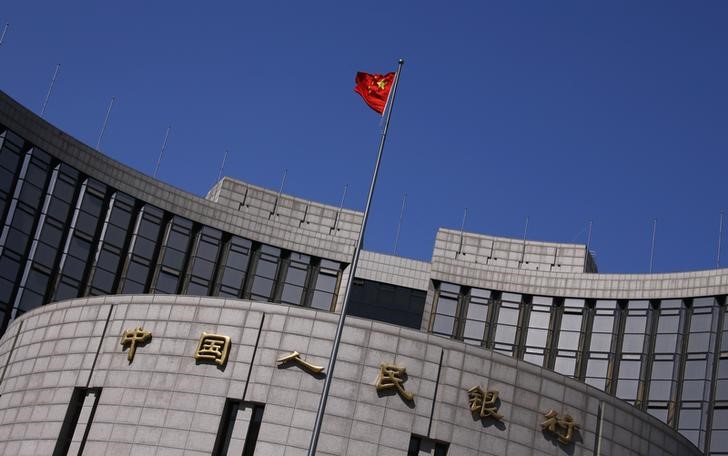
China's central bank kept the one-year loan prime rate unchanged at 3.0% and the five-year LPR at 3.5%, marking a 13th straight month of no change. The decision reflects a cautious policy stance as officials balance support for a fragile recovery against financial stability concerns, with manufacturing holding up but consumer spending and housing still weak. Markets now appear to expect targeted support rather than broad rate cuts in the near term.
The more important signal here is not the unchanged policy rate, but the widening gap between price stability optics and real-economy weakness. Keeping broad rates pinned while leaning on targeted support usually extends the life of stressed sectors rather than reviving aggregate demand, which means the market can stay bifurcated: export manufacturers and policy-sensitive state-linked borrowers outperform while domestically exposed consumption, developers, and smaller private lenders remain under pressure. That is a recipe for lower dispersion, not a clean beta rally.
For equities, the second-order effect is that “liquidity support” increasingly becomes a stock-picking environment instead of a macro lift. If authorities avoid a generalized easing cycle, duration-sensitive property and consumer recovery trades are likely to keep underperforming, while beneficiaries are the companies with direct access to policy credit, refinancing channels, or external demand. In practice, this favors quality balance sheets and exporters over domestic cyclicals that need household confidence to turn first.
The contrarian read is that the market may be underpricing how long this can persist without a rate cut: if housing and consumption stay weak into the next 1-2 quarters, targeted measures may prove insufficient and force a broader easing impulse later. That creates a setup where near-term downside is concentrated in leverage-heavy domestic beneficiaries, but 3-6 month optionality improves for rate-sensitive recoveries if policymakers ultimately pivot. The key catalyst is not the next rate decision, but whether transmission tools actually improve bank lending volumes and mortgage demand by the next data print.
AI-powered research, real-time alerts, and portfolio analytics for institutional investors.
Overall Sentiment
neutral
Sentiment Score
-0.05
Ticker Sentiment
