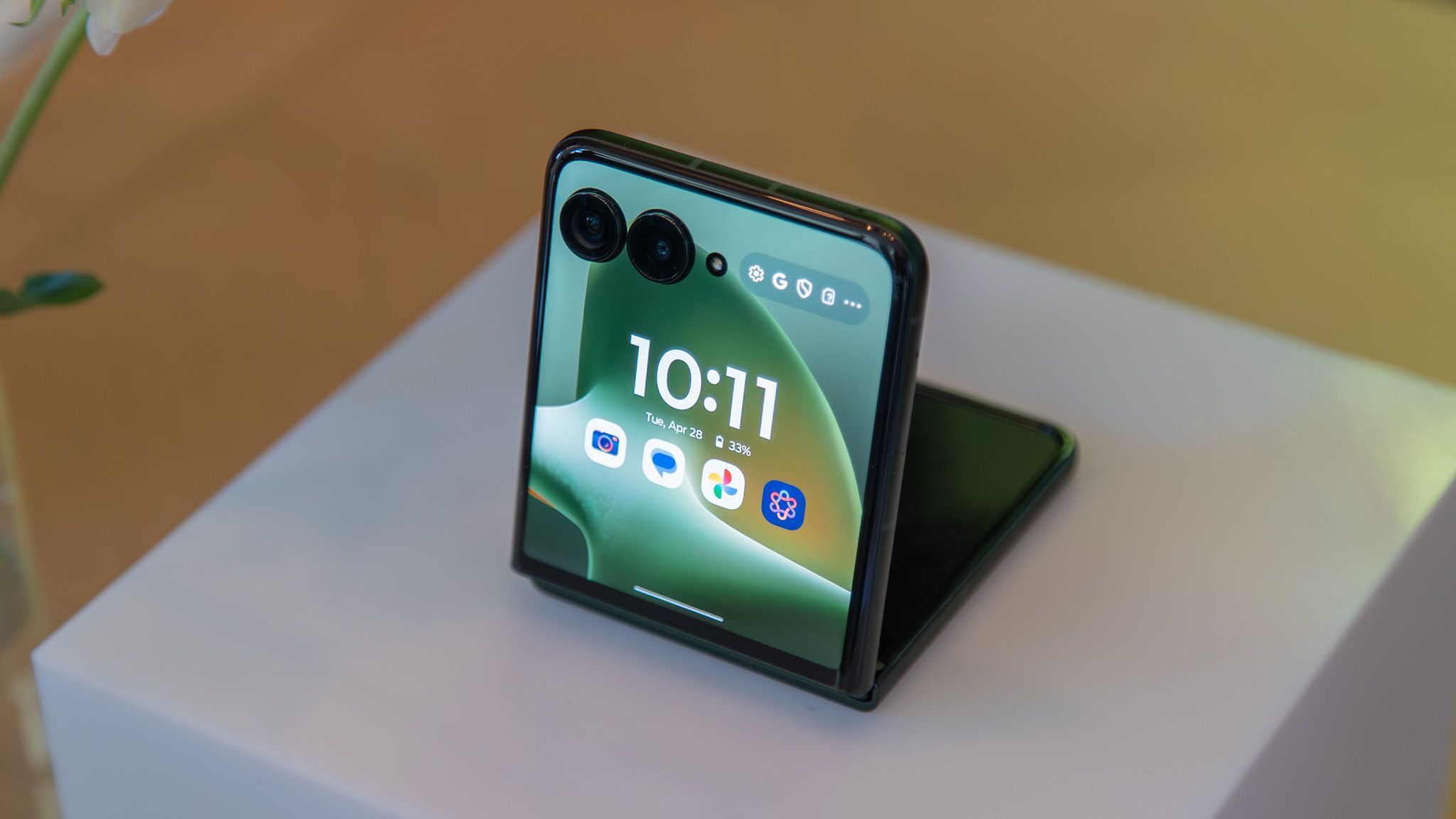
AT&T is offering the Motorola Razr Plus (2026) for $4.43 per month over 36 months with a new unlimited line, no trade-in required, though new customers must pay a $35 activation fee. The phone carries a $1,044.99 promotional total versus a usual $1,099.99 price for the 256GB model. The deal is consumer-facing and promotional in nature, so it is unlikely to move markets materially.
This is less a handset story than a carrier-acquisition subsidy with a hardware headline attached. AT&T is effectively eating a meaningful portion of device economics to lock in incremental postpaid lines, which is rational if churn reduction and service ARPU more than offset the promo cost over the 36-month term. The second-order effect is that handset vendors become increasingly dependent on carrier-led financing and promotion cycles rather than pure product differentiation, compressing pricing power for everyone in the Android foldable stack. For QCOM, the implication is modestly positive but not from near-term unit upside; the real value is mix durability and ecosystem normalization. Foldables still matter less for volume than for signaling premium Android demand, but promos like this reduce adoption friction and help keep high-end Android attach rates from leaking to iPhone. The risk is that the 2026 model being an incremental refresh caps the urgency of replacement demand, so the demand pull may be front-loaded into new-line activations rather than a broad upgrade cycle. For T, the trade works only if this promotion improves net adds without forcing a wider subsidy war. The key variable over the next 1-2 quarters is whether competitors match with similar no-trade-in offers, which would convert this from an acquisition win into a margin erosion event. If rival carriers stay disciplined, this is a small but real positive for postpaid subscriber quality; if they respond, the industry could be forced into a more expensive promotional cadence just as handset replacement cycles remain soft. The contrarian view is that the best outcome for carriers may actually be mediocre device enthusiasm: a device compelling enough to sign a line, but not compelling enough to trigger a costly upgrade wave across the base. That supports T more than it supports the handset maker. The market may be overestimating the importance of the foldable launch itself and underestimating how much of the economics live in the carrier contract, activation fee, and churn math.
AI-powered research, real-time alerts, and portfolio analytics for institutional investors.
Request DemoOverall Sentiment
mildly positive
Sentiment Score
0.28
Ticker Sentiment
