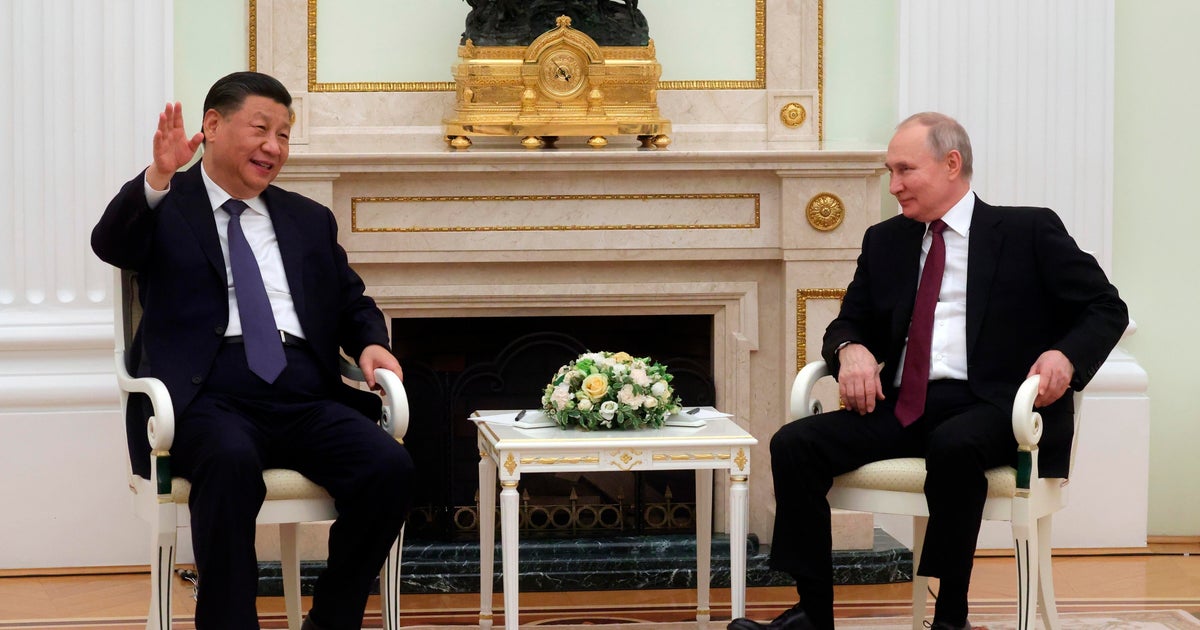
Putin is scheduled to meet Xi Jinping in Beijing on May 19-20, with the leaders set to discuss bilateral ties, economic cooperation, and key international issues. The visit comes just after Trump's China trip and underscores the continued deepening of China-Russia relations amid Western sanctions on Moscow and the war in Ukraine. Markets may view the meeting as a modest geopolitical signal rather than an immediate catalyst, though it reinforces sanctions and trade-related overhangs.
The sequencing matters more than the optics: a high-profile China-Russia bilateral immediately after a U.S.-China summit reduces the odds that Beijing materially distances itself from Moscow in the near term. That keeps the sanctions regime leaky, which is structurally negative for any trade built on tighter enforcement assumptions and supportive for China-linked intermediaries that can facilitate commodity, shipping, and industrial inputs outside the Western system. The second-order effect is not a headline risk-off event, but a slow bleed in efficacy of export controls and financial pressure on Russia.
For markets, the key implication is that U.S. leverage is being tested on two fronts at once: trade bargaining with China and coercive diplomacy around Taiwan. If the U.S. follows through on the delayed arms sale, the trade is less about near-term defense earnings and more about a higher probability of sanctions escalation, accelerated munitions replenishment, and increased demand for asymmetric deterrence systems over legacy platforms. If the sale slips again, it will read as weakness, which could embolden Beijing on Taiwan and compress the risk premium in U.S.-China confrontation hedges.
The contrarian view is that the market may be overestimating the durability of the China-Russia alignment as a purely strategic bloc. Russia’s dependence is real, but Beijing has little incentive to absorb direct sanction blowback indefinitely, especially if Washington offers selective concessions on trade. That creates a medium-term path where rhetoric stays warm but transaction intensity stagnates, which would be bearish for the most sanction-sensitive rerating trades and bullish for companies with diversified Asia exposure rather than pure China-Russia linkage.
Catalyst window is days to weeks for headline volatility around the Beijing meetings, but months for actual policy transmission through tariffs, arms sales, and sanctions enforcement. The main tail risk is a sudden escalation on Taiwan or a fresh export-control package that forces Chinese institutions to choose sides, which would widen spreads in defense, semis, and shipping. Absent that, the more likely outcome is incremental deterioration in U.S. bargaining power rather than a discrete market shock.
AI-powered research, real-time alerts, and portfolio analytics for institutional investors.
Request DemoOverall Sentiment
neutral
Sentiment Score
-0.05
