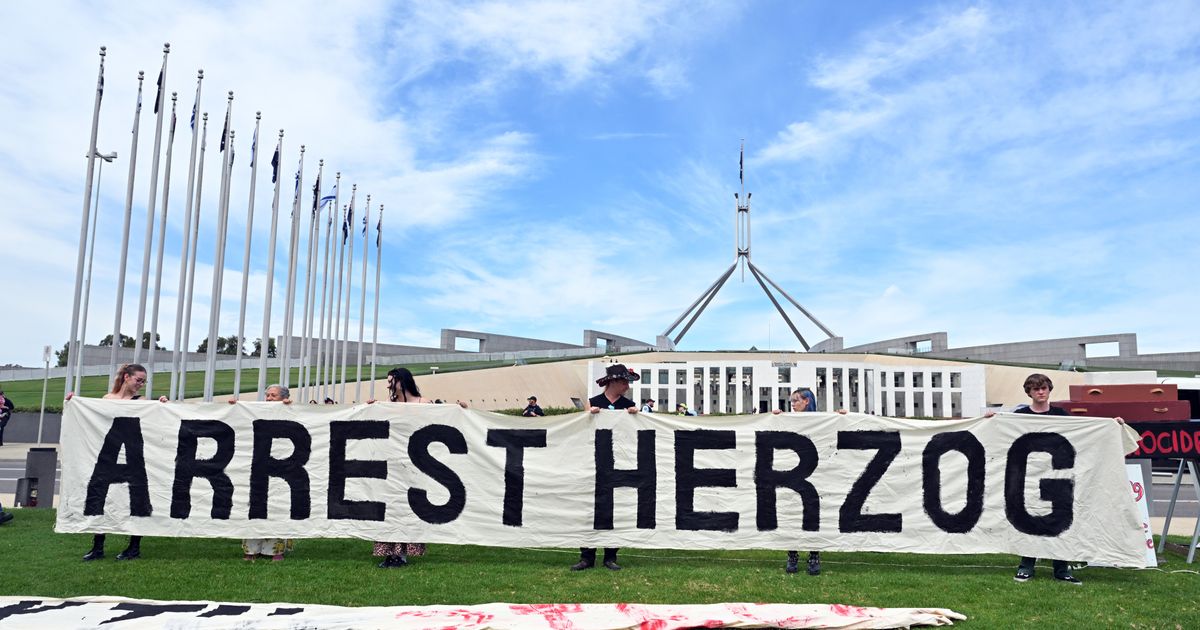
Australia's prime minister pressed visiting Israeli President Isaac Herzog to pursue criminal charges after a April 1, 2024 Israeli airstrike on a World Central Kitchen aid convoy in Gaza killed seven people, including Australian aid worker Zomi Frankcom; an Australian inquiry attributed the strike to Israeli military procedural failures. The request and Herzog's visit have provoked large protests, accusations of incitement and strained bilateral relations, raising short-term geopolitical and political risk around Australia-Israel ties and domestic community tensions that could affect policy and diplomatic cooperation.
Market structure: Near-term winners are defense and ISR vendors (Israel-focused ESLT and global primes LMT/RTX/NOC) and traditional safe-havens (gold, Brent) as geopolitical risk premiums rise; losers include Australian-exposed consumer and travel assets and AUD liquidity-sensitive carry trades. Competitive dynamics favor niche ISR/surveillance suppliers (Elbit, small-cap Israel tech) that can win accelerated procurement and exports; larger primes should see only modest share gains but improved pricing power on classified systems. Cross-asset: expect modest moves — safe-haven bid into US Treasuries and JPY, downward pressure on AUD, 2–5% upside risk to Brent on escalation, and vol spikes in relevant equities/options for 1–4 weeks.
Risk assessment: Tail risks include regional escalation or reciprocal cyber/terror acts (low probability <10% but high impact) that would drive oil >$90/bbl and equities sharply lower within days; legal escalation (Australian criminal referrals within 1–6 months) could sustain reputational and export controls risk for Israel-linked contractors. Hidden dependencies: defense capex depends on budgets and US diplomatic positioning — a single Australian/European political action unlikely to reprice US defense long term. Catalysts to watch: formal criminal filing(s) within 30–90 days, Israeli government response, and any US policy statements that could widen sanctions or procurement shifts.
Trade implications: Tactical, small-size plays favored — use options to express event risk while limiting downside. Prefer 1–2% tactical long allocations to Israel-specific ISR (ESLT) and 1–2% to broad defense exposure (ITA or LMT/RTX basket) via 3–6 month call spreads; add 0.5–1% long gold (GLD) and 0.5–1% Brent call spreads if Brent breaches $85/bbl. Short AUD (FXA or FX forward) 1% if AUDUSD <0.67 targeting 3–5% fall; trim on stabilizing headlines or if yields compress.
Contrarian angle: The market may overstate persistent fallout; prosecution demands are politically impactful but unlikely to cause broad sanctions — defense equities could be overbought on headline volatility and mean-revert in 3–6 months. Use mean-reversion pair trades (long short-dated calls on ESLT vs short-dated calls on broad defense ETF ITA) to capture Israel-specific premium without broad sector beta. Historical parallels (short-lived oil/defense spikes around prior Gaza escalations) suggest cap gains of 8–20% are possible in weeks, but risk of rapid giveback argues for tight stops (6–8%) and option-defined risk.
AI-powered research, real-time alerts, and portfolio analytics for institutional investors.
Request DemoOverall Sentiment
moderately negative
Sentiment Score
-0.42
