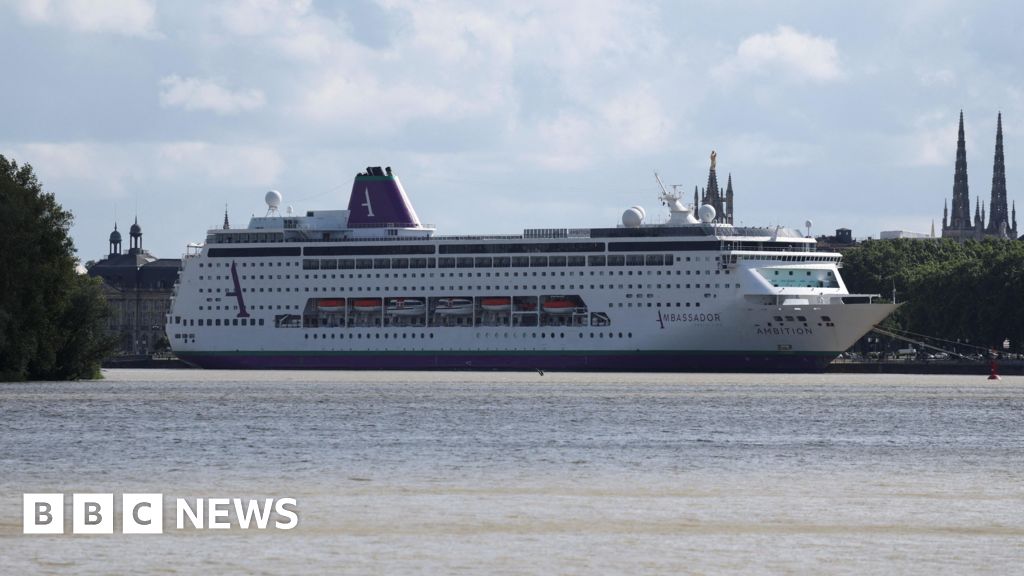
More than 1,000 passengers on Ambassador Cruise Line’s Ambition were affected by a gastrointestinal illness outbreak, with 48 passengers and one crew member symptomatic as of 11:00 BST Wednesday. Disembarkation in Bordeaux was suspended while French health authorities tested samples and implemented precautionary sanitation measures. The incident is operationally negative for the cruise line and broader travel sector, but appears unlikely to have major market-wide impact.
The immediate market read is not on the cruise operator alone, but on the broader “group travel under contagion” complex. Outbreaks like this tend to hit near-term booking velocity for all cruise brands, especially on itineraries with dense embarkation/disembarkation points, because the reputational damage travels faster than the pathogen and can depress conversion for several weeks even if the incident is contained in days. The second-order winner is the onshore travel substitute set — rail, private transfers, and higher-end land tours — as risk-averse retirees and group travelers reallocate discretionary spend away from enclosed, shared-environment vacations.
For the cruise ecosystem, the larger issue is operating leverage to perception. The incremental cost of enhanced sanitation is trivial versus revenue, but the revenue risk is asymmetric because a single highly publicized event can trigger elevated cancellation rates across sailings that have nothing to do with the ship in question. That argues for a wider trading lens: not just the operator, but suppliers with exposure to cruise demand elasticity, including port services, shore excursions, and some hospitality names in embarkation hubs, which can see softer same-day spend if shore leave is suspended.
The health-angle takeaway is that the event is more likely to be treated as an operational hygiene problem than a systemic public-health event, limiting duration. The key catalyst is whether labs confirm norovirus-type spread; that would imply a short-lived but recurring risk for the sector rather than a one-off idiosyncratic issue. If confirmation comes quickly and no broader cluster emerges, the equity reaction should fade within days; if testing is delayed or additional onboard cases rise, expect a wider de-risking over 2-4 weeks as investors price in schedule disruption and reputational drag.
Contrarian view: the consensus may overestimate the earnings impact and underestimate how resilient cruise demand has been post-pandemic. Historically, these incidents create sharp but brief drawdowns, and operators often recover load factors once the story exits the news cycle. That makes this more attractive as a relative-value short than an outright structural bearish bet, particularly if broader leisure equities are being sold in sympathy.
AI-powered research, real-time alerts, and portfolio analytics for institutional investors.
Request DemoOverall Sentiment
mildly negative
Sentiment Score
-0.35
