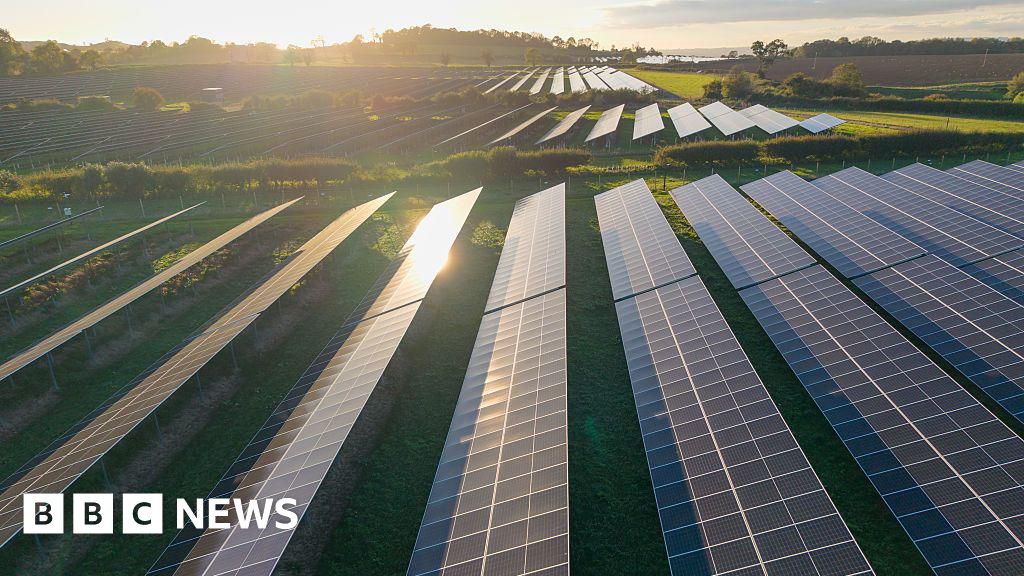
Great Britain set a renewables generation record in 2025 as wind, solar, hydro and biomass produced over 127 TWh (vs 119 TWh in 2024); wind supplied >85 TWh (~30% of generation) and solar rose to >18 TWh (~6%), up ~4 TWh year‑on‑year aided by the UK's sunniest year and new rooftop and large-scale solar additions. However gas generation also increased to >77 TWh (~27%, from 72 TWh in 2024), pushing average grid carbon intensity to 126 gCO2/kWh and underscoring risks to the government's 95% clean power-by-2030 target without faster deployment of storage, nuclear and grid upgrades — a dynamic that has modest implications for energy and renewables investments rather than immediate broad market disruption.
Market structure: Rapid growth in wind and especially solar (solar +~4TWh y/y; renewables >127TWh in 2025) shifts marginal-cost dynamics — renewables exert downward pressure on wholesale power prices during high‑output periods while increasing volatility when intermittent. Winners are grid owners/operators (National Grid NG.L) and large-scale renewables owners (SSE.L, Iberdrola/IBR.L), plus storage and inverter manufacturers; losers are merchant gas peakers and retailers with generation exposure (Centrica CNA.L) as spark spreads compress and curtailment/connection risk rises. Risk assessment: Key tail risks include a political/regulatory reversal (subsidy/tariff changes) or slower-than-expected rollout of utility-scale storage/grid upgrades causing sustained curtailment and stranded project value. Immediate (days) risk is price volatility driven by weather; short-term (3–12 months) is capex/newsflow risk around grid upgrade timelines; long-term (3+ years) is technology mix — insufficient storage or nuclear will keep gas >20% share, preventing the 95% clean-power target. Hidden dependency: interconnectors and European imports materially change GB gas burn in cold/low-renewable spells. Trade implications: Operationally, buy regulated-grid exposure and storage/systems players; avoid or hedge merchant gas generators. Prefer long NG.L and SSE.L (grid + contracted renewable cashflows) and selective long positions in storage/MPPT hardware (Fluence FLNC; SolarEdge SEDG; First Solar FSLR) via call spreads to limit premium. Implement pair trades (long renewables owner, short gas-exposed generator) and use calendar spreads in UK power futures to monetize increasing day/night volatility. Contrarian angles: Consensus understates balance-sheet strain from distributed solar (250k rooftops in 2025) and resulting network tariff reallocation — political backlash could raise grid charges, benefiting regulated owners but hurting merchant returns. Don't assume falling bills; short-term bills could rise if grid capex is socialized. Historical parallel: Germany’s Energiewende where renewables growth outpaced grid upgrades, producing years of curtailment and higher network charges.
AI-powered research, real-time alerts, and portfolio analytics for institutional investors.
Request DemoOverall Sentiment
mildly positive
Sentiment Score
0.12
