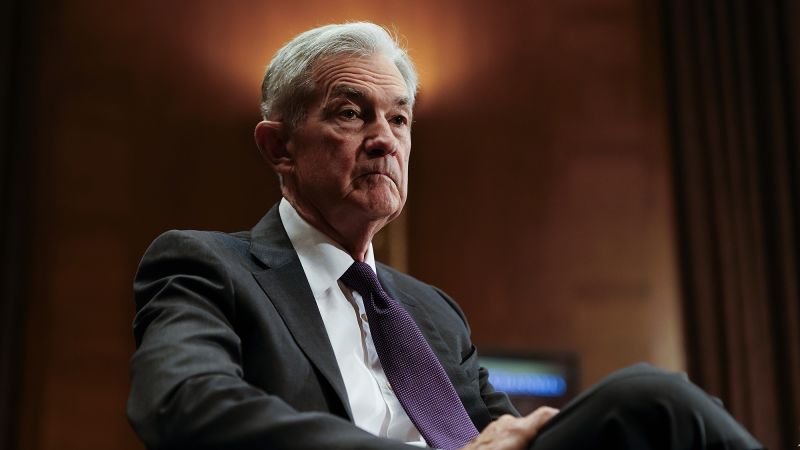
The Fed is expected to hold its benchmark rate unchanged again at 3.5%-3.75% at 2 p.m. ET, while markets are pricing in a 100% chance of no move. Attention is on Jerome Powell’s likely final meeting, Kevin Warsh’s confirmation vote, and the Supreme Court case over Lisa Cook’s removal, all against a backdrop of elevated oil prices with Brent above $116 and U.S. crude at $104.30. The combination of Fed policy, Middle East conflict, and presidential pressure on the central bank gives this broad market significance.
The market’s immediate read is “no hike, no surprise,” but the more important implication is that policy uncertainty is now being price-discovered through personnel rather than macro data. A Fed chair transition under overt White House pressure raises the odds of a steeper, faster easing path than the market currently discounts, which should compress front-end real yields even if inflation stays sticky. That is bullish duration on the surface, but the first-order winner is likely the long-end safety bid rather than the most rate-sensitive cyclicals, because investors will demand a premium for institutional independence risk.
The bigger second-order effect is higher term premium and lower confidence in policy reaction function. If the market begins to treat Fed communications as politically contingent, you can get a bull-steepening move only if growth weakens; otherwise the curve can steepen bearishly on inflation credibility concerns. That is a toxic mix for banks, housing, and small caps: lower policy rates help funding costs, but a credibility shock tends to reprice inflation breakevens and keep mortgage rates elevated relative to Fed funds.
Energy is the near-term swing factor. Elevated crude is doing the Fed’s work for it by tightening real household purchasing power and complicating any dovish pivot; that keeps the bar high for multiple expansion in broad equities. The contrarian setup is that markets may be underestimating how quickly a political shift at the Fed could re-ignite “lower-for-longer” positioning in growth assets even as the underlying inflation regime remains unresolved.
For equities, this is less about the decision itself and more about the next 2-6 weeks of messaging risk: any sign Powell resists political pressure supports duration assets; any sign the successor process accelerates perceived easing should weaken the dollar, flatten real rates, and favor mega-cap duration names over domestic cyclicals. The litigation angle on Fed independence is the true tail risk: if it moves against Cook, the market could begin pricing a structural regime change in which policy is treated like a contested executive branch function, not an independent central bank.
AI-powered research, real-time alerts, and portfolio analytics for institutional investors.
Request DemoOverall Sentiment
neutral
Sentiment Score
-0.05
Ticker Sentiment
