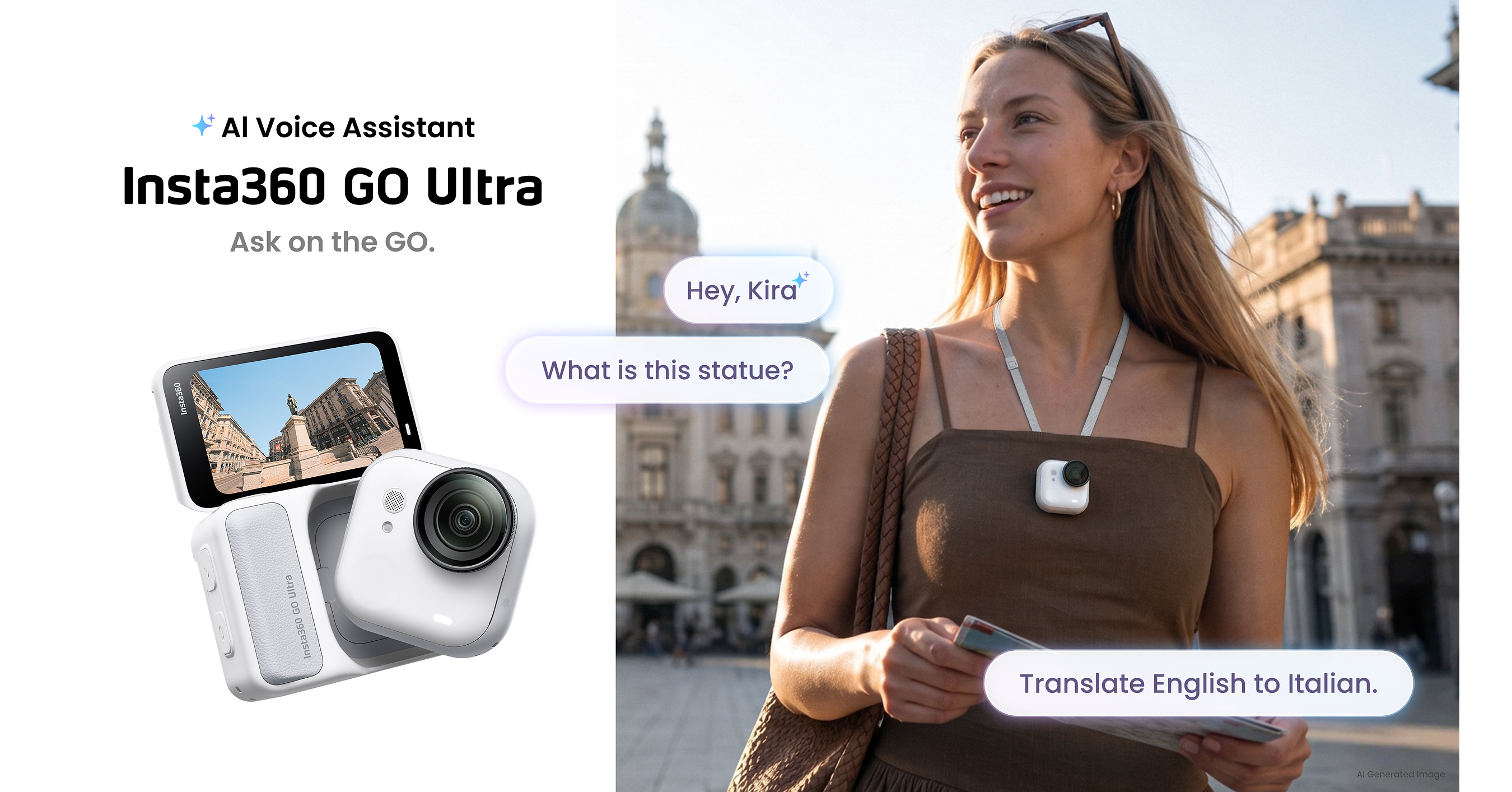
Insta360 announced a major software update for its GO Ultra wearable camera: an AI Voice Assistant powered by Google Gemini offering real-time translation, voice Q&A, and photo Q&A. The update is rolling out via app software on July 29, 2026, and adds voiceprint recognition to keep responses focused in noisy environments. Overall, the product strengthens the wearable’s travel and storytelling functionality, though it is a software feature with limited direct indications of near-term financial impact.
This is a distribution win for Google more than a near-term earnings event. Getting Gemini embedded into a third-party, battery-constrained wearable is useful proof that Google’s multimodal stack can function as a default assistant layer outside the phone, which matters strategically for consumer AI mindshare versus Apple and OpenAI. The financial translation is weak today, but the optionality is real if OEMs start treating Gemini as the standard interface for camera-first wearables, translation, and AR-adjacent devices.
The second-order effect is competitive pressure on legacy hardware names and on phone-based travel apps: if the camera becomes the interface for translation, search, and contextual Q&A, engagement shifts away from standalone apps and toward the device owner with the best on-device AI stack. That is mildly negative for smaller action-camera players and support apps, but only if usage proves sticky; otherwise this is a feature-led novelty that won’t move replacement cycles. The more important structural read is that Google is building a portfolio of consumer-facing endpoints for Gemini, which could improve retention and future monetization across Android, Pixel, and wearables.
The main tail risk is privacy and trust. Always-on voice recognition plus photo interpretation on a wearable camera raises more friction than a standard chatbot, so any consumer backlash or regional regulatory tightening could slow adoption quickly. Over the next 1-3 months, watch activation/retention data and OEM follow-through; over 6-18 months, the thesis breaks if Gemini remains a demo feature rather than becoming a default assistant in higher-volume devices. Falsifier: no measurable partner expansion, or signs Google is forced to constrain features on privacy/cost grounds.
AI-powered research, real-time alerts, and portfolio analytics for institutional investors.
Request DemoOverall Sentiment
mildly positive
Sentiment Score
0.25
Ticker Sentiment
