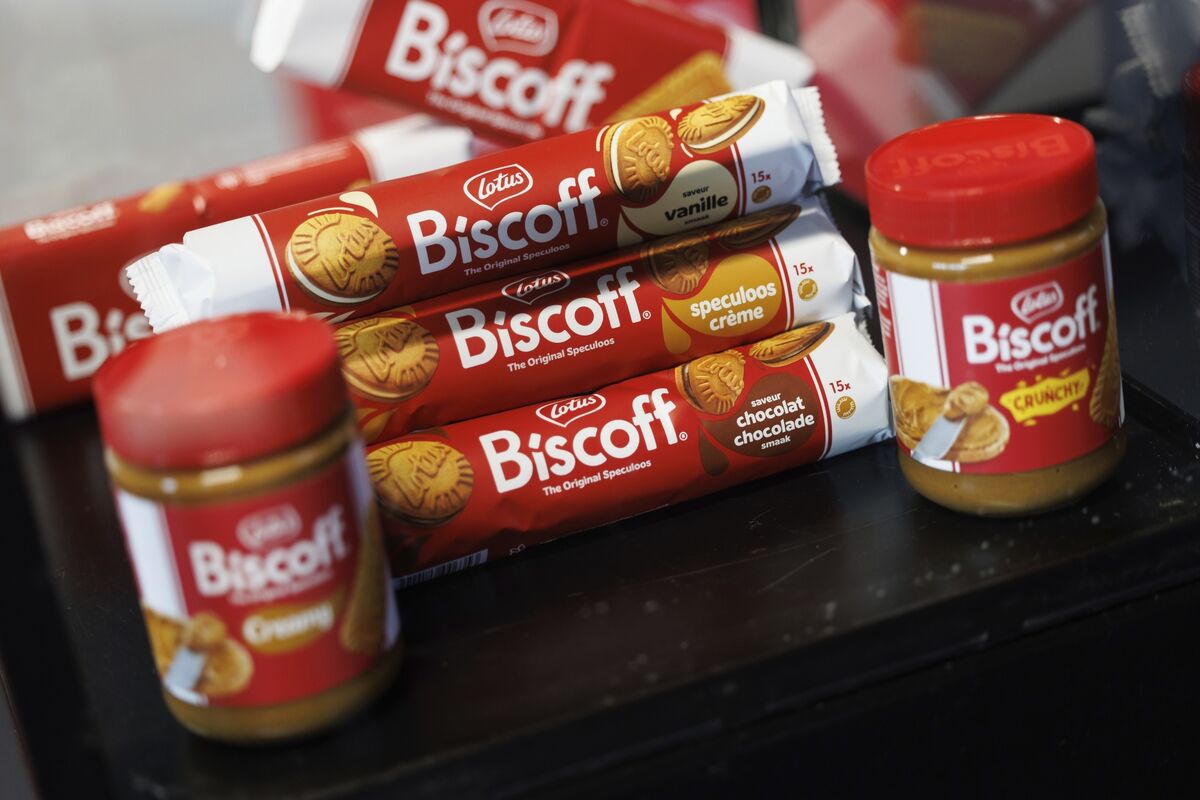
Lotus Bakeries NV shares are up 47% year-to-date and nearly 590% over the past decade, outperforming broader food and staple peers that have struggled globally. The rally is attributed to soaring worldwide sales of Biscoff cookies. Overall read-through is positive for the company’s growth trajectory, though the article is more performance/flow-focused than fundamentals like earnings beats.
The market is rewarding a scarce-growth franchise inside an otherwise ex-growth staples complex. The real mechanism is multiple divergence: when a food company can still compound revenue above category growth, investors stop valuing it like a low-beta staple and start paying for branded-consumer optionality. That rerating can persist for months, but it also makes the equity vulnerable if growth is concentrated in one hero product rather than a broad portfolio.
Second-order, Lotus’ outperformance pressures adjacent cookie and snack incumbents to defend shelf space and promotional intensity, which usually means lower trade margins for peers with weaker brand pull. The most exposed names are large packaged-food operators with slower innovation cycles and heavier reliance on price/mix, especially MDLZ and KHC-style businesses; premium private label is the other loser if consumers keep trading up. On the flip side, if volume growth is real, capex and working capital can rise faster than EBITDA, so the market may be underestimating near-term free-cash-flow volatility.
The key risk is duration: the immediate momentum trade can run further, but the 1-3 month catalyst path depends on whether management can show that growth is still broadening geographically and not just distribution-led. Over 6-18 months, the thesis breaks if margin reinvestment rises, cocoa/input inflation squeezes gross profit, or retailers push back on pricing and shelf allocation. Consensus may be missing that this is either a durable premiumization platform or a very expensive single-SKU success story; the stock is likely priced for the former.
AI-powered research, real-time alerts, and portfolio analytics for institutional investors.
Overall Sentiment
moderately positive
Sentiment Score
0.35
Ticker Sentiment
