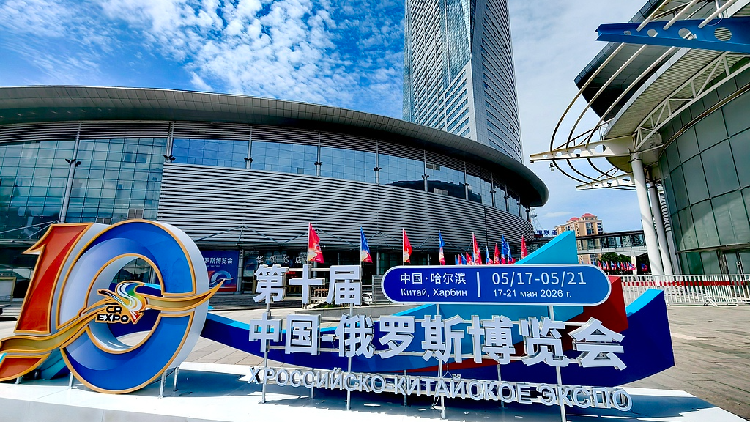
China and Russia marked the opening of the 10th China-Russia Expo in Harbin with congratulatory letters from Presidents Xi Jinping and Vladimir Putin. Both leaders emphasized deeper bilateral cooperation, with Xi citing the 30th anniversary of the strategic partnership and the 25th anniversary of the friendship treaty. The event is framed as a platform for expanded practical cooperation and mutual economic development, but it contains no concrete policy or market-moving announcements.
This is less a standalone market event than a confirmation signal that the China-Russia corridor is becoming a longer-duration, policy-protected trade lane. The practical beneficiary set is concentrated in infrastructure, logistics, industrial equipment, rail, ports, and commodities services tied to cross-border flows; the less obvious upside is for firms that can intermediate sanctioned or sanction-adjacent trade through third countries, especially in Central Asia and the Far East. That creates a second-order boost for Chinese export machinery and heavy equipment vendors while compressing margins for Western suppliers that are structurally excluded from these flows.
The bigger implication is not incremental headline trade, but supply-chain re-routing that reduces dependence on maritime chokepoints and dollar-cleared channels over the next 6-18 months. That favors rail, inland logistics, and localized industrial substitution, while increasing competitive pressure on European manufacturers that previously sold into Russia via indirect channels. In commodities, any deepening of bilateral industrial cooperation is mildly supportive for copper, steel input, diesel, and power equipment demand, but the effect should be modest unless it translates into financing and project execution rather than rhetoric.
The main risk is that the signaling value is already priced into markets that assume continued geopolitical alignment; what matters is whether this turns into concrete project awards, customs facilitation, or payment infrastructure. If the next 1-3 months bring no operational follow-through, the trade becomes a fade rather than a catalyst. Conversely, a tighter sanctions regime or evidence of secondary-sanctions enforcement would slow the real economy impact, but could paradoxically accelerate non-dollar settlement and local-currency trade, making the long-run rerouting thesis more durable.
Consensus is probably underestimating how much of the economic benefit accrues to the logistics layer rather than to headline exporters. The most attractive setup is to own the enablers of trade resilience, not the state-owned champions whose upside is already embedded in policy expectations. This is a slow-burn theme with asymmetric exposure if cross-border infrastructure financing starts showing up in order books over the next two quarters.
AI-powered research, real-time alerts, and portfolio analytics for institutional investors.
Request DemoOverall Sentiment
neutral
Sentiment Score
0.10
