
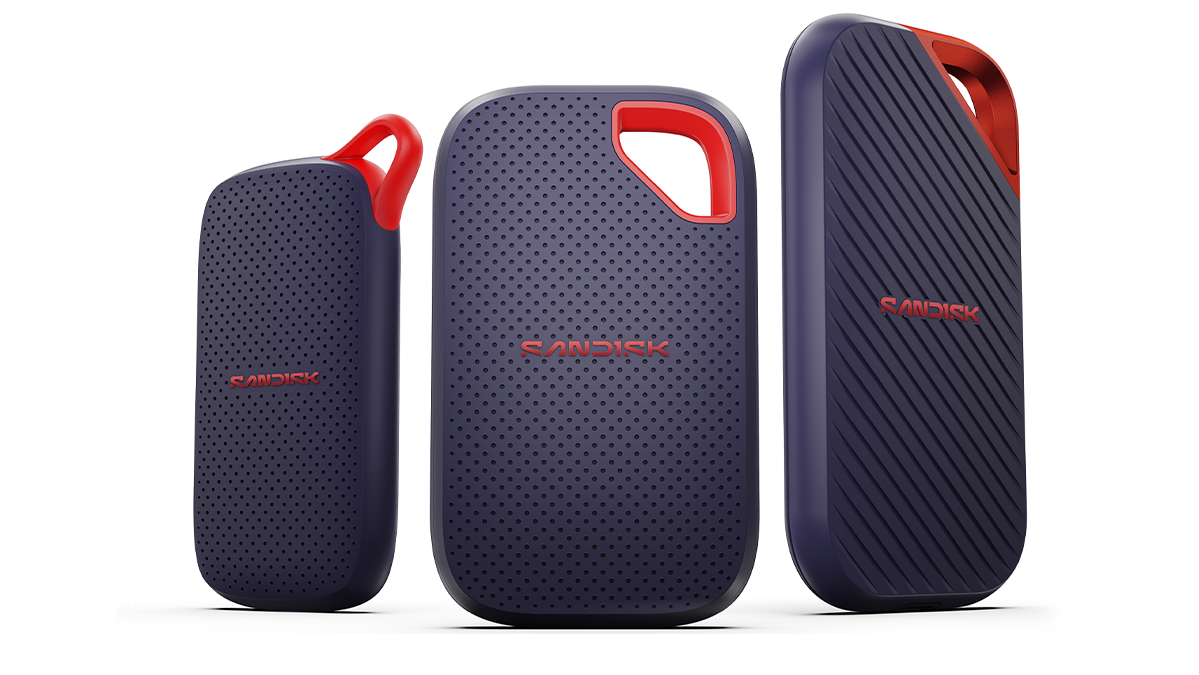
SanDisk refreshed its portable SSD lineup with three tiers: the new top-tier Extreme PRO Portable SSD (up to 4,000MB/s read and 3,800MB/s write; 2TB/4TB/8TB; IP65; 3m drop resistance; availability and pricing expected in H2 2026, likely using USB4), the mid-range Extreme Portable SSD (2,000MB/s read; 1TB/2TB/4TB available now at $259.99/$459.99/$919.99 with a 500GB coming later), and an entry-level Portable SSD (up to 1,000MB/s via USB 3.2 Gen 2; 500GB/1TB/2TB expected H2 2026). The announcement emphasizes performance differentiation (notably vs SanDisk Professional), refreshed branding (V3 suffix and new logo), and staged availability/pricing that could modestly affect consumer demand and product mix for the storage segment.
Market structure: SanDisk’s V3 lineup (Extreme PRO at 4,000MB/s, up to 8TB; mid-range 2,000MB/s with 1–4TB shipping now) benefits SanDisk (SNDK), controller suppliers (e.g., Phison-equivalents) and NAND vendors (Micron MU, SK Hynix). HDD incumbents (STX) and lower-margin external SSD rivals face pricing pressure; 4TB+ portable ASPs near $900 suggest SanDisk is chasing pro prosumer ASPs where gross margins can exceed commodity NAND sales by 500–1,000 bps if yields hold.
Risk assessment: Near-term (days–weeks) volatility should be muted — product availability and reviews are the main drivers; short-term (3–6 months) tail risks include NAND oversupply or controller shortages shifting ASPs ±20%. Long-term (6–24 months) risks: USB4 host penetration (likely <30% of installed base by H2 2026) and cannibalization of SanDisk Professional SKUs. Hidden dependency: product success hinges on third-party controller allocations and retail promotions; catalyst watch: NAND spot price moves, major review viral positivity, and H2 2026 retail availability/date-confirm.
Trade implications: Tactical: establish a 2–3% long position in SNDK sized to portfolio risk targeting +25–35% in 6–12 months if mainstream reviews validate speeds; set a 15% stop. Relative/value: pair long SNDK (1.5%) vs short STX (1.5%) to express SSD displacement of HDDs over 12 months. Options: buy a 9–15 month call spread on SNDK (buy 30% OTM, sell 60% OTM) to cap premium if IV is elevated; if IV low, consider outright 12-month LEAP calls.
Contrarian angles: Consensus assumes rapid adoption of premium external NVMe; that’s likely overdone — if USB4 adoption lags or retail pricing drops 20% to drive volumes, SNDK upside compresses. Historical parallel: high-performance SSD launches (2018–2019) saw 15–25% price erosion in 12 months; staging buys and using call spreads to limit time decay are preferred to all-in long exposure.
AI-powered research, real-time alerts, and portfolio analytics for institutional investors.
Request TrialOverall Sentiment
mildly positive
Sentiment Score
0.25
Ticker Sentiment
