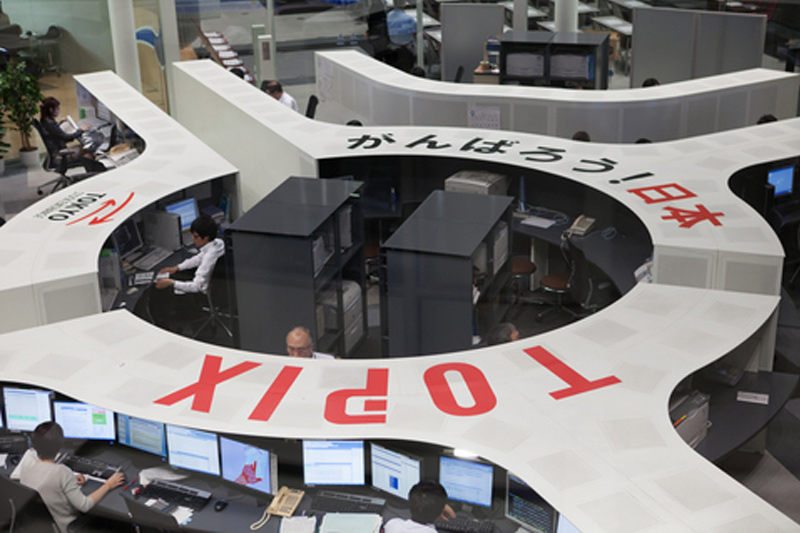
The Nikkei 225 closed down 0.10% as decliners outnumbered advancers 2,071 to 1,499 and 239 were unchanged; Nikkei volatility rose 3.22% to 45.80. Top performers included Ibiden (+3.76%), Dainippon Screen (+3.66%) and SUMCO (+3.13%), while Tokyo Electric Power (-4.76%), Isuzu (-4.37%) and Furukawa Electric (-4.19%) led losers. Energy prices were firmer: WTI crude for May +0.51% to $97.33/bbl and Brent +1.25% to $104.43/bbl, while April gold futures fell 0.85% to $5,018.54; USD/JPY declined 0.30% to 159.25 and the US Dollar Index futures eased 0.04% to 100.07.
AI hardware vendors (SMCI-style) remain the highest-conviction beneficiaries of the next spending leg: proprietary integration of GPUs, power delivery and thermal solutions shortens lead times for hyperscalers and commands price/capacity capture that software-only vendors struggle to sustain. A commodity-cost regime that biases higher energy and freight is a subtle advantage for vertically integrated OEMs because customers prioritize performance-per-watt and turnkey deployment over lowest-component-cost procurement — that increases switching costs and expands gross-margin optionality for winners.
Adtech/mobile monetization plays (APP-style) are exposed to a different cycle: ad CPMs, user engagement and macro discretionary budgets drive revenue with limited pricing power, so upside is more binary and correlated with consumer macro than with infrastructure capex. The deciding catalysts over 3–12 months are GPU availability and hyperscaler procurement cadence versus advertising demand elasticity; a sustained upgrade cycle in data centers would likely outpace ad-recovery benefits and widen the dispersion between hardware winners and adtech losers.
Tail risks: a rapid restoration of GPU supply or an inventory flush would compress OEM ASPs and hurt SMCI materially within 60–120 days, while regulatory/privacy shocks or a soft consumer income print would meaningfully depress APP's valuation in the same window. For portfolio construction, express preference for asymmetric option-led exposure to SMCI and defensive, premium-harvesting positions on APP, and keep a small, liquid macro hedge (Nasdaq put or VIX call) to protect against a correlation shock that would wipe out both themes concurrently.
AI-powered research, real-time alerts, and portfolio analytics for institutional investors.
Request DemoOverall Sentiment
neutral
Sentiment Score
0.00
Ticker Sentiment
