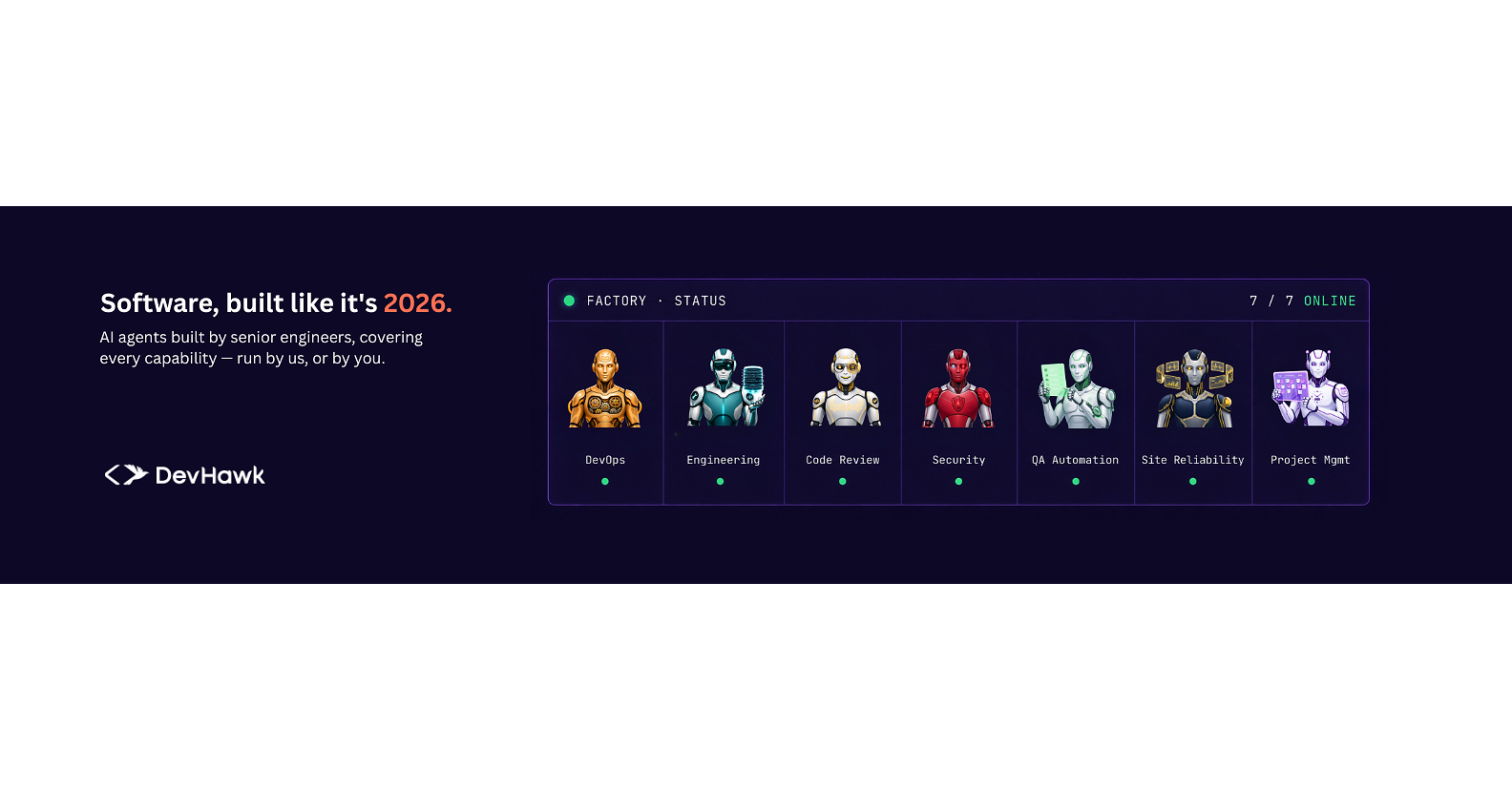
Fraction rebrands and expands into DevHawk, an “AI software factory” using specialized AI agents directed by senior engineers to build, run, and maintain business-critical software. The company claims a single senior engineer can replace “6–10 people,” shipping “up to 10x faster” with “80–90% less” than a traditional team, and offers both a managed and self-serve operating model. DevHawk says demand is rising from non-technical industries (e.g., construction, logistics, healthcare), with deeper roots in wealth management and fintech.
This is less a direct company event than a signal that software spend is shifting from labor to orchestration. If autonomous development tooling gets even partial traction, the first-order winner is not the model layer but the control plane around it: observability, security, identity, CI/CD, and cloud runtime vendors should capture budget that used to sit in headcount. That makes names like NOW, DDOG, CRWD, and SNOW better structural beneficiaries than the headline-grabbing "AI coding" brands.
The likely pressure point is traditional IT services and staff-augmentation economics. In the next 1-3 quarters, offshore and nearshore firms with high exposure to billing by engineer-hour could see utilization pressure or slower deal conversion as clients test smaller, senior-led teams. The more interesting second-order effect is on vertical SaaS: once a customer believes bespoke software is cheaper, off-the-shelf workflows face higher churn risk, but only in subsegments where switching costs are low and compliance burden is manageable.
Contrarian view: the market may be overrating displacement and underpricing adoption friction. Regulated industries will not let an AI agent "run" production without audit trails, rollback, and human accountability, which lengthens sales cycles and makes the near-term revenue impact more of an uplift to implementation budgets than a wholesale replacement of software vendors. Over 6-18 months, the bigger structural winner could be firms that sell governance around autonomous software, not the firms that merely write more code.
AI-powered research, real-time alerts, and portfolio analytics for institutional investors.
Overall Sentiment
mildly positive
Sentiment Score
0.15
