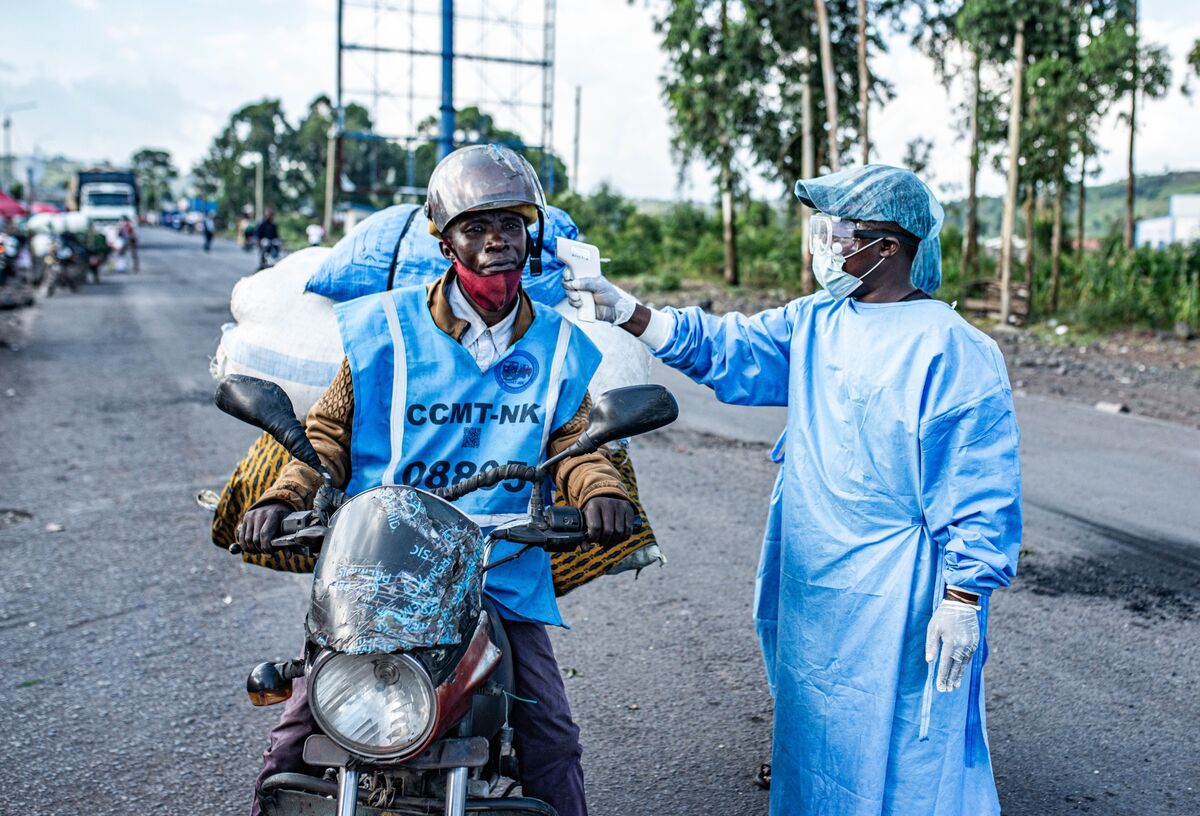
Ebola may have killed more than 200 people in the Democratic Republic of Congo, with cumulative suspected deaths reaching 210 as of May 23 and more than 900 suspected cases reported across 11 health zones. Violence, mistrust and overwhelmed surveillance systems are disrupting containment efforts in the country’s conflict-hit east. The article is materially negative for public health conditions, though direct market impact is likely limited.
This is less a pure health shock than a fragility amplifier for a region already priced as structurally difficult. The first-order losers are local transport, retail, and any businesses relying on cross-border movement in eastern Congo, but the second-order damage is bigger: a prolonged outbreak raises transaction frictions, depresses labor mobility, and widens the discount investors apply to any asset with exposure to the Great Lakes supply corridor. The market tends to underappreciate how quickly an epidemic plus insecurity can convert a temporary humanitarian event into a multi-quarter drag on provincial growth and tax collection.
The key risk is not just case growth; it is surveillance failure. When tracing and isolation break down, the situation can re-rate from a contained health event to a regional mobility shock within days, particularly if rumors and mistrust suppress reporting. That creates tail risk for mining logistics, NGO/contractor operations, and insurers with any latent political violence or business interruption exposure in Central/East Africa. The time horizon matters: over the next 1-3 weeks, headlines can drive abrupt repricing; over 2-6 months, the larger issue is whether the outbreak becomes embedded in a broader governance premium.
There is no obvious direct listed equity to short here, so the better expression is through proxies. African frontier sovereign debt and any regional EM basket with Congo/Rwanda/Uganda adjacency can underperform if the narrative shifts from isolated outbreak to corridor disruption. The contrarian view is that the market may overstate contagion to global risk assets; absent evidence of export bans or major mining shutdowns, this is likely a local-to-regional event rather than a commodity or global beta shock. The real opportunity is to fade knee-jerk selling in broad EM, while staying defensive on names with physical or political exposure to eastern Congo specifically.
AI-powered research, real-time alerts, and portfolio analytics for institutional investors.
Request DemoOverall Sentiment
strongly negative
Sentiment Score
-0.82
