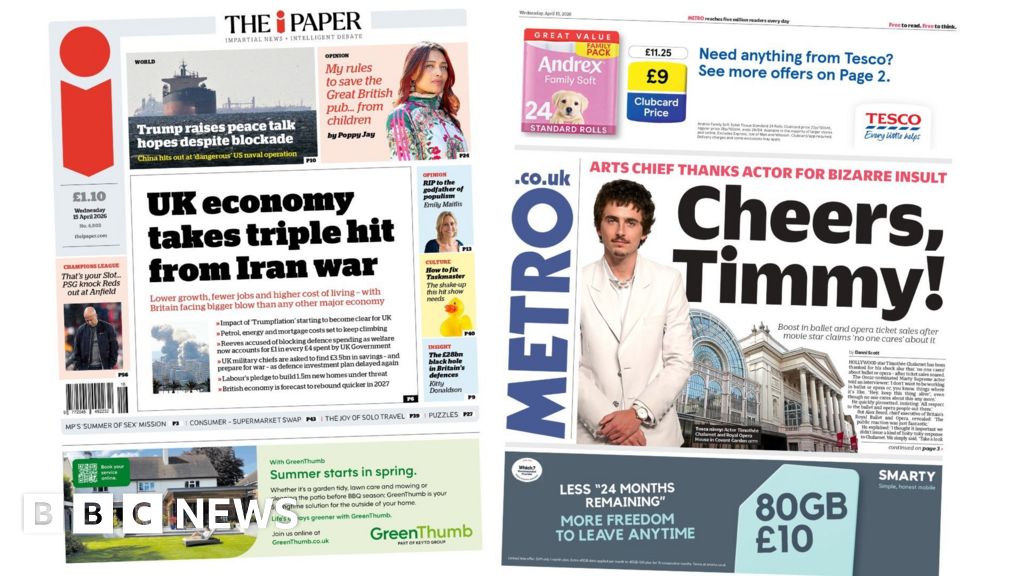
The IMF says Britain would be hit hardest among the G7 by the economic fallout from the Iran war, while UK coverage also centers on defence spending, with Rachel Reeves proposing less than £10bn of extra spending over four years. Wall Street banks reportedly smashed first-quarter earnings records as traders benefited from elevated market volatility. Separately, the government is weighing changes to single-sex spaces guidance and the National Lottery is set for a format change tied to Powerball-style competition.
The market is starting to price a classic stagflationary mix for the UK: weaker growth, higher imported inflation, and tighter fiscal choices. The immediate second-order winner is not broad UK equities but duration-linked and volatility-sensitive businesses globally, because every increment of geopolitical noise supports bank trading desks, defense suppliers, and higher policy uncertainty premia. For UK domestic cyclicals, the bigger issue is not one bad quarter but a multi-month squeeze in real incomes and capex confidence if energy and shipping costs remain elevated.
Defense is the cleanest medium-horizon beneficiary, but the market may still be underestimating how slow-budget jurisdictions respond: headline commitments often arrive before executable procurement. That means the first trade is usually in primes and missile/munitions names, while the second-order winners are electronics, power systems, and cybersecurity vendors that can scale faster than shipbuilders or platforms. If the UK is forced to prioritize defense without offsetting tax rises, expect municipal and consumer-facing sectors to absorb the pain first.
The contrarian setup is that the current move may be over-crowded in “war = oil up, defense up” while underappreciating the unwind path. If diplomacy or ceasefire rhetoric reduces tail risk, volatility sellers should outperform quickly, and the bank-trading earnings tailwind would fade just as fast. On the UK side, the political signal may be more important than the absolute spend number: if fiscal room is constrained, the trade is less about one-off defense uplift and more about avoiding exposure to domestic demand and regulated sectors that will be asked to fund it.
AI-powered research, real-time alerts, and portfolio analytics for institutional investors.
Overall Sentiment
neutral
Sentiment Score
-0.10
