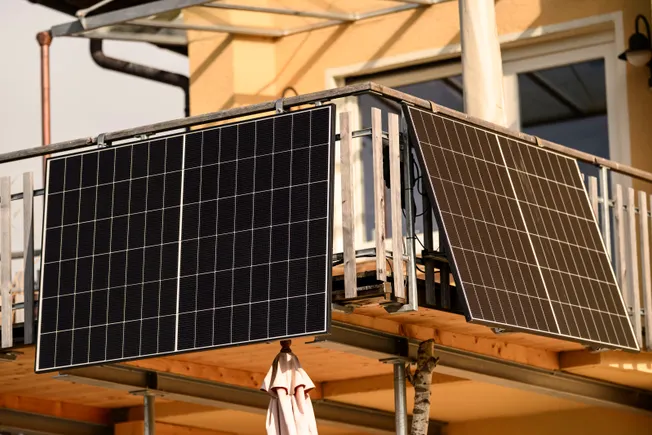
Virginia legislature approved bill allowing plug-in 'balcony' solar devices up to 1,200 watts with a unanimous 96-0 Senate vote and is expected to be signed by Gov. Abigail Spanberger. The law bars utilities from requiring interconnection approval or charging fees for these devices and mandates they cannot export power or affect building electrical systems during outages. Supporters say the change lowers household energy purchases modestly and benefits tenants; utilities have raised safety and reliability concerns. If signed, Virginia would be the second U.S. state after Utah to allow balcony solar, and roughly 30 similar bills are pending nationwide.
This law is a small-product, high-signaling event: 1.2 kW cap makes the near-term load impact trivial to grid operators, but it creates a low-friction distribution channel for customer-sited generation that is disproportionately valuable to device makers and firmware/IP owners (anti-islanding, export-blocking, UL/IEEE compliance). Expect product design winners—firms that can embed reliable anti-islanding logic and UL-certified inverters— to capture pricing power and recurring firmware/service revs, even if module volumes remain modest.
Second-order demand: landlords, multifamily managers and tenant-focused energy service providers gain a marketing/retention lever that can be monetized via subscriptions or rent-premium offerings; this shifts some customer acquisition economics away from legacy rooftop installers toward consumer-electronics channels and retail distribution. Over 12–36 months that could meaningfully expand the addressable market for microinverters and smart batteries (small-scale UPS-style storage), without requiring large interconnection or utility capex.
Key risks and reversal mechanisms are regulatory and safety incidents. A safety failure or sustained utility campaign could trigger municipal rollbacks, mandatory device certification, or insurance/liability claims that raise product costs; these are 3–18 month tail risks. Also, competition from low-cost Chinese portable solar suppliers can compress margins rapidly — domestic inverter/IP owners are the only structural shield, so intellectual property and certification become the moat.
AI-powered research, real-time alerts, and portfolio analytics for institutional investors.
Request DemoOverall Sentiment
mildly positive
Sentiment Score
0.20
