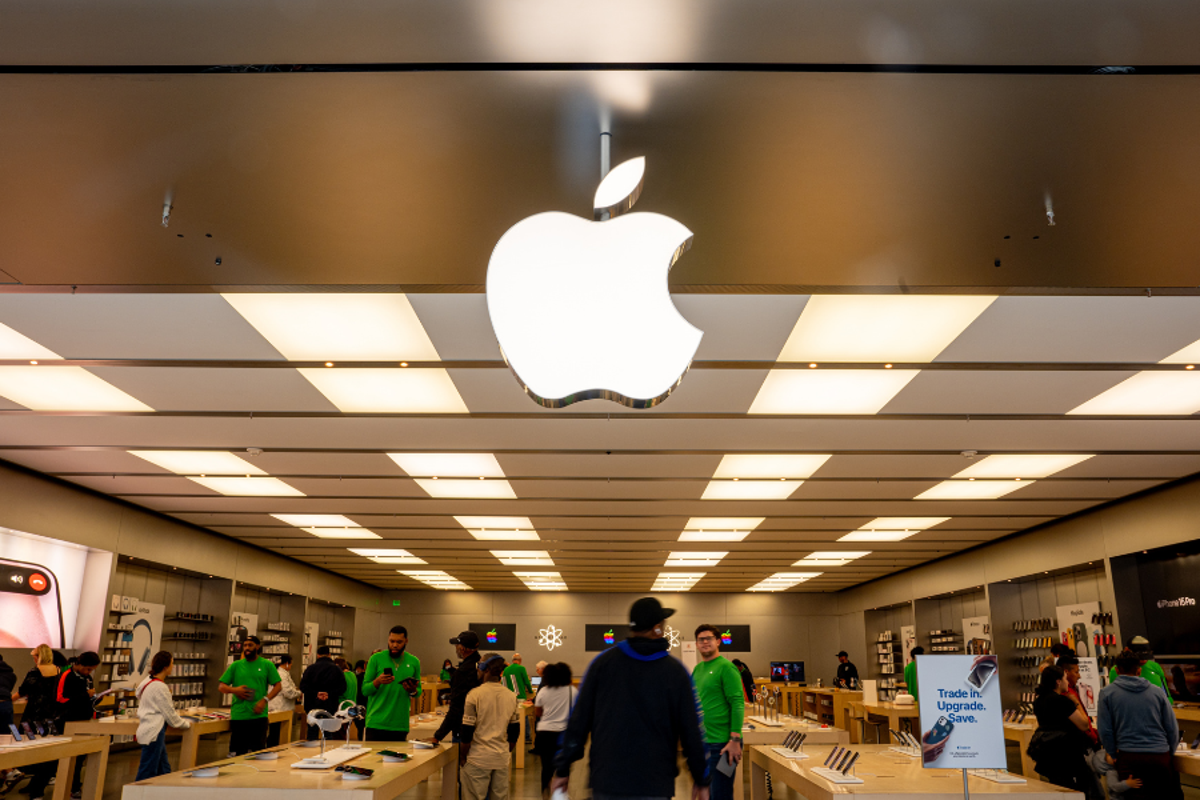
Apple is closing three mall-based U.S. stores in Towson, Maryland, Escondido, California, and Trumbull, Connecticut, with shutdowns set for June. The move reflects declining mall conditions and retailer departures, and the Towson closure is more sensitive because it was the first Apple Store in the U.S. to unionize; nonunion workers will be transferred, while unionized employees must reapply under their contract terms. The news is modestly negative for Apple retail sentiment but unlikely to have a material impact on overall company fundamentals.
The important signal here is not the store count; it is the acceleration of Apple’s retail rationalization toward higher-traffic, higher-income, lower-friction formats. Mall closures usually start as a lease-management issue, but when a premium brand exits, it often marks a broader demand air-pocket in that catchment area: weaker foot traffic, less discretionary spend, and rising vacancy that can pressure adjacent apparel, specialty retail, and mall landlords over the next 6-18 months. That makes this a negative read-through for secondary mall REITs before it is one for Apple’s own top line.
Second-order, the labor handling split matters because it increases execution and reputational risk in a way that can persist for quarters. If the union site becomes a legal test case, the cost is not direct P&L impact but management distraction and bargaining leverage at other organized locations; the larger risk is precedent, not headlines. For Apple, these are low-revenue locations relative to the ecosystem, so the near-term financial impact is negligible, but the message is that physical retail is being used more selectively as a service layer, not a growth engine.
The contrarian read is that this is not necessarily bearish for the brand if the company is pruning underproductive real estate before demand conditions deteriorate further. Apple has the balance sheet and traffic density to shift customers toward nearby stores and online fulfillment with limited friction. The real question is whether this is a one-off clean-up or the start of broader U.S. retail optimization; if more closures follow in weaker malls, it could become a leading indicator for consumer trading-down and mall REIT stress. Time horizon to watch is 1-2 quarters for follow-on announcements and 6-12 months for leasing/tenant fallout.
AI-powered research, real-time alerts, and portfolio analytics for institutional investors.
Request DemoOverall Sentiment
moderately negative
Sentiment Score
-0.35
Ticker Sentiment
