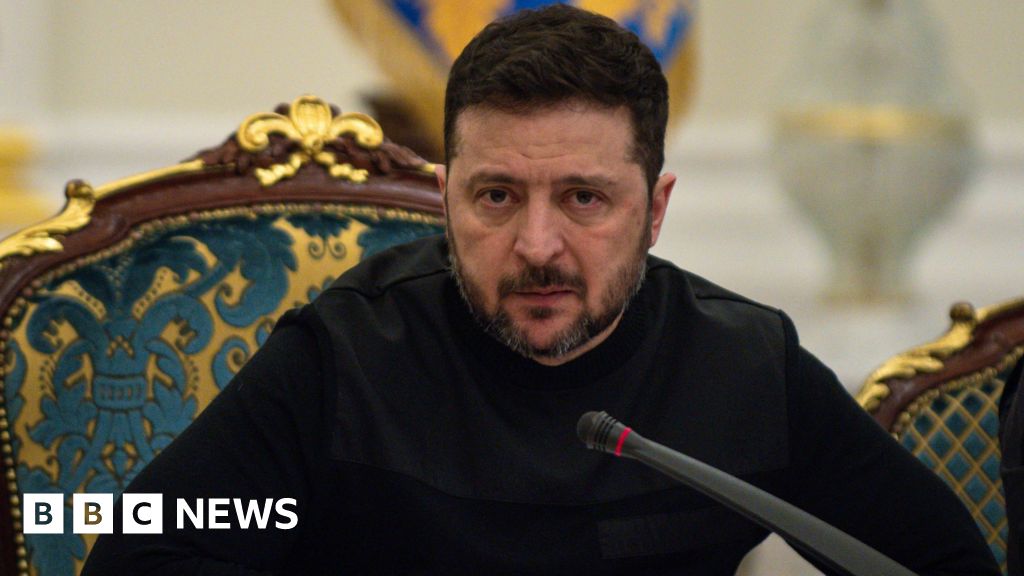
The US has asked Ukraine to help defend Gulf allies against Iranian Shahed drones, and President Zelensky said Kyiv would provide interceptor drones and expertise only if its own defence is not weakened and diplomatic gains are secured, proposing swaps of interceptors for Patriot air-defence missiles. Zelensky noted roughly 800 Patriot PAC-3 missiles have been used recently—more than Ukraine has received during the war—and Ukraine's defence industry says interceptor-drone production could scale to about 10,000 per month, though transfers would need top political approval and substantial training; the situation raises geopolitical risk and potential upward pressure on oil prices that could benefit Russia.
Market structure: Immediate winners are aerospace & defense OEMs and primes (RTX, LMT, NOC) and energy producers (XOM, CVX) if Middle East strikes push Brent >$5-$10 above current levels; losers include global airlines (AAL, UAL) and any Gulf operators forced to ration Patriot missiles. Ukraine offering interceptor exports (claiming up to 10,000/month) introduces a potential low-cost competitor for short-range counter-drone markets but is constrained by training capacity and political approvals, limiting near-term disruption to legacy missile demand.
Risk assessment: Tail risks include rapid escalation driving Brent >$120/bbl and a simultaneous spike in global risk premia that compresses equities by 8–15% within days, or US political moves blocking transfers that strand inventory/revenue expectations for defense contractors. Time horizons: immediate (days) expect volatility spikes and flight-to-quality; short-term (weeks–months) expect firming defense order pipelines and missile restocking; long-term (quarters+) could see structural procurement shifts if Ukraine proves scalable and Western allies formalize swaps. Hidden dependencies: training bottlenecks, US approval cycles, and Patriot missile stockpile transparency are key second-order constraints.
Trade implications: Tactical trade set-up: overweight primes via options-defined exposure to RTX/LMT (6-month call spreads) and overweight integrated majors XOM/CVX if Brent >$95 for >5 trading days, while shorting airline exposure (JETS ETF or AAL) on a 3–6 month basis. Use Brent call options (3-month, 5–10% OTM) as asymmetric hedge for energy-driven shocks and reduce duration in cyclical beta if geopolitical risk persists.
Contrarian angles: Consensus favors sustained premium for US missile makers, but the market underprices a scenario where Ukraine scales interceptors and trains Gulf crews over 6–12 months, commoditizing low-cost loitering-munitions countermeasures and capping PAC-3 volume growth. Historical parallels (post-2019 Saudi attacks) show defense budget spikes can be short-lived; prepare for mean reversion if oil normalizes below $85 within 2–3 months, which would hurt producers more than primes.
AI-powered research, real-time alerts, and portfolio analytics for institutional investors.
Request TrialOverall Sentiment
moderately negative
Sentiment Score
-0.35
