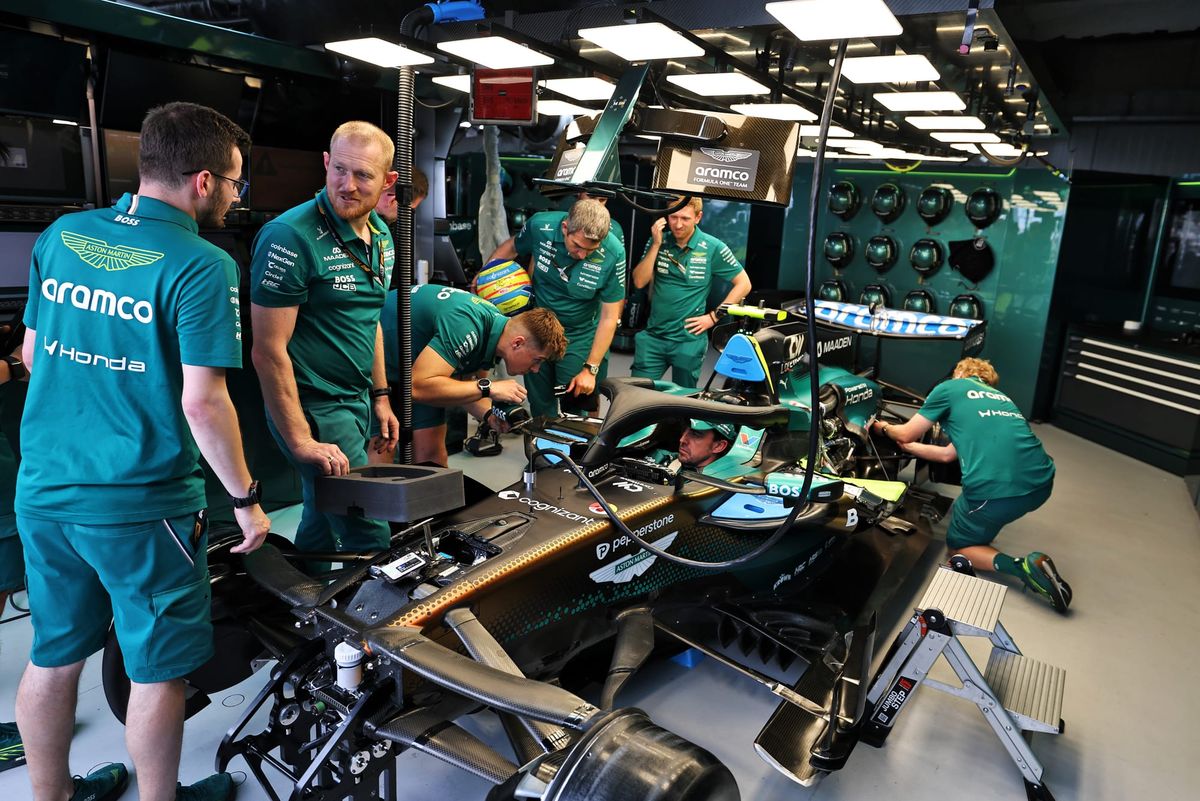
Day one of the 2026 Monaco GP highlighted multiple team-specific technical and operational issues, including Aston Martin's random downshift and low-speed gear-sync risks, Alpine's investigation into Pierre Gasly's balance problems, and Haas's upgrade being compromised by an unrelated part failure. Ferrari and Mercedes also faced setup and energy-management challenges under Monaco's new 2026 rules, while Charles Leclerc reaffirmed his long-term Ferrari commitment. The article is largely technical and team-specific, with limited immediate market impact.
The biggest near-term signal is that Monaco has become a stress test for execution quality, not raw pace. That matters because in a tightly packed field, reliability and software/controls competence can create a disproportionate gap: a small drivetrain or sync issue can swing qualifying spots by multiple rows, and Monaco’s track position premium means those losses are far harder to recover than at a conventional circuit. For the market lens, this favors teams with mature systems integration and punishes projects still debugging the interaction between power unit, gearbox, and chassis.
Ferrari looks incrementally de-risked operationally: the combination of driver confidence, engineer continuity, and a car that is less dependent on brute-force platform stability should improve conversion at low-speed circuits over the next 1-3 races. The second-order effect is that a cleaner operating environment can matter more than headline aero gains in a season where marginal improvements are tiny; that gives Ferrari a better shot at repeating points efficiency even if outright dominance remains elusive. By contrast, Aston Martin and Haas are highlighting the downside of immature or brittle setups — a few basis points of performance loss per corner becomes a major fragility when the track offers almost no overtaking.
The most interesting contrarian read is that the new Monaco-specific rules and winglet gimmicks may be overestimated by the market. If the incremental gain is only a few hundredths, then the real edge belongs to teams that can manage energy deployment, gear synchronization, and braking consistency, not those with the flashiest hardware tweak. That supports a view that the spread in results will be driven more by operational execution than by visible regulatory innovation, which usually means the consensus will overpay for design novelty and underprice reliability risk.
AI-powered research, real-time alerts, and portfolio analytics for institutional investors.
Request DemoOverall Sentiment
neutral
Sentiment Score
-0.05
Ticker Sentiment
