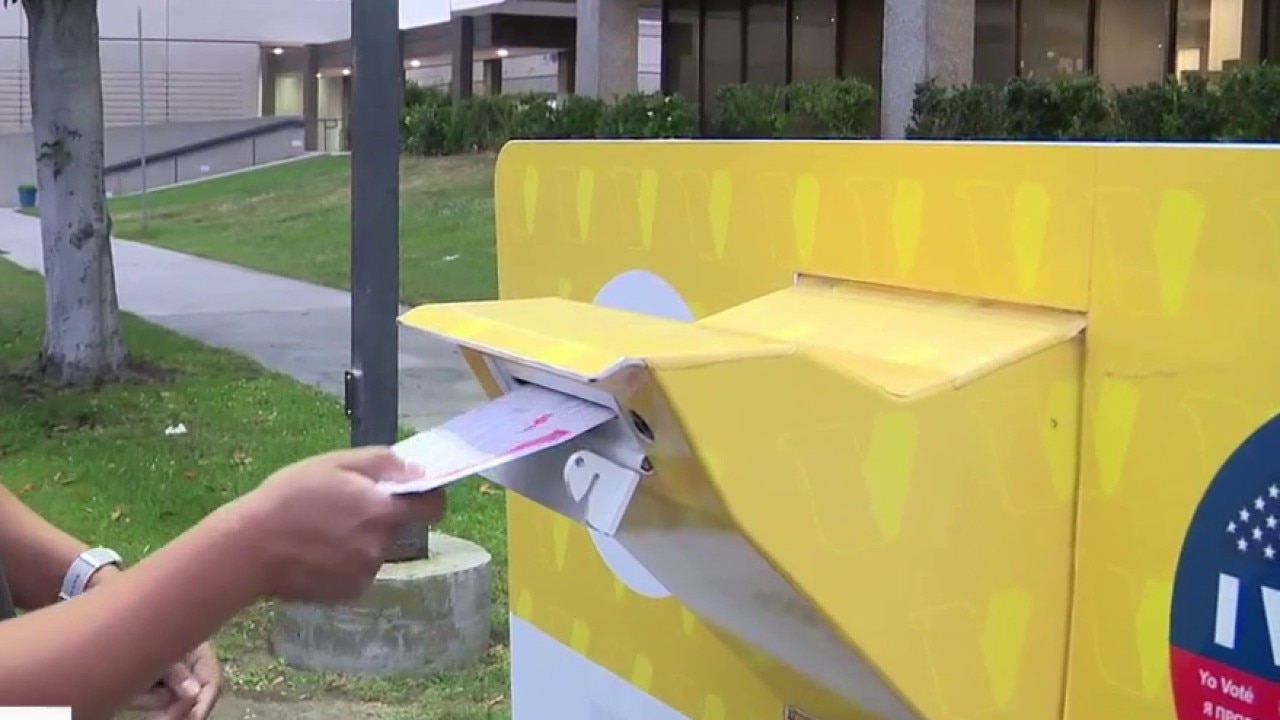
Federal authorities have opened multiple election fraud investigations in California, with the U.S. Attorney's office coordinating with the FBI and working alongside DOJ officials to audit voter rolls. The article highlights ongoing disputes over slow ballot counting, with Los Angeles County still reporting 713,180 outstanding ballots as of Thursday, while state officials defended the legality and accuracy of California's 30-day canvassing window. The probes are currently unspecified, and there is no confirmed evidence of widespread irregularities affecting election outcomes.
The market implication is not the fraud probe itself, but the probability that California’s post-election process becomes a longer, noisier political event that drags governance risk into the next several weeks. That matters because unresolved vote tallies and federal scrutiny can keep headline volatility elevated for state-linked policy vehicles, especially anything exposed to California budget negotiations, municipal issuance, or ballot-measure dependent regulatory outcomes. In practice, the first-order move is reputational; the second-order move is delayed certainty, which tends to widen risk premia around assets tied to state policy visibility.
The key catalyst window is the next 1-4 weeks: if the federal probes remain vague and no material evidence surfaces, the market will likely fade the issue as election theater. But if subpoenas, indictments, or formal audit steps emerge, the story can shift from short-lived rhetoric to a governance overhang that complicates legislative scheduling and raises the cost of doing business for regulated industries awaiting California rulemaking. The biggest asymmetry is in consumer-facing and regulated names that rely on clean, predictable state administrative timelines; even a small probability of procedural challenge can delay permits, enforcement actions, or budget approvals by months.
The contrarian angle is that the slow-count narrative may be more structurally bullish for process-integrity vendors than for headline political shorts. Any renewed emphasis on ballot chain-of-custody, voter roll maintenance, and county election infrastructure increases the odds of incremental public spending and procurement, even if the immediate political debate fizzles. Meanwhile, the broader equity market is likely to underprice the chance that this becomes a recurring template in other large vote-by-mail states, creating a medium-term tailwind for election-adjacent software, compliance, and verification workflows.
The main risk to this view is rapid de-escalation: if county canvassing proceeds without disputed discrepancies, the issue will compress back into a 2-3 week news cycle and fade to noise. In that case, any governance-related premium should mean-revert quickly, and political volatility trades will lose money through theta decay rather than directional loss.
AI-powered research, real-time alerts, and portfolio analytics for institutional investors.
Request DemoOverall Sentiment
neutral
Sentiment Score
-0.05
