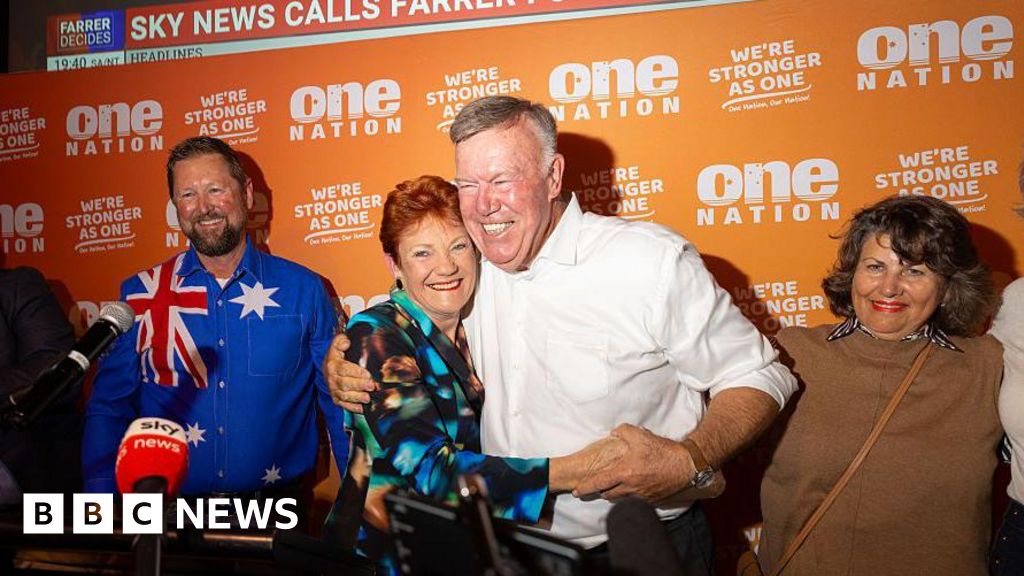
Australia's One Nation party won its first-ever federal lower-house seat, with David Farley taking 60% of the primary vote in the Farrer by-election. The result is politically significant as a sign of voter drift away from traditional parties, but it does not affect the Labor government's large parliamentary majority. The vote also served as an early test for the new Liberal and National leaders amid continuing coalition infighting and weak polling.
The key market takeaway is not the by-election itself but the signal that protest voting is moving from episodic noise to a potentially durable coalition risk for the center-right. That matters because Australia is increasingly a policy regime where minority pressure groups can force larger parties to chase the median voter with less fiscal restraint, less certainty around immigration, energy, and regional spending, and more headline-driven politics. The first-order equity read is limited, but the second-order effect is a higher probability of policy whiplash and slower reform, which typically compresses domestic multiple expansion rather than driving outright earnings misses.
The more interesting tradeable implication is positioning around sectors exposed to regional Australia and “policy beta” rather than the political event itself. Banks, listed infrastructure, and domestically levered consumer names tend to underwrite stability and predictability; when protest politics gains share, discount rates on regulated or quasi-regulated cash flows can widen even if near-term earnings are unchanged. Conversely, resource and agribusiness-linked names can become relative havens because they are less dependent on Canberra’s policy premium and more exposed to global pricing.
The contrarian view is that investors may overestimate the persistence of this right-populist signal because preferential voting can translate visible primary-vote strength into much less enduring governing power. In other words, the headline may flatter the insurgent party without yet changing the seat math that matters for national policy. The cleaner catalyst to watch is whether this becomes a broader anti-major party swing in polling over the next 2-3 months; if it stalls, the market should fade any knee-jerk repricing of domestic political risk.
AI-powered research, real-time alerts, and portfolio analytics for institutional investors.
Request DemoOverall Sentiment
neutral
Sentiment Score
0.05
