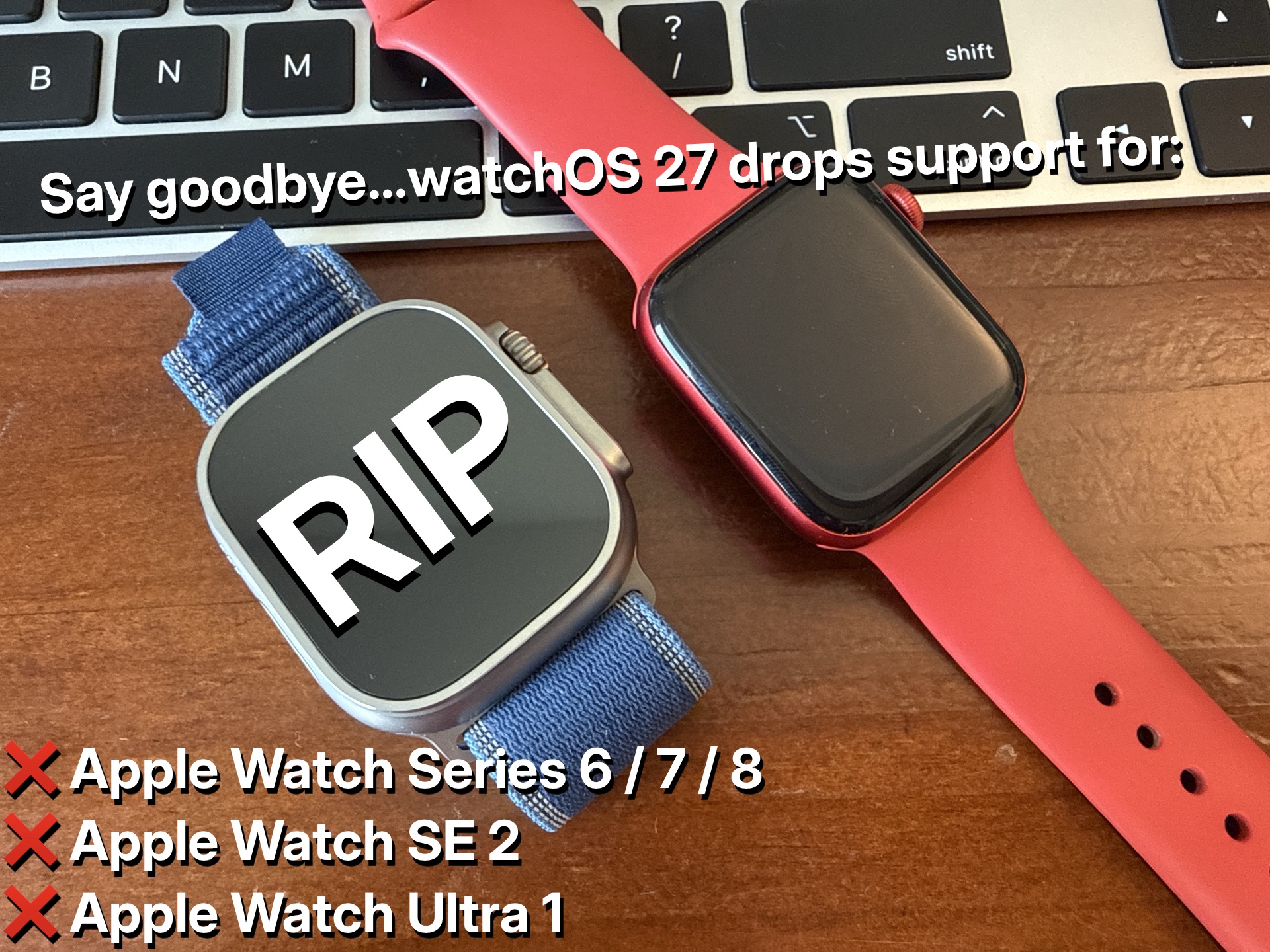
Apple’s watchOS 27 will drop support for five older Apple Watch models, including the original Ultra and SE 2, while keeping Series 9/10/11, Ultra 2/3, and SE 3 compatible. The cutoff is tied to the newer dual-core processor and Neural Engine needed for on-device Siri AI and other features, highlighting Apple’s three-year CPU refresh cadence. The news is mostly a product-support and upgrade-cycle issue rather than a direct financial catalyst, though it may frustrate some existing owners.
This is less about the wearable business and more about Apple deliberately turning the Watch into a compute-gated AI endpoint. The key second-order effect is software fragmentation: by hard-resetting the support floor around the newer neural-capable chip, Apple is likely protecting margin on silicon refreshes and avoiding a degraded Siri experience that would have contaminated the brand. That matters because the Watch is a high-frequency engagement device; if on-device AI feels sluggish or battery-hostile, the reputational damage would be disproportionate to the hardware savings.
The immediate loser is not just owners of older models, but the upgrade elasticity of the installed base. Apple is signaling that feature-access, not cosmetic design, will increasingly determine replacement timing, which should pull demand forward for higher-end models while pressuring resale values of pre-cutoff devices. That creates a subtle tailwind for AAPL Services attach and accessory demand, but it also raises the risk that some users simply defer upgrades if the value proposition is perceived as punitive rather than compelling.
The market is probably underestimating how this helps Apple’s long-term gross margin mix. A stricter support window reduces the cost of maintaining legacy optimization layers and incentivizes a shorter hardware cadence around new AI features, which should support ASPs even if unit growth is flat. The main risk is consumer backlash spilling over into smartwatch sentiment for 1-2 quarters, but unless reviewers frame the new Siri experience as mediocre, that should fade quickly. The bigger catalyst is the next Watch cycle: if Apple pairs a modest hardware bump with a visibly better AI demo, this cutoff will look like disciplined product management rather than obsolescence.
Contrarian take: this is mildly bullish for AAPL because it converts a potential AI credibility problem into a segmentation strategy. The consensus reads the move as user-unfriendly, but the more important signal is that Apple is unwilling to ship AI features that would compromise battery life or responsiveness on legacy silicon. That discipline should support premium pricing and reduce the odds of a broader watchOS quality issue, which is worth more than a few incremental years of backward compatibility.
AI-powered research, real-time alerts, and portfolio analytics for institutional investors.
Request DemoOverall Sentiment
mildly negative
Sentiment Score
-0.15
Ticker Sentiment
