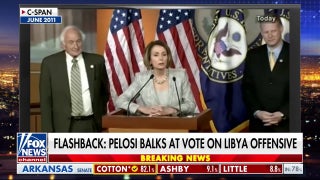
President Trump publicly criticized British Prime Minister Keir Starmer for initially blocking U.S. use of U.K. bases—specifically Diego Garcia—for strikes against Iran during Operation Epic Fury, saying London later allowed only “defensive strikes.” Trump highlighted logistical complications involving the Chagos Islands and framed the U.K. stance as uncooperative, while Starmer defended staying out of offensive action and prioritized Britain’s national interest and regional protection. The exchange underscores friction in U.S.-U.K. defense cooperation and elevates short-term geopolitical risk considerations that could modestly affect defense-related positioning and regional risk premia.
Market structure: Immediate winners are defense primes and logistics/fuel suppliers — think Lockheed (LMT), Northrop (NOC), Raytheon (RTX) and freight/charter operators — as demand for strike support, ISR and airlift rises; losers include commercial airlines (AAL, DAL) and UK-sensitive equities if bilateral friction persists. Cross-asset: expect a tactical flight-to-safety — USTs rally (10y yield down 10–30bp intraday), USD strength vs risk currencies, gold up 2–5% and oil prone to 5–15% spikes if shipping or supply routes are threatened; equity implied vols to gap higher by 20–50% on headline shocks.
Risk assessment: Tail scenarios include broader regional escalation (low probability, high impact) that could push Brent >$120 and global equity drawdowns >15% within weeks; a sustained UK–US diplomatic rift could re-shape NATO logistics procurement (multi-quarter). Immediate (0–7 days): headline-driven volatility; short-term (1–3 months): commodity shocks and defense re-rating; long-term (12–36 months): elevated defense budgets but delayed UK operational commitments. Hidden risks: insurance/shipping reroutes, political constraints on procurement, and rapid option-implied volatility moves.
Trade implications: Bias overweight defense (ITA or LMT/NOC/RTX) and commodity-linked names (XOM/CVX) for 3–12 month horizons; hedge with 1–2% GLD position and short airlines. Use defined-risk options: 3–6 month call spreads on LMT/NOC and 1–3 month Brent call spreads, and buy tail S&P puts if VIX breaks >20. Monitor GBP moves for selective UK equity opportunities.
AI-powered research, real-time alerts, and portfolio analytics for institutional investors.
Request TrialOverall Sentiment
moderately negative
Sentiment Score
-0.30
Contrarian angles: The market may overpay for permanent escalation; history (1990/2003 Gulf episodes) shows sharp initial commodity/defense moves often mean-revert over 3–6 months if conflict remains localized. Consider selling short-dated volatility after a headline-driven spike and selectively buying beaten-up UK large caps if GBPUSD falls >5% (mean-reversion candidate). Unintended risk: a contained outcome can leave defense names vulnerable to 10–25% pullbacks.
