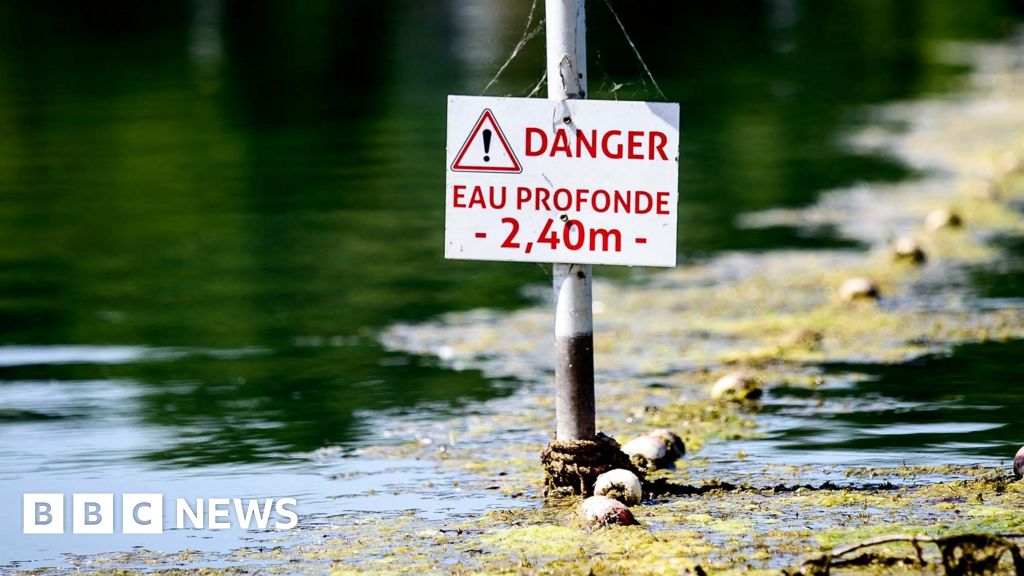
Europe's peak heatwave has triggered at least 40 drownings in France since Thursday, red alerts across France, Spain, Italy, Germany, the Netherlands and Belgium, and record temperatures including France's hottest June day at 29.8C. The event is disrupting transport and tourism, forcing early closures at the Eiffel Tower and Louvre, and prompting emergency labor protections and a shutdown at France's Golfech nuclear plant because river water temperatures are too high for cooling. The combination of health, infrastructure and energy stress makes this a broad regional shock with likely economic knock-on effects.
The first-order market impact is not just “hot weather is bad”; it is a short, sharp stress test for Europe’s operational fragility. The more important second-order effect is that heat increasingly converts into service disruption: transport, tourism, and public-facing venues see same-day revenue loss, while industrial activity gets throttled by safety pauses and labor-hour restrictions. That creates an asymmetric hit to domestically exposed cyclicals versus companies with pricing power and low weather sensitivity.
The energy angle is nuanced. Near-term power demand spikes, but generation reliability becomes the bigger issue when thermal plants face cooling constraints and rail/urban infrastructure degrades under heat. This favors utilities and grid/hardware names tied to resilience investment over pure electricity producers, while making the market more willing to pay for climate-adaptation capex than for incremental volume growth. Repeated heat events also raise the probability of policy intervention around work rules, building standards, and cooling infrastructure, which should support multi-year spending themes.
The biggest miss in consensus is that the valuation damage accumulates through persistence, not headline severity. One-off heatwaves are manageable; a summer cadence of early-season extremes forces behavior changes in tourism, municipal budgets, and insurer loss assumptions, with knock-on pressure on food, water, and leisure operators. If upcoming weeks revert to normal temperatures quickly, the trade fades; if the current pattern broadens across Northern Europe, the market will likely reprice earnings quality rather than just weather-sensitive beta.
Contrarianly, this may be more bullish for adaptation capex than bearish for Europe overall. The companies that make grids, HVAC, water management, and building controls could see a multi-quarter demand tailwind as governments and property owners finally spend to reduce downtime. The risk is that investors underweight the lag between policy response and earnings capture, so the first move may be in sentiment before fundamentals show up.
AI-powered research, real-time alerts, and portfolio analytics for institutional investors.
Request DemoOverall Sentiment
strongly negative
Sentiment Score
-0.55
