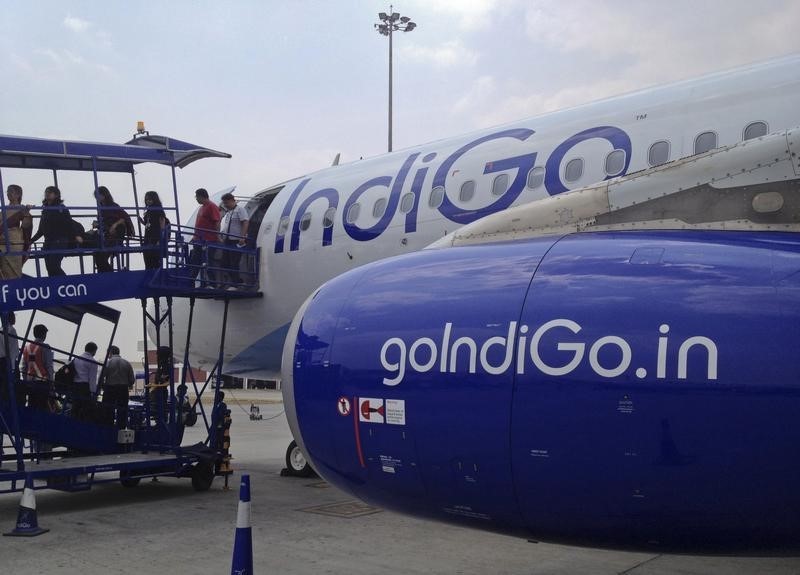
InterGlobe Aviation (IndiGo) CEO Pieter Elbers resigned with immediate effect; shares rose 0.4% as of 07:15 GMT. Managing Director and co-founder Rahul Bhatia will serve as interim CEO while the board looks for a permanent successor. The move follows December 2024 scheduling disruptions, so key risks to monitor are operational stability, clarity on the summer schedule, and continuity of execution during ongoing fleet expansion and capacity growth.
A leadership discontinuity inside a high-capacity growth airline produces concentrated operational risk that is asymmetric through the next two quarters: route scheduling and crew rostering are tightly path-dependent, so a small slip (1–2% effective ASK reduction or a few percentage points hit to international load factors) magnifies unit cost and yields pressure on near-term margins. Because summer demand is idiosyncratically lumpy, the window to reset schedules and preserve corporate accounts is narrow—operational miscues in the next 6–12 weeks are the highest-probability channel for measurable revenue loss.
Second-order effects land on the OEM/lessor and MRO ecosystem: any change in cadence for wide-body utilization or deferred deliveries forces cascade decisions around subleases, engine shop visits, and spare-parts inventories that can shift working capital and capex timing by quarters. Competitors with flexible wide-body capacity or stronger corporate loyalty relationships can convert marginal corporate contracts quickly; that conversion is sticky and can shave market share permanently if the incumbent’s reliability perception slips over a 3–6 month period.
From an investor standpoint, this is a trade between idiosyncratic, near-term execution risk and a longer-term franchise value tied to network scale. The cheap (but event-risky) entry is to wait for operational stable-readouts (7–10 days of schedule adherence post-summer schedule release) before increasing exposure; conversely, if management signals any durable strategy change on wide-body cadence or loyalty monetization, treat that as a re-risk moment. Meanwhile, consider rotating into names with higher governance visibility and secular cash conversion (e.g., SMCI/APP) until execution proves reliable.
AI-powered research, real-time alerts, and portfolio analytics for institutional investors.
Overall Sentiment
neutral
Sentiment Score
0.05
Ticker Sentiment
