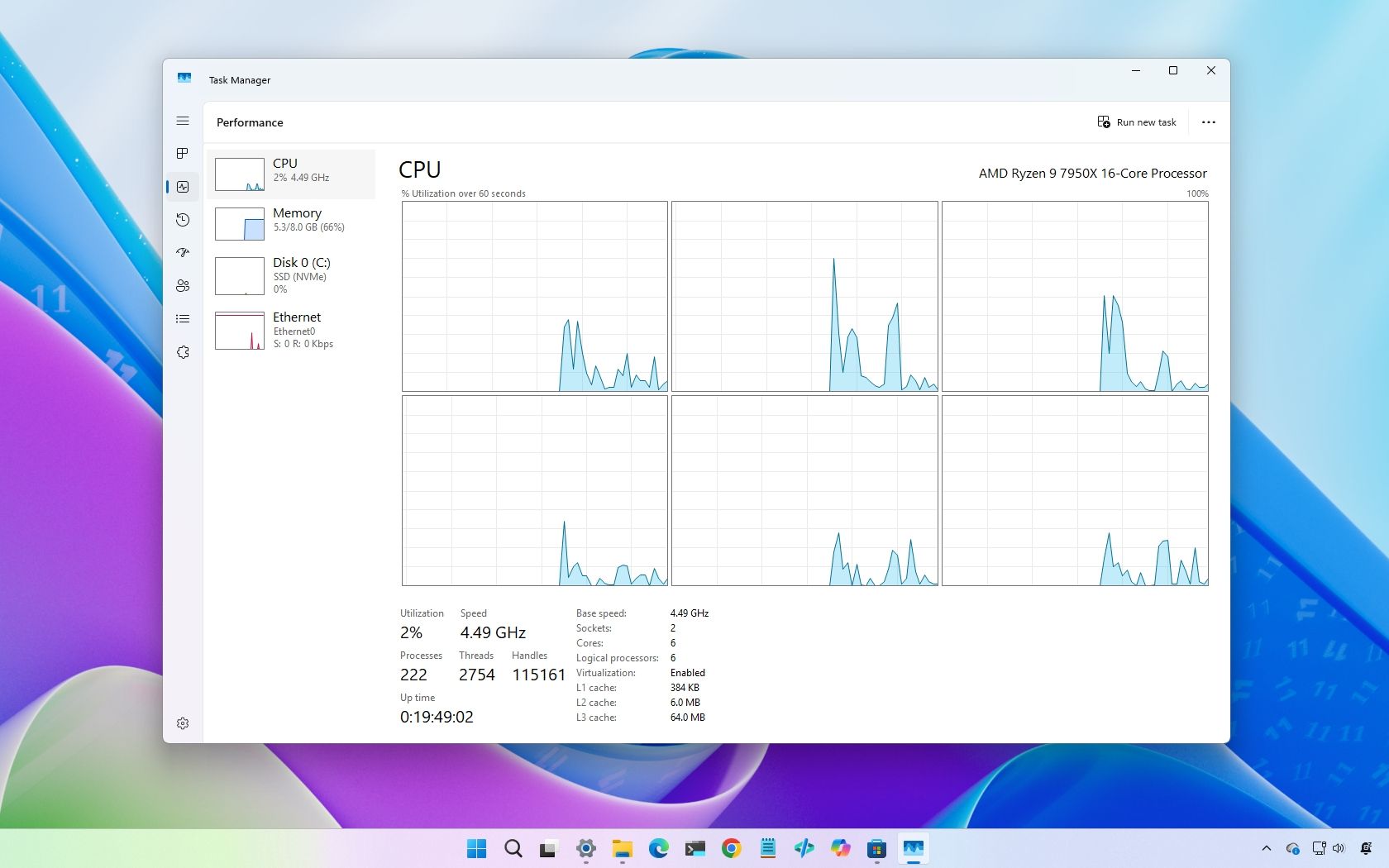
Microsoft is testing a Windows 11 Low Latency Profile feature that temporarily boosts CPU frequency for 1-3 seconds during interactive tasks, with reported improvements of up to 40% in app launch times and 70% in shell interactions. The feature is expected to roll out by default in June 2026 for Windows 11 25H2 and 24H2, with minimal battery impact but limited user visibility or control. The article is largely explanatory and suggests only modest real-world benefits, especially on newer hardware.
The market read-through is more about operating-system monetization than raw performance. A background responsiveness layer that quietly improves perceived speed can reduce upgrade friction for Windows 11, which matters because perception of slowness is a bigger driver of user dissatisfaction than benchmark deltas. The second-order effect is supportable attach-rate expansion for Microsoft’s ecosystem: if casual users feel the UI is smoother, it becomes easier to defend Windows 11 adoption, Copilot/Cloud tie-ins, and eventual hardware refresh cycles without a visible feature sell effort.
The key beneficiary is MSFT, but the upside is likely incremental rather than re-rating-worthy. The feature’s value is highest on older or mid-tier devices, which means it may extend useful life of installed base PCs by 6–18 months, partially offsetting near-term OEM refresh demand. That is mildly negative for the PC hardware chain, especially firms most levered to replacement cycles, while being positive for software stickiness and enterprise manageability if Microsoft later exposes policy controls.
The main risk is that invisible tuning becomes a trust issue: if battery drain, thermal spikes, or inconsistent gains show up in real-world use, the narrative flips from “smart optimization” to “hard-to-audit background behavior.” On a 1–3 month horizon, the catalyst is rollout telemetry and user complaint volume; on a 6–12 month horizon, it is whether Microsoft makes the feature enterprise-configurable. If they do, it strengthens Windows as a managed platform; if they don’t, it creates a small but real headwind for IT adoption in regulated environments.
Consensus may be underestimating how little this changes high-end systems and overestimating the near-term monetization for Microsoft. The bigger opportunity is not the feature itself, but the precedent of automated, invisible performance tuning as a differentiator versus other desktop OSes. That suggests a slow-burn positive for MSFT, while the hardware beneficiaries are more likely to be on the lower end of the stack than the premium OEM names most investors instinctively reach for.
AI-powered research, real-time alerts, and portfolio analytics for institutional investors.
Request DemoOverall Sentiment
neutral
Sentiment Score
0.15
Ticker Sentiment
