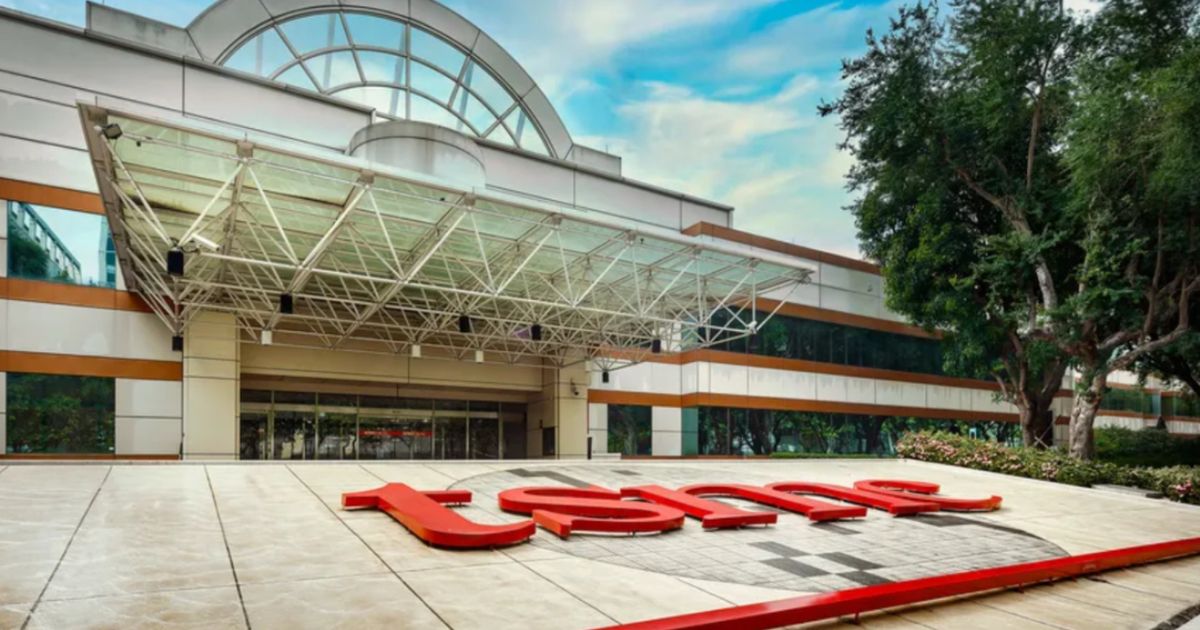
TSMC reported a record 35% profit increase in Q4 with gross margin of 62.3% (above prior guidance of 59–61%) and an EPS beat, and announced plans to invest $56 billion through 2026 to expand AI chip production. US-listed shares jumped ~6.7% to $349, lifting semiconductor peers (KLA +8.9%, Applied Materials +8%, ASML +6.2%, Lam +5.8%, AMD +5.6%); Wedbush reiterated Outperform and raised its 12-month target to NT$2,200, citing management guidance for ~4.5% revenue growth in Q1 2026, >60% gross margins for the year, and expected mid-50% five-year growth in AI-accelerator revenues supporting ~25% overall sales growth.
Market structure: TSMC’s beat and $56B capex commitment through 2026 materially favors advanced-node winners — TSM (ADR) and equipment suppliers ASML, AMAT, LRCX, KLAC — by extending pricing power and backlog visibility for 12–36 months. Smaller foundries, legacy-node fabs and memory suppliers face relative displacement as TSMC captures AI-accelerator wallet share; expect ASPs for leading-edge wafers to stay firm and lead times to remain >6–12 months. Cross-asset: stronger semiconductor cashflows should tighten high-yield/IG spreads for key suppliers, lift TWD vs USD incrementally, raise implied equity vols in semis (short-term), and modestly increase industrial metals demand for fab construction. Risk assessment: Tail risks include China–Taiwan escalation, US export-control shifts, or a 2–3 quarter AI spending pause; any such shock could compress TSMC gross margin by 300–500bps and erase >20% of consensus 12-month upside. Time horizons differ: immediate (days) = sentiment squeeze; short (3–12 months) = equipment delivery/capacity ramp; long (3–5 years) = realization of mid-50% AI-accelerator CAGR assumptions and potential overcapacity. Hidden dependencies: concentrated customer exposure (NVIDIA/AMD), ASML shipment cadence, and power/utility constraints that can bottleneck fabs. Key catalysts: upcoming NVDA earnings, TSMC Q1 guide (watch for +/-200bps vs consensus), and ASML shipment updates. Trade implications: Tactical long exposure to TSM (1.5–3% portfolio) and ASML/AMAT (1–2% combined) captures durable secular AI demand and equipment backlog; tranche purchases on 5–10% pullbacks over 2–6 weeks. Use options to express asymmetric risk: buy TSM Dec‑2026 LEAP calls ~25% OTM sized at ~30% of the target equity notional, and buy 3–6 month ASML/AMAT calls 20–30% OTM for near-term upside; consider selling covered calls if positions exceed target. Rebalance: shift 3–5% from software/large-cap cyclicals into semis; take profits if TSM rises +25% or if reported gross margin slips below 60%. Contrarian angles: Consensus underestimates capex lead times — $56B doesn’t relieve 6–18 month tightness and could create 2027–2029 oversupply if demand growth stalls; the same capex that drives margins now seeds future cyclical supply risk. The rally may be partially overdone if multiple equipment/OSAT names run >20% without fresh order-book confirmation; historical parallel: 2017–19 capex boom → 2019–2020 correction. Unintended consequence: aggressive capacity expansion could force price competition in 2–4 years; set re-eval triggers (order backlog growth <10% QoQ or TSMC guidance miss >200bps) to cut exposure.
AI-powered research, real-time alerts, and portfolio analytics for institutional investors.
Request DemoOverall Sentiment
strongly positive
Sentiment Score
0.75
Ticker Sentiment
