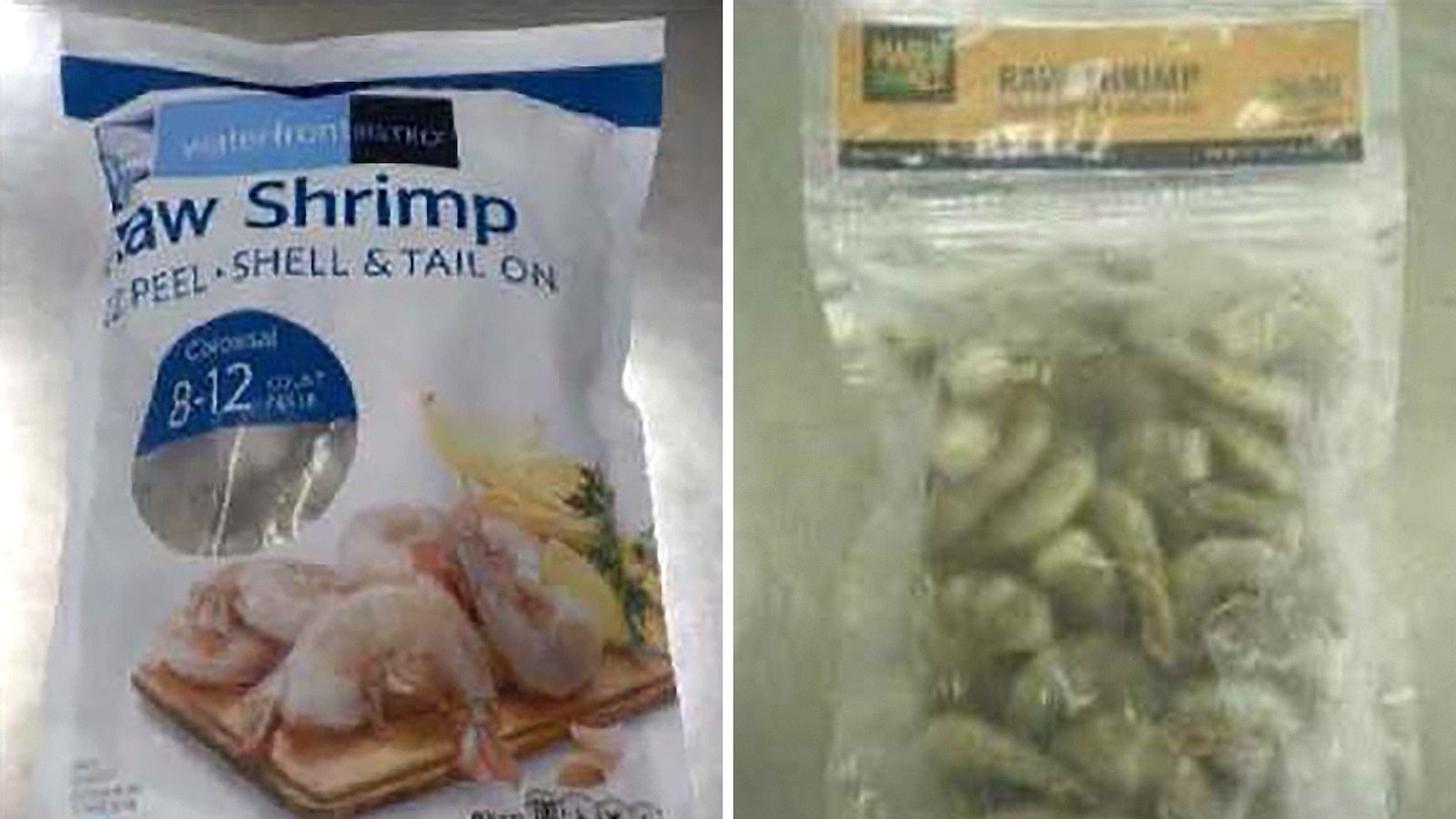
The FDA has recalled approximately 83,800 bags of frozen raw shrimp imported from Indonesia and distributed by Direct Source Seafood LLC under the Market 32 and Waterfront Bistro labels after possible exposure to very low levels of cesium-137; affected UPCs and best-by dates span April 2027 and the product was sold at major supermarket chains across multiple states following late June/early July 2025. Consumers are advised not to consume the product and to return or discard it; the FDA noted no product that has tested positive for Cs-137 entered the U.S. marketplace and no illnesses have been reported. The event poses reputational and refund costs for the importer and retailers and could create localized supply-chain disruption, but absent confirmed contamination or reported health impacts the near-term financial effect on major retailers and suppliers appears limited.
Market structure: This recall is concentrated (≈83,800 bags) and branded/private‑label heavy, so direct financial losers are supplier Direct Source Seafood (private) and exposed private‑label lines at Albertsons (ACI) and regional chains; category demand for frozen shrimp could fall 5–15% regionally over 2–6 weeks. Winners are diversified grocers (WMT, COST) and large protein producers (TSN) that can capture short‑term substitution away from shrimp; price power for alternative proteins may improve modestly (+1–3% margin leverage) if demand shifts persist.
Risk assessment: Near term (days–weeks) the main risk is reputation/traffic loss in affected stores leading to isolated comps misses; medium term (1–3 months) regulatory escalation (targeted FDA/state bans or mandatory import testing) could raise supplier compliance costs by low‑to‑mid single digits on margins. Tail risks include detection of an actual contaminated lot entering consumer supply or a broader recall of Indonesian seafood that could disrupt US imports for quarters — a >10% supply shock to US shrimp imports would be high‑impact. Hidden dependencies: many private‑label programs rely on single foreign suppliers, creating outsized supplier concentration risk.
Trade implications: Tactical plays favor small, event‑driven shorts and hedges into 4–8 week windows (expect headlines to drive >2–5% moves). Relative trades: long large diversified grocers and protein processors vs short exposed regional grocers/private‑label operators; options should be used to cap downside around discrete FDA/state announcements (30–90 day expiries). Timing: act quickly on headline volatility, trim/exit after 2–3 FDA test updates or when comps normalize (6–12 weeks).
Contrarian: Consensus will likely over‑react to “radioactivity” language; scientific and FDA language suggests low measured risk — a >3–6% sell‑off in a major grocer is likely overdone and tradable. Historical parallels (short seafood/food scares) show V‑shaped recovery in 4–8 weeks once tests clear; contrarian longs on >5% drawdown with event‑dated protection present attractive asymmetric returns. Unintended consequence: accelerated retailer sourcing diversification will benefit domestic aquaculture and vertically integrated proteins over 6–18 months.
AI-powered research, real-time alerts, and portfolio analytics for institutional investors.
Request DemoOverall Sentiment
mildly negative
Sentiment Score
-0.25
