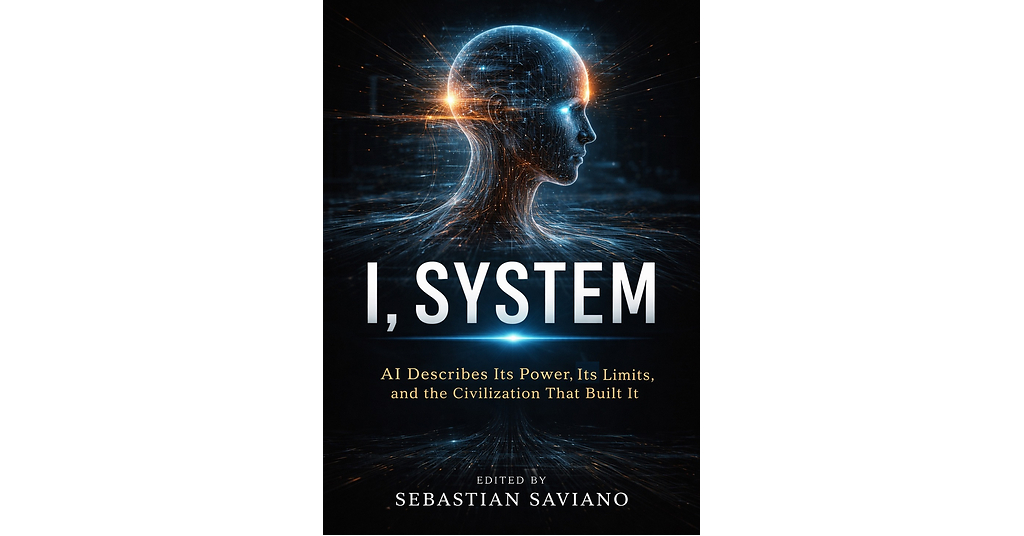
Deriva Publishing announced release details for Sebastian Saviano’s book “I, System,” arguing that AI “fluency is not understanding” and that responsibility for AI-generated language remains with people and institutions. The piece emphasizes governance/accountability as AI systems increasingly draft emails, summarize legal documents, and influence decisions across schools, businesses, governments, and courts. No financial metrics, earnings, policy change, or company actions are reported.
This is not a direct earnings or policy catalyst, but it does reinforce a real market mechanism: enterprise AI value is migrating from raw model quality to governance, auditability, and contractual liability management. That structurally favors incumbents with workflow lock-in and compliance distribution—MSFT, GOOGL, NOW, RELX, TRI, and ACN—because they can monetize “trust” as part of the stack rather than as a standalone feature. The long tail of pure-play AI applications remains vulnerable if buyers decide fluency is not enough and procurement demands logging, provenance, and human override before scaling spend.
The near-term price impact should be minimal; the first tradable effects would show up over 1-3 months in procurement commentary, legal-tech budgets, and model-risk spending, not in headline sentiment. Regulated verticals may slow front-office AI adoption while accelerating back-office compliance and review tooling, which means spend is likely to reallocate rather than disappear. Over 6-18 months, any hardening of liability or traceability rules should expand multiples for platform/software names with control layers and compress them for speculative AI names without durable enterprise entrenchment.
Contrarian takeaway: the consensus is still too focused on capability arms races and too light on institutional permissioning. The real bottleneck is not whether models can sound competent, but whether buyers can defend the decision to rely on them. That said, this article itself is mostly noise for equities unless it foreshadows actual regulation, a lawsuit, or evidence of procurement friction in earnings calls.
AI-powered research, real-time alerts, and portfolio analytics for institutional investors.
Overall Sentiment
neutral
Sentiment Score
0.00
